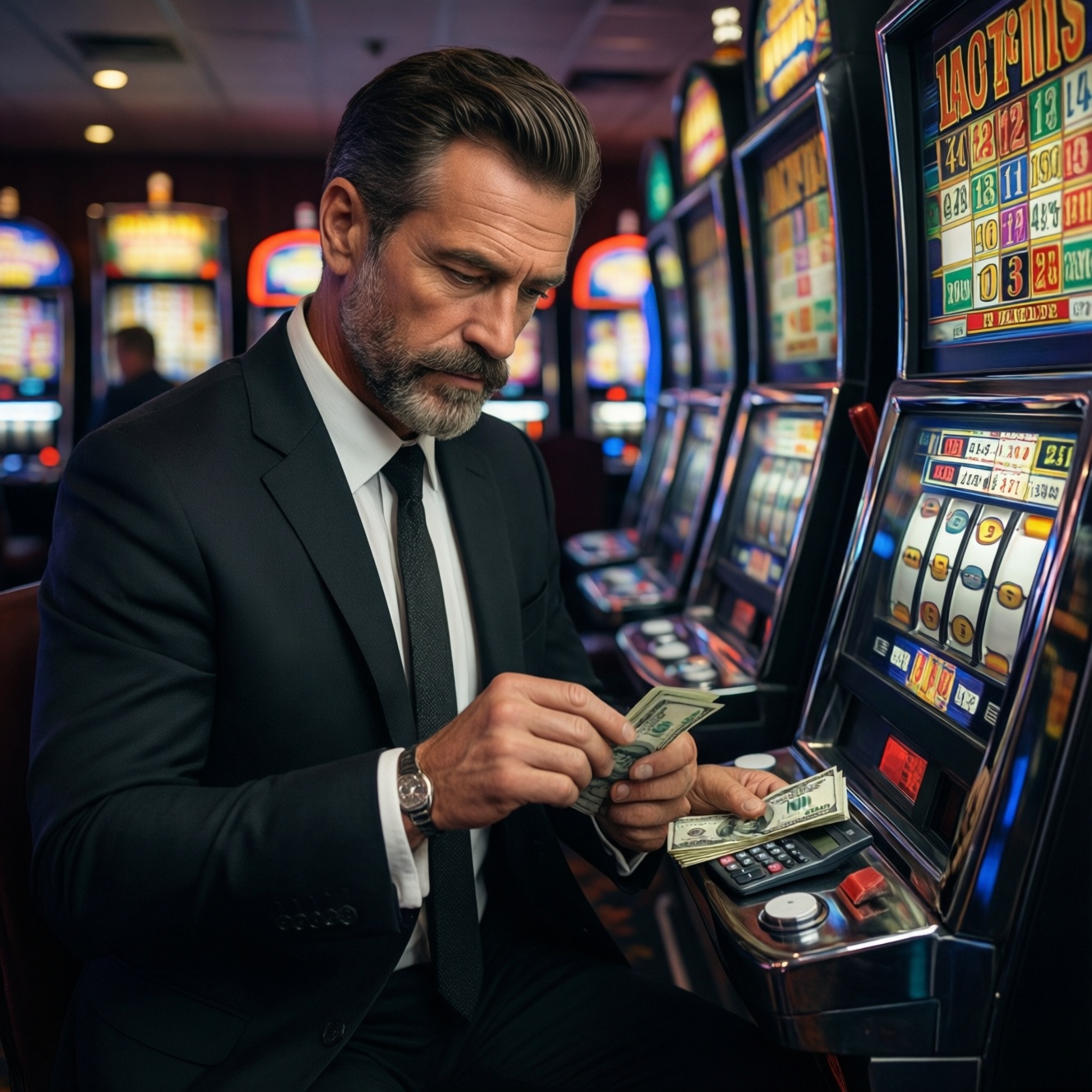

"Hot" and "cold" slots are a myth because modern slots are modeled as independent random trials: the probability of a win on the next spin does not change based on previous outcomes. Streaks occur naturally under randomness, but they do not signal a machine that is "due" or "tight." This is why pattern-based betting fails mathematically.
Summary of the Mathematical Argument
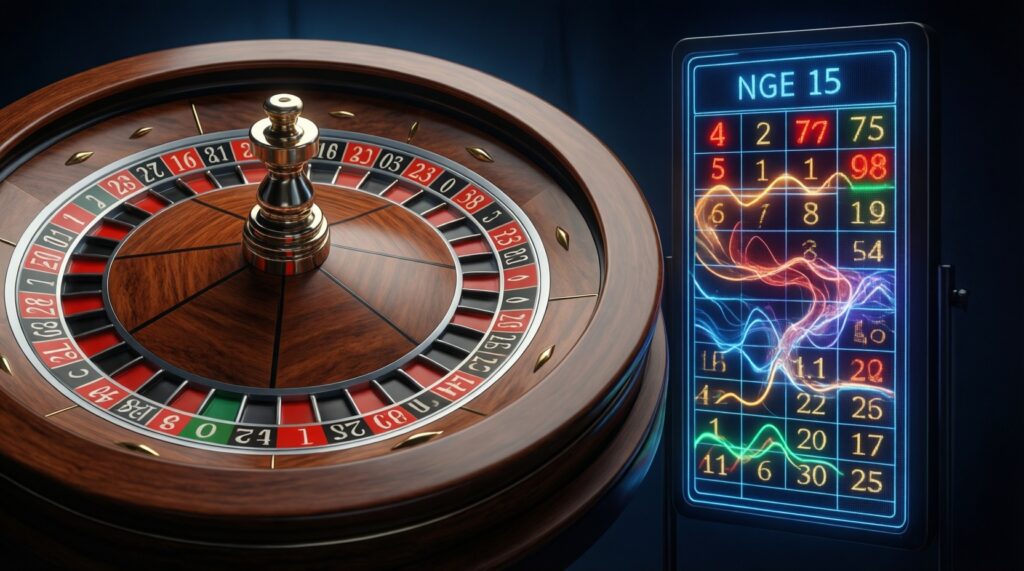
- If each spin is independent, then past outcomes do not change the next-spin distribution.
- Perceived "hot" streaks and "cold" droughts are expected under variance, even with fixed odds.
- Conditional probability clarifies the core mistake: confusing given history with caused by history.
- RNG-based selection makes "memory" patterns (machines warming up, paying back, cycling) non-predictive.
- Strategy choices differ mostly in convenience and risk, not in changing the underlying probabilities.
What Players Mean by "Hot" and "Cold" Slots
In player language, a "hot" slot is one that has recently paid frequent wins or a big bonus, while a "cold" slot is one that has not paid "for a long time." The practical belief is that "hot" machines will keep paying (momentum) or that "cold" machines must pay soon (due theory).
Mathematically, those labels try to infer a changing win probability from recent results. That inference only works if the process has state (memory) that affects future outcomes. For regulated, RNG-driven slots, the next outcome is designed to be independent of the previous outcomes, so "hot/cold" describes your observed sample path, not a changing mechanism.
This is the core of the hot and cold slots myth: translating a short-term pattern into a causal claim about the next spin.
- Check: Are you labeling a machine based only on recent outcomes rather than a verified change in probabilities?
- Check: Are you assuming the game has a "due" state without evidence of dependency?
Independence and the Probability Model of Slot Spins
Formal reasoning treats each spin as a random experiment with a fixed probability distribution over outcomes. Independence means the distribution for spin t+1 is the same regardless of what happened on spins 1..t.
- Model: Let Xt be the outcome (or payout) of spin t.
- Fixed distribution: For each spin, P(Xt=x) is constant over time for a given game configuration.
- Independence: P(Xt+1=x | X1,...,Xt) = P(Xt+1=x).
- Implication: Recent wins do not make a win more likely next; recent losses do not make a win "due."
- What can vary: Your bet size, volatility of the game you choose, and session length change variance and bankroll risk, not the next-spin probability model.
- Key question: are slot machines random in the independence sense? In properly implemented RNG slots, yes: each spin is a fresh draw.
- Check: When you change "strategy," are you only changing stake/volatility/time rather than the game's distribution?
- Check: Are you treating independent trials as if they form a trend?
Why Past Spins Do Not Change Future Odds: Conditional Probability Explained
Intuition says "after many losses, a win is more likely." Formal reasoning asks for P(win next | history). Under independence, that conditional probability equals the unconditional probability.
One clean example: Let W be the event "next spin is a win," and L10 be the event "the last 10 spins were losses." If spins are independent, then:
P(W | L10) = P(W).
Where the confusion shows up most often (typical scenarios):
- Chasing a "cold" machine: "It hasn't hit in 30 spins, so it must be close." Independence says the next spin does not become more favorable because you observed a drought.
- Sticking to a "hot" machine: "It's paying now, so it will keep paying." A streak does not change the next-spin distribution; it only changes your narrative.
- Switching machines after a loss streak: Players treat switching as "resetting luck," but if each machine is independent per spin, your next-spin probability is defined by the new game's distribution, not by your previous history.
- Raising bets after losses (martingale-style): This increases bankroll risk without improving P(W); independence makes the recovery logic fragile.
- Timing myths: "Play at certain minutes when it's due." Time-based conditioning does not imply causation unless the game's parameters actually change with time.
- Check: Are you mistaking P(history | win rate) for P(win | history)?
- Check: Is your decision rule based on observed streaks rather than on game selection and bankroll constraints?
Streaks, Variance, and the Human Perception of Patterns
Intuition treats streaks as signals. Formal reasoning treats streaks as expected artifacts of randomness and volatility. Even with a constant underlying win probability, clustered wins and clustered losses occur naturally.
What randomness reliably produces (so it looks like patterns):
- Clustering: Wins often appear in bursts; losses often appear in runs.
- Recency bias: The last few outcomes dominate perception, even when they have no predictive power.
- Selection effects: You remember unusual streaks and forget ordinary sequences.
Practical pluses vs. limitations of different player approaches (convenience vs. risk):
- Pattern-chasing (hot/cold): Easy to implement (just watch outcomes), high risk of overbetting and prolonged chasing because it falsely promises predictability.
- Bankroll-first rules (stop-loss/stop-win): Moderate convenience, lower risk; it manages exposure without claiming to predict outcomes.
- Game-selection focus (volatility/features you can tolerate): Moderate effort (requires reading paytable/feel of variance), lower risk of cognitive traps; still does not create an edge.
- Check: Are you interpreting variance as information?
- Check: Are your rules reducing risk (bankroll) rather than trying to forecast randomness?
How Random Number Generators Produce Independent Outcomes
Players often ask for a slot machine rng explained in plain terms. Intuition imagines a machine "cycling" through outcomes. Formal design uses an RNG to generate unpredictable values; the game maps each spin's RNG output to an outcome using fixed rules. The mapping can be complex, but independence is the key property from a player perspective.
Common myths and what independence implies instead:
- Myth: Machines warm up or cool down. Independence: there is no "temperature" state affecting the next draw.
- Myth: The game must pay back after it takes enough. Independence: previous losses do not create a credit that changes future probabilities.
- Myth: There is a visible cycle you can time. Independence: without dependency, observed sequences do not reveal a future schedule.
- Myth: Switching bets changes what the RNG will give you. Independence: stake changes payout size and variance, not the underlying randomness source.
- Myth: A casino can flip a "tight/loose" switch mid-session. Independence: your evidence is outcomes; without verified parameter changes, the safest assumption is a fixed distribution per configuration.
- Check: Are you assuming hidden states (cycle, debt, heat) that would violate independence?
- Check: Are you separating what you can control (stakes, session length, game choice) from what you cannot (next RNG draw)?
Practical Consequences for Strategy and Responsible Play

If you are searching for best online slots real money, independence changes what "best" can mean: not "most predictable," but "best fit" for your variance tolerance, budget, and entertainment goals. The question do hot and cold slots exist is operationally answered by how your decisions perform: streak-based rules do not change odds, but they can increase risk via chasing.
Mini-case (compare approaches by implementation vs. risk):
- Hot/cold tracking: Implement in seconds (watch last outcomes). Risk: encourages escalating bets after losses or overconfidence after wins; bankroll can swing harder without any probability gain.
- Pre-commitment bankroll plan: Implement in minutes (set budget and limits). Risk: lower; it caps exposure while accepting randomness.
- Game selection by volatility preference: Implement with moderate effort (try demo, read in-game info). Risk: medium-to-lower; you align experience with tolerance, but you still have no predictive edge.
Mini-pseudocode for an independence-respecting session rule (no prediction, only risk control):
bankroll = B
stop_loss = L
stop_win  = W
while session_active:
  bet = fixed_bet()
  play_spin()
  if bankroll <= B - L: stop()
  if bankroll >= B + W: stop()
- Check: Are your rules about limiting downside and session length rather than "reading" streaks?
- Check: Are you avoiding bet escalation schemes that assume a win becomes more likely after losses?
- Self-check: Can you state in one sentence why P(win next | past) should equal P(win next) under independence?
- Self-check: Are you making any decision that depends on "due" outcomes or "momentum"?
- Self-check: Did you set a budget, a stop-loss, and a stop-win before playing?
- Self-check: Are you choosing games for entertainment/variance fit rather than supposed predictability?
Common Misconceptions Addressed
If I just watched a jackpot, isn't the slot "hot"?
No. A jackpot event is part of the same distribution; it does not increase the probability of another jackpot on the next spin under independence.
If a machine hasn't paid in a long time, isn't it "due"?
No. "Due" thinking assumes dependence; with independent spins, the next-spin win probability does not rise because of a loss streak.
Does switching machines reset my luck?
Switching changes the game distribution you face (different volatility/features), but it does not erase or improve the probability of the next outcome in any magical way.
Are slot machines random even online?
Yes in the relevant sense: outcomes are intended to be generated independently by an RNG and then mapped to results. Randomness does not mean "evenly alternating"; it includes streaks.
Can I predict bonuses by counting spins since the last feature?
Counting only helps if the game is designed with a stateful trigger (dependency). Without that verified mechanic, spin counting is not predictive.
Do "hot hours" or specific times of day change my odds?
Not by mathematics alone. Time-based beliefs need a real parameter change; otherwise, it is just conditioning on a label that does not affect the RNG draw.