
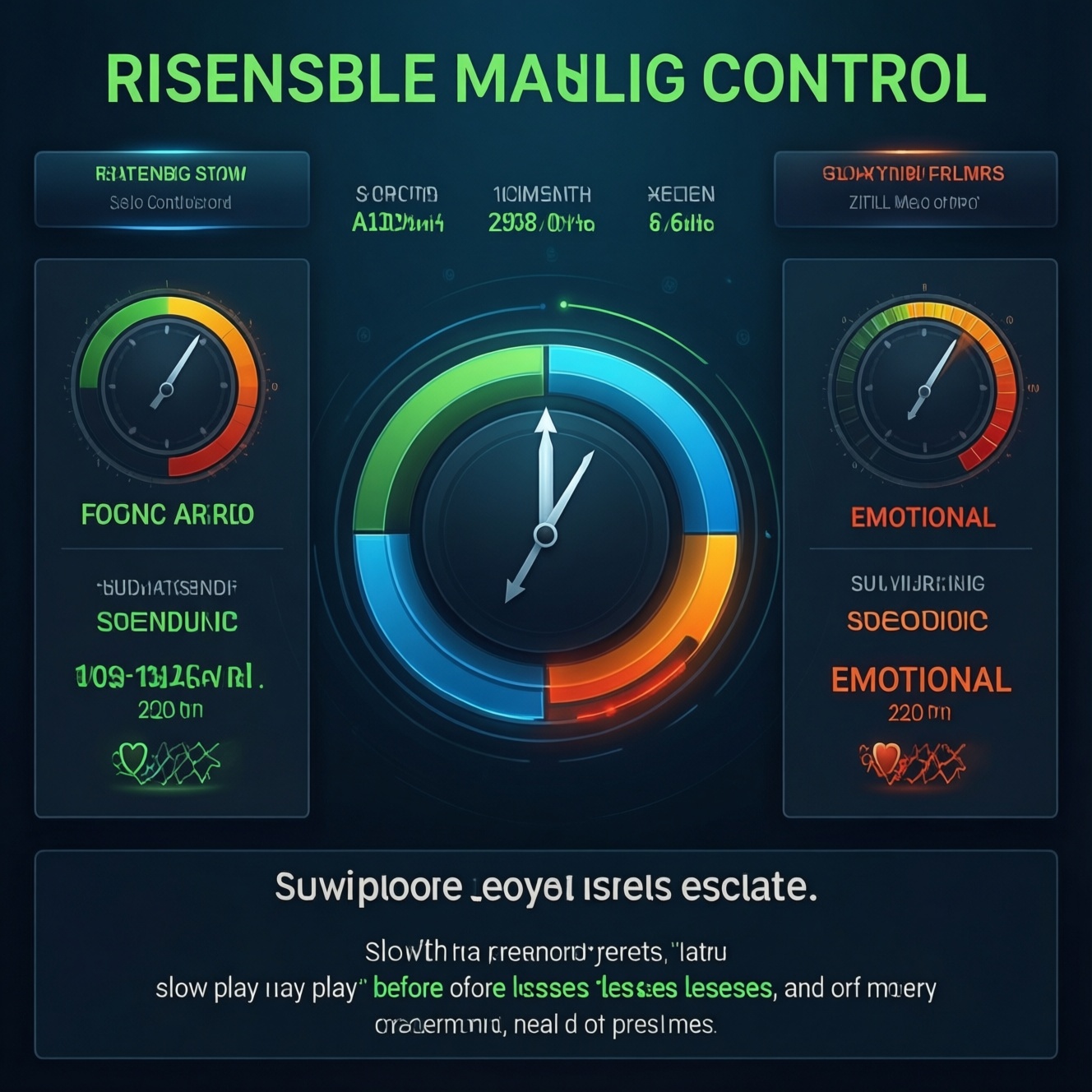
Responsible play metrics help you prevent tilt by tracking three things together: time (session length and breaks), spend (loss velocity and limit hits), and emotional signals (behavioural proxies like rapid re-buys). Implement them with clear thresholds, privacy-safe data handling, and real-time interventions that slow play and prompt reflection before losses escalate in TH operations.
Core metrics for responsible play

- Session duration: total active play time per session (exclude inactivity timeouts).
- Pause quality: count and length of breaks; flag "micro-breaks" that don't reduce risk.
- Cumulative exposure: rolling total of time and net losses across 24h/7d windows.
- Loss velocity: net loss per minute and per decision/event; detect sharp accelerations.
- Limit pressure: frequency of limit warnings, near-misses, and override attempts.
- Behavioural volatility: erratic stake sizing, rapid re-buys, and shortened decision times.
Measuring session duration, pauses and cumulative exposure
Best fit: operators, poker networks, and affiliates running a responsible gaming analytics program where you can log event timestamps reliably and deliver on-site/app messages. These metrics also help when you are evaluating a responsible gambling tracking software vendor because definitions are easy to standardize.
Do not do this (or reduce scope): when you cannot obtain informed consent for behavioural monitoring, when device/user identity is unstable (high shared-device risk), or when your intervention channel is unavailable (no practical way to notify, pause, or cool down a player).
- Define "active time": time between meaningful game events (bets, hands, spins) with an inactivity cutoff you document internally.
- Define "pause": a gap longer than your inactivity cutoff; store pause count and pause duration separately.
- Define "cumulative exposure window": rolling 24h and 7d aggregates are more actionable than calendar days.
Identifying spending escalation: thresholds, velocity and context
To detect escalation safely and consistently, you need both spend data and context signals. This is where gambling loss limit tools become operational rather than just a settings page.
- Data requirements:
- Per-event net outcomes (stake, win, loss, fees/rake) with timestamps.
- Balance changes (deposits, withdrawals, bonuses) with timestamps.
- Game metadata (game type, table/stake level, tournament vs cash, currency).
- Access and controls:
- Ability to enforce limits and cooldowns at the account level (not only per-device).
- Messaging channel: in-product banners, email, SMS, or call-center workflow.
- Audit logging for every alert and intervention outcome.
- Escalation signals to compute:
- Loss velocity: rising net loss per minute compared to the player's baseline (use relative change, not a single universal number).
- Stake jump: rapid movement to higher limits after losses, not after wins.
- Chasing pattern: increased deposit frequency or re-buy frequency following a loss streak.
- Tooling options: a responsible gaming analytics platform or internal pipeline; for land-based venues, integrate a player behavior monitoring system for casinos (loyalty card + session logging) if you can meet consent and transparency requirements.
Emotional signal capture: behavioural proxies and signal quality
Behavioural proxies can indicate frustration, impulsivity, or loss of control, but they are not diagnoses. Treat them as "risk markers" and design interventions that are supportive and reversible.
Risks and limitations to acknowledge before you start
- False positives: a skilled player changing strategy can look like tilt; avoid punitive actions.
- Data bias: missing events (disconnects, delayed logs) can mimic erratic behaviour.
- Privacy sensitivity: emotional inference is sensitive; minimize data and maximize transparency.
- Channel mismatch: alerts that appear mid-hand/mid-spin can increase stress; timing matters.
-
Choose behavioural proxies you can measure consistently
Start with event-level signals you already log, then add only what you can validate. Good early proxies are decision speed changes, stake volatility, rapid re-buys, and loss-streak reactions.
- Poker example: time-to-act dropping sharply after bad beats.
- Slots example: increasing bet size immediately after consecutive losses.
-
Build a player baseline and a short-term comparison window
Compute each proxy over a long window (baseline) and compare it to the current session (short window). Use relative deviation (e.g., "much faster than usual") rather than hard universal cutoffs.
- Baseline: last N sessions or a stable rolling period.
- Short window: last X minutes or last Y events.
-
Create a composite "tilt risk" score with guardrails
Combine a small set of proxies into a score, but cap the impact of any single signal. This reduces overreaction to one anomaly and supports safer decisions when using tilt detection software for online poker.
- Include: loss velocity + stake volatility + re-buy acceleration.
- Exclude: personally sensitive inferences you cannot explain to the player.
-
Validate signal quality before acting in real time
Check whether the score correlates with harm-related outcomes you can measure (limit hits, long sessions, repeated deposits). Use holdout testing and manual review samples to spot systematic errors.
- Investigate spikes caused by disconnect/reconnect patterns.
- Verify that missing logs don't inflate "pause" or "speed" signals.
-
Document explainable reasons for each alert
For every intervention, store a short reason code such as "rapid re-buys + loss acceleration." This enables auditing, player support conversations, and safer tuning over time.
Real‑time rule design: alerts, soft interventions and cooldowns
Use this checklist to verify your rules actually reduce risk without creating friction that worsens behaviour.
- Alerts are timed safely (not mid-hand, not during irreversible actions) and are readable on mobile.
- Each alert includes an actionable next step (take a break, set a limit, view session summary).
- Rules have cooldown tiers (gentle prompt → stronger prompt → enforced pause) and do not jump to enforcement on one weak signal.
- Interventions are non-punitive: no shaming language, no threats, no account penalties triggered solely by a proxy score.
- Players can access current session stats (time played, net result, deposits) in one screen.
- Every trigger has a reason code and is logged for audit and tuning.
- There is an operator fail-safe for outages (e.g., disable automated enforcement if data latency is high).
- Support teams have a clear playbook for escalations and self-exclusion requests.
Governance, privacy and informed consent for sensitive signals
- Over-collection: gathering emotional or behavioural data "just in case" instead of minimizing to what you can justify and protect.
- Unclear consent: burying monitoring in generic terms; players should understand what is tracked and why.
- Non-explainable scoring: using black-box features you cannot summarize in plain language to a player or regulator.
- Purpose creep: reusing risk signals for marketing, VIP promotion, or retention targeting.
- One-size thresholds: applying the same tilt rule to all games, stake levels, and player histories.
- Ignoring context: treating deposits as always risky; sometimes a deposit follows a planned budget and limit settings.
- No human review path: failing to provide a controlled process for edge cases and complaints.
- Weak access control: too many staff can view sensitive risk dashboards without role-based restrictions.
Monitoring outcomes: KPIs, A/B testing and continuous refinement
If full real-time scoring is not feasible or is too sensitive for your current governance maturity, use alternatives that still reduce harm.
- Limit-first approach: focus on deposit/loss/time limits and clearer limit journeys when you lack reliable behavioural event data.
- Post-session insights: deliver summaries and reflective prompts after a session when in-session messaging is disruptive or risky.
- Risk-tier segmentation: simple tiers (low/medium/high) based on exposure and limit pressure when explainability is a priority.
- Human-led outreach: trained support interventions for high-risk patterns when automation could produce harmful false positives.
Practical concerns and troubleshooting
How do I avoid flagging skilled players as "tilting"?
Use relative-to-baseline comparisons and require multiple concurrent signals (e.g., loss velocity plus re-buy acceleration). Keep interventions supportive and reversible, not punitive.
What is the safest first intervention to deploy?
Start with a gentle, well-timed break prompt plus a visible session summary (time played, net result). Only add enforced cooldowns after you confirm signal quality and logging reliability.
Why do my pause metrics look inflated?
Disconnects, backgrounding apps, and event logging delays can create false "pauses." Add data-latency checks and standardize your inactivity cutoff across products.
Can I use the same rules for slots and poker?
Not reliably. Calibrate per game type because event cadence, decision time, and variance differ, which changes what "normal" looks like.
How should we explain interventions to players?

Use plain language tied to observable facts: time played, recent losses, repeated deposits, rapid re-buys. Avoid claims about emotions or diagnoses.
What if a player ignores every prompt?
Escalate gradually: stronger prompt, then a short cooldown, then offer limit setting or self-exclusion pathways. Ensure support contact options are visible and localized for TH.
Which teams must be involved before go-live?
Compliance/legal, responsible gaming, data/engineering, product, and customer support. You need shared definitions, audit logging, and an escalation playbook before activating enforcement.