

Paylines, Payways, and Cluster Pays differ by how a slot defines a valid win: fixed line paths (Paylines), left-to-right symbol combinations across adjacent reels (Payways), or connected symbol groups anywhere on the grid (Cluster Pays). This changes hit distribution and volatility: paylines concentrate wins into fewer paths, payways increases win density, and clusters shift wins toward frequent small hits with occasional spikes.
At-a-Glance Comparison of Slot Mechanics
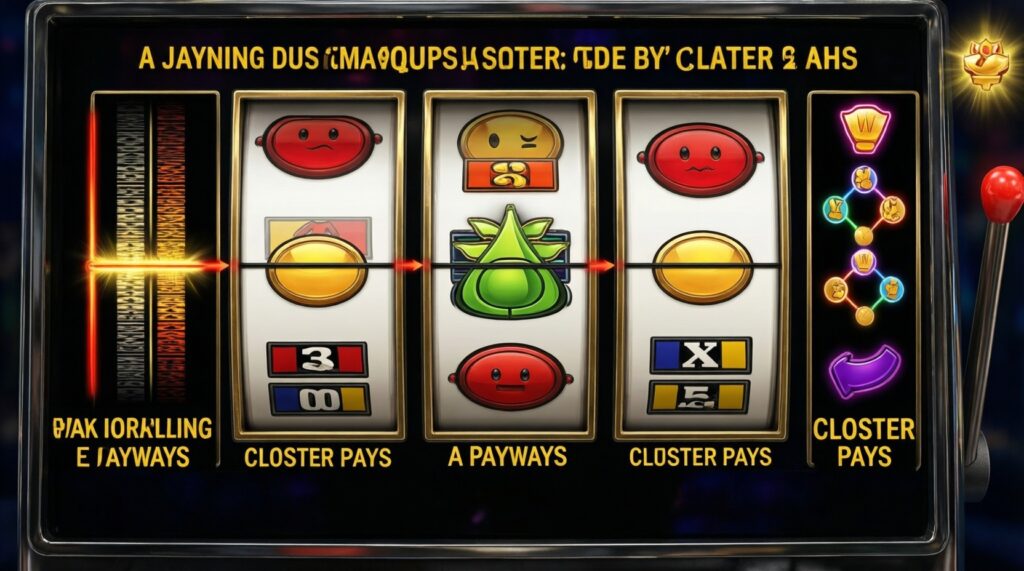
- Paylines: wins only on pre-defined lines; clearer to read, easier to budget per line, but can feel "dead" outside active lines.
- Payways: wins on any matching path across adjacent reels; more frequent small wins, but multi-win screens can mask net loss.
- Cluster Pays: wins from connected groups; supports cascades/avalanches naturally, but perceived fairness depends heavily on cluster rules.
- Risk impact: paylines often feel swingier at the same RTP; payways usually smooths outcomes; clusters often create "streaky" sessions due to cascades.
- Best fit: choose based on audience expectation, UX clarity, and how you want wins to "arrive" (lines, combinations, or areas).
How Paylines Define Winning Paths
If you're asking "สล็อตออนไลน์ Paylines คืออะไร": paylines are pre-set win paths across the reels; a win happens only when matching symbols land on an enabled line (usually left-to-right, sometimes both ways). Use these criteria to decide whether paylines are the right base mechanic:
- UI clarity needs: can you show line wins clearly without clutter (especially on mobile)?
- Bet structure preference: do you want "bet per line" control, or a single total bet?
- Player mental model: does your audience expect classic line-based slots, or modern "all ways" games?
- Symbol distribution goals: can your reel strips support meaningful line hits without excessive dead spins?
- Wild/scatter complexity: line rules can simplify wild substitution; scatters stay independent of lines.
- Feature integration: are you planning nudges/holds/respins that interact cleanly with fixed line paths?
- Win messaging: will you emphasize single "main wins" (good for lines) versus many small concurrent wins (more typical in ways)?
- Compliance/QA effort: line evaluation is straightforward; fewer edge cases than cluster adjacency rules.
Payways: Combinatorial Rules and Payout Density
If you're asking "สล็อตออนไลน์ Payways คืออะไร": payways (often called "ways to win") pay for matching symbols on adjacent reels, typically starting from the leftmost reel, regardless of vertical position. This increases the number of evaluated winning paths, which tends to increase perceived hit density (more frequent "something happened" screens) without guaranteeing profit per spin.
| Variant | Who it fits | Pros | Cons | When to choose |
|---|---|---|---|---|
| Classic fixed paylines (e.g., 20-50 lines) | Players who like traditional line slots and per-line betting | Easy to explain; clear win paths; predictable win evaluation | Dead spins feel harsher; players may forget which lines are active | When you need maximum readability and a "classic" cabinet-to-mobile translation |
| All-ways / 243 ways (5 reels × 3 rows) | Intermediate players who accept many small wins | Higher win-event density; simple "any position counts" messaging | Win spam can hide net loss; harder to create "big line moments" | When you want smoother pacing and frequent feedback on each spin |
| Megaways-style variable rows per reel | Players seeking high volatility swings and feature-driven peaks | Session-to-session variety; strong anticipation as ways expand | More variance; heavier math/QA; can feel unfair without transparent rules | When your product goal is "high excitement per feature" and you can support complex UX |
| Pay both ways (left-to-right and right-to-left) | Casual audiences who dislike "wasted" matches | Fewer perceived dead spins; intuitive value ("matches count either way") | More frequent small wins can dilute headline payouts | When you want softer loss perception and straightforward onboarding |
| Adjacent pays with minimum-reel requirement (e.g., 3+ reels) | Operators tuning balance between feedback and volatility | Control over hit rhythm; easier to prevent "too many tiny wins" | Can feel stingy if min requirement is too strict | When you need tighter control of win distribution while keeping "ways" messaging |
Concrete configuration examples (deterministic, not performance claims):
- 5×3 all-ways: 3 positions per reel → 35 = 243 possible positional combinations for a given symbol across 5 reels.
- Megaways-style: if reels show 2-7 symbols each, total ways vary per spin as the product of visible rows (e.g., 6×7×4×5×6 ways on that spin).
- Same RTP, different feel: keeping RTP constant, shifting payout weight from frequent small ways-wins into fewer big wins increases volatility even if the mechanic label stays "Payways."
Cluster Pays: Area Matching and Hit Patterns
If you're asking "สล็อต Cluster Pays คืออะไร": Cluster Pays awards wins when a minimum number of identical symbols form a connected group (typically orthogonal adjacency; sometimes diagonals are included by rule). Clusters pair naturally with cascades, which can create streaky sequences of wins and re-triggers.
Practical scenario guidance (if → then):
- If you want frequent micro-wins and constant motion, then use Cluster Pays with cascades and a moderate minimum cluster size (and message it clearly).
- If your audience values "readable outcomes" more than spectacle, then prefer paylines or all-ways; clusters can look random without strong visual grouping.
- If you need strong feature hooks (multipliers growing during cascades), then Cluster Pays is a natural fit because it creates multi-step resolution.
- If you're targeting high-volatility seekers, then push cluster rules toward rarer qualifying groups and concentrate reward into cascade multipliers or feature entry.
- If you must minimize rule disputes, then avoid diagonal adjacency and edge-case connectors unless you can visualize them unambiguously.
Mathematical Effects on Volatility, Hit Frequency and RTP
Use this quick selection algorithm to translate your goal into a mechanic choice. This is where "สล็อตออนไลน์ Paylines Payways Cluster Pays ต่างกันอย่างไร" becomes operational: the rule set changes how RTP is delivered (many small events vs fewer large events), not just the final RTP number.
- Fix non-negotiables: jurisdiction constraints, max exposure (max win), and device UX limits.
- Decide the primary pacing: fewer meaningful hits (lean paylines) vs frequent feedback (lean payways/cluster).
- Choose the resolution style: single evaluation per spin (paylines/payways) vs multi-step cascades (cluster-oriented designs).
- Allocate payout "mass": do you want more value in base game or in features (free spins, bonus buy equivalents, etc.)?
- Stress-test perception: simulate (or QA) screens with many tiny wins-can players still tell when they're losing?
- Tune symbol math to match mechanic: don't keep the same reel-strip philosophy when moving from lines → ways → clusters.
- Validate bankroll feel with session goals: short punchy sessions (higher variance) vs longer steady sessions (lower variance).
Risk Profiles: How Each System Affects Bankroll and Session Length
Common selection mistakes that increase perceived risk or reduce trust:
- Assuming "Payways is always safer": a ways game can still be high volatility if value is concentrated in rare long combinations or features.
- Ignoring net-loss masking: frequent tiny wins (common in payways and clusters) can make players overestimate return and chase longer.
- Overloading paylines: too many active lines without clear visualization makes outcomes feel arbitrary, not "skillfully readable."
- Cluster ambiguity: unclear adjacency (diagonal vs orthogonal) or complex connectors cause disputes and customer support friction.
- Mismatch between base game and feature: very calm base game plus extremely spiky feature can feel like "nothing happens until it explodes."
- Over-tuning cascades: long cascade chains can inflate excitement but also amplify variance in ways players don't anticipate.
- Not aligning bet UI with mechanic: per-line betting UI on a pseudo-ways game (or vice versa) confuses value perception.
- Testing only RTP, not distribution: two games with the same RTP can produce very different bankroll trajectories.
Design Trade-offs: Tuning Frequency, Max Win and Player Perception
- If your objective is maximum clarity and classic expectations, prefer Paylines.
- If your objective is frequent feedback and smoother-looking sessions, prefer Payways.
- If your objective is cascade-driven engagement and feature momentum, prefer Cluster Pays.
- If your objective is "headline volatility" with variable outcomes per spin, consider Megaways-style payways or a cluster + multipliers design.
For "เล่นสล็อตแบบ Paylines หรือ Payways หรือ Cluster Pays แบบไหนคุ้มกว่า", the most "worth it" choice depends on what you value: paylines are best for transparency and controllable moments, payways are best for consistent on-screen activity, and cluster pays are best for cascading narratives and multiplier arcs. Pick the mechanic that matches your target risk feel, then tune distribution to match.
Common Practical Questions from Operators and Players
Can two slots with the same RTP feel very different in risk?
Yes. RTP is a long-run average; paylines, payways, and clusters mainly change how that RTP is distributed across frequent small wins versus rare large wins.
Do payways always increase hit rate?
They often increase the number of evaluated winning paths, but the actual hit rate depends on symbol probabilities and minimum match rules (e.g., 3+ reels). You can still tune a ways game to feel tight.
What makes Cluster Pays feel "streaky"?
Cascades resolve in multiple steps, so a single spin can chain into several wins or none. That clustering of outcomes is a key driver of perceived streaks.
Is it safer for bankroll to play paylines than clusters?
Not inherently. A paylines game can be tuned to be either smoother or swingier; clusters can be gentle or aggressive depending on minimum cluster size and where value is concentrated.
Which mechanic is easiest to explain to new players?
Paylines are usually easiest because the win paths are explicit. Payways is also simple if you keep the rule "adjacent reels from the left," while clusters require clear adjacency visuals.
What is the most common UX mistake with payways?
Celebrating many tiny wins without showing net result clearly. Players may interpret "many wins" as profitability and overextend their session.