

Volatility is the size and speed of price swings: low volatility means smoother returns, medium means noticeable ups/downs, and high means frequent large moves. Choose the level that matches your time horizon, risk capacity, and budget so you can hold through drawdowns without panic-selling. This also guides fund selection in Thailand, including กองทุนความผันผวนต่ำ.
How low, medium and high volatility differ in practice
- Low volatility: smaller day-to-day swings, easier to hold, but slower compounding; mistakes usually come from overpaying for "stability."
- Medium volatility: balanced movement; rewards patience and rebalancing; most "default" long-term portfolios live here.
- High volatility: large swings and gap risk; requires strict sizing and rules; leverage amplifies errors quickly.
- Same return can feel very different: the path (drawdowns and recovery time) is often what makes investors quit.
- Fit is personal: the "best" volatility level is the one you can stay invested in during stress.
Defining volatility: metrics, measurement periods and volatility regimes
Volatility is a measure of how widely returns vary around an average over a chosen period. If you've ever asked ความผันผวน คืออะไร, the practical answer is: it's how hard an asset can shake your portfolio (and your behavior) before your plan breaks.
In practice, investors commonly approximate volatility using: (1) the standard deviation of returns, (2) average true range (ATR) for trading instruments, and (3) maximum drawdown and time-to-recover as "felt volatility." The same asset can be "low" on a monthly chart but "high" on an intraday chart.
Volatility regimes are periods where the market's behavior changes: calm, normal, and stress. Your process should assume regimes will change and avoid building a plan that only works in calm conditions.
Risk-return fingerprints: expected moves, drawdowns and tail risk by regime
Each volatility level has a recognizable pattern in how returns arrive, how losses cluster, and how much "surprise" risk (tail risk) you carry.
- Low volatility: returns often come steadily; the main risk is "slow bleed" (underperforming for long stretches) and concentration in defensive factors.
- Medium volatility: returns arrive in cycles; drawdowns are common but usually recoverable if your horizon matches; rebalancing tends to work best here.
- High volatility: returns can be lumpy; large up-days and down-days dominate; gap moves can bypass stops, so tail risk is the first-class problem.
- Sequence risk matters: if you withdraw or need cash soon, the order of returns can hurt more than the average return.
- Correlation can spike in stress: assets that look diversified in calm markets may drop together in a high-volatility regime.
- Behavioral load increases: higher volatility increases the chance of strategy abandonment, which is often the biggest hidden cost.
Time horizon and instrument fit: which assets match each volatility level
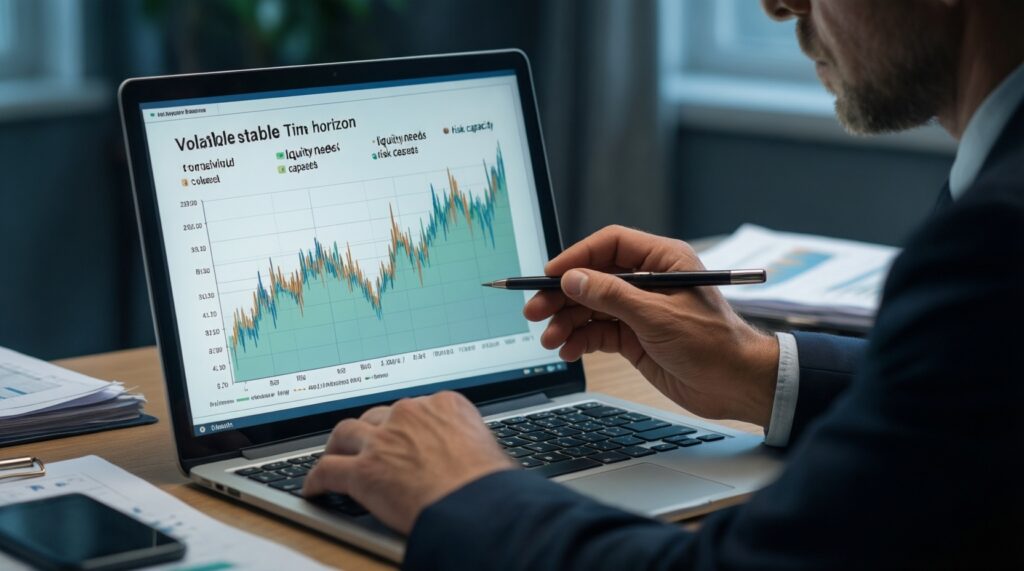
Instrument fit means: the product's volatility should match your holding period, liquidity needs, and ability to add funds during drawdowns.
- Short horizon (weeks to months): prefer low-to-medium volatility instruments, or hold high volatility only with tight, rule-based sizing. If your cash is earmarked for tuition, rent, or a down payment, high volatility is usually a mismatch.
- Medium horizon (1-3+ years): medium volatility portfolios with periodic rebalancing often match goals like general wealth building.
- Long horizon (5-10+ years): you can include higher volatility sleeves (e.g., equity-heavy or thematic exposure) if you can endure deep drawdowns without selling.
- Thailand mutual fund selection: if you're comparing เลือกกองทุนตามความเสี่ยง ต่ำ กลาง สูง, treat "risk level" as a volatility proxy, then verify with drawdown history and what the fund actually holds.
- Low-volatility fund use-case: กองทุนความผันผวนต่ำ often fits as a stabilizer, emergency buffer extension (not the emergency fund itself), or a parking sleeve before gradual risk-on moves.
- Where to buy is secondary to fit: for กองทุนหุ้นความผันผวนต่ำ ซื้อที่ไหนดี, prioritize total cost, platform reliability, and your ability to automate contributions; "best place" is where you can consistently execute the plan.
Sizing and leverage: position sizing, margin and stop placement for each regime
Sizing converts volatility from an abstract label into a controlled risk exposure. The higher the volatility, the smaller the position (or the wider the stop) must be for the same risk.
Position sizing rules that scale with volatility
- Low volatility: you can size larger, but still cap single-position risk. Use diversification rather than concentration to chase returns.
- Medium volatility: keep position size moderate and rebalance on a schedule (monthly/quarterly) rather than reacting to headlines.
- High volatility: reduce size first, then consider whether the trade/investment is even necessary. If you must participate, treat it as a small sleeve with predefined loss limits.
Stops, margin, and leverage constraints
- Stops must reflect instrument noise: in high volatility, tight stops are often just "paid to exit"; in low volatility, overly wide stops can be inefficient.
- Margin is a volatility amplifier: higher volatility increases margin calls and forced selling risk. If you cannot add collateral quickly, avoid leverage.
- Plan for gaps: stop-loss orders do not guarantee fill price during sharp moves; size so a gap against you is survivable.
Aligning volatility with capital and goals: practical selection rules
Most failures come from pairing a high-volatility product with a low-volatility life constraint (near-term spending, low liquidity, or small capital).
- Match volatility to cash-flow reality: if you may need the money soon, lower volatility is usually the correct trade-off even if returns are lower.
- Don't confuse "low volatility" with "no loss": low-volatility funds can still draw down; they simply tend to swing less.
- Avoid choosing by recent performance: investors often buy high volatility after it already rose, then sell after the inevitable drawdown.
- Use a two-bucket structure for small budgets: for ลงทุนตามระดับความเสี่ยง งบน้อย, keep a safety bucket (cash/low volatility) and a growth bucket (medium/high volatility) so one bad month doesn't force you to liquidate everything.
- Stress-test your own behavior: if a hypothetical 15-30% drawdown would make you exit, you're likely holding too much volatility.
Concrete allocation examples and a comparison table for real portfolios
Use the examples below as illustrations to translate "low/medium/high" into a portfolio you can actually follow. Adjust to your platform access, taxes, and fund availability in Thailand.
Three simple portfolio sketches (illustrative)
- Stability-first (low volatility core): 70% low-volatility funds, 30% medium volatility equity exposure. Goal: stay invested with minimal regret, add risk later.
- Balanced builder (medium volatility core): 40% low volatility, 50% medium volatility, 10% high volatility satellite. Goal: long-term growth with a controlled "spice."
- Aggressive sleeve (high volatility small): 60% medium volatility, 30% low volatility, 10% high volatility thematic/sector. Goal: participate in upside while limiting the damage of being wrong.
A short algorithm to verify you picked the right volatility level
- Define the deadline: when do you need the money (months/years)? If the answer is "uncertain," assume shorter.
- Set a maximum tolerable drawdown: write a loss level (in % or THB) that would still let you sleep and continue contributions.
- Map instrument to regime: label your candidate as low/medium/high volatility based on its typical swings and its worst visible drawdowns on the chart.
- Run a stress scenario: assume a drawdown larger than your comfort level (e.g., 1.5×). If that breaks your plan, reduce volatility or size.
- Check cash flexibility: can you add funds during drawdowns or would you be forced to sell? Forced selling means volatility is too high.
- Decide the rule: "If X happens, I do Y" (rebalance, hold, or cut size). No rule = you are relying on emotions.
| Volatility level | Typical fit (Thailand context) | What can go wrong (risk fingerprint) | Rule-of-thumb sizing approach | Illustrative stress assumption to test your plan |
|---|---|---|---|---|
| Low | Capital preservation sleeve, near-term goals, portfolio stabilizer; often overlaps with กองทุนความผันผวนต่ำ | Slow underperformance; hidden concentration; complacency | Can be a larger core allocation; diversify across issuers/strategies | Assume a noticeable but manageable drawdown and slower recovery; confirm you would not panic-sell |
| Medium | Core long-term investing, retirement building, diversified equity/balanced funds; aligns with เลือกกองทุนตามความเสี่ยง ต่ำ กลาง สูง for many investors | Multi-month drawdowns; correlation spikes in stress | Moderate core allocation; rebalance on schedule; avoid performance chasing | Assume a deeper drawdown than low-volatility and a longer recovery period; confirm you can keep contributing |
| High | Small satellite sleeve, thematic/sector tilts, short-term trading ideas; question the motive behind กองทุนหุ้นความผันผวนต่ำ ซื้อที่ไหนดี if the goal is stability | Gap risk; tail events; forced selling with leverage | Small sleeve only; cut size before adding leverage; predefine exit/hedge rules | Assume a sudden large adverse move that ignores stops; confirm you can survive without margin calls or emotional liquidation |
Practical questions traders and investors ask about volatility
Is volatility the same as risk?
Volatility is one type of risk: variability of returns. Risk also includes permanent loss, liquidity risk, leverage risk, and behavior risk.
How do I translate "ความผันผวน คืออะไร" into a decision?
Write your time horizon and maximum tolerable drawdown, then choose the lowest volatility level that still meets your return needs. If you cannot hold through a stress scenario, you picked too much volatility or too large a position.
Are low-volatility funds always safer?
No. They often swing less, but they can still lose money and can underperform for long periods. Verify what the fund actually holds and how it behaved in past drawdowns.
How should I think about "เลือกกองทุนตามความเสี่ยง ต่ำ กลาง สูง" on Thai fund platforms?
Treat the risk label as a starting filter, not a conclusion. Confirm it with the fund's holdings, historical drawdowns, and whether the volatility matches your goal deadline.
What matters most when asking "กองทุนหุ้นความผันผวนต่ำ ซื้อที่ไหนดี"?
Costs, ease of disciplined contributions, and reliable execution matter more than the "best" app. Choose a platform where you can automate investing and avoid impulsive switching.
What's a practical approach to "ลงทุนตามระดับความเสี่ยง งบน้อย"?

Use two buckets: a safety bucket (cash/low volatility) and a growth bucket (medium/high volatility). Keep the high-volatility sleeve small so one bad move doesn't derail your entire plan.