

Faster spins and autoplay don't change the mathematical house edge, but they can increase your loss rate per hour by compressing more wagers into the same time and reducing decision quality. Use autoplay only with strict limits, paced spin speed, and monitoring metrics so you can detect when "fast autoplay slots" are accelerating spend or impairing judgment.
Quick Summary: Autoplay Effects on Outcomes
- Higher spin velocity can raise losses per hour even when the game's expected value per spin stays the same.
- "Speed up slot spins" tends to reduce pause time, making it easier to miss stop signals (fatigue, tilt, budget drift).
- "Quick spin slots online" often increase decision errors: longer sessions, fewer planned breaks, weaker recall of spend.
- "Autoplay casino slots" should be treated as a pacing tool to slow down (not to chase outcomes) and should always include hard caps.
- To understand how autoplay affects gambling losses, track spins/minute, average bet, net change per minute, and time-to-stop.
Mechanics of Autoplay and Spin Velocity
What changes with speed: spin duration, inter-spin delay, animation/celebration time, and the number of decisions you make per minute (bet changes, feature buys, stopping). Faster settings can turn a "budget per session" problem into a "budget per 10 minutes" problem.
Who it can fit: intermediate players who can (1) pre-commit limits, (2) review session metrics, and (3) reliably stop on schedule.
When not to use it:
- After a loss streak or when you feel urgency to recover losses.
- If you routinely lose track of time/spend.
- When playing on mobile while distracted (commute, TV, social media).
- If you plan to "speed up slot spins" specifically to chase bonuses or "get to a win faster."
Quantifying Loss Rate Changes with Increased Spin Speed
You don't need advanced math, but you do need consistent logging. Prepare these tools and access points before comparing normal speed vs fast autoplay.
- Game telemetry you can see: in-game session history (bet size, win/loss, time stamps if available) or the casino's transaction log.
- A timer and a simple tracker: phone stopwatch plus notes app, or a spreadsheet (Google Sheets/Excel) with columns for time, spins, bet, balance.
- Two fixed configurations: (A) manual or normal speed, (B) "quick spin slots online"/turbo/fast mode with autoplay enabled, while keeping bet size identical.
- Defined endpoints: either a time-box (e.g., stop exactly on the timer) or a spin-box (stop after a set count of spins). Pick one and stick to it.
- Pre-commit limits: maximum session duration, maximum net loss, and maximum bet changes (ideally zero) during measurement.
| Spin pacing mode (what you control) | Expected effect on loss rate per hour (direction) | Decision latency & self-check frequency (direction) | Perceived variance & volatility (typical feeling) | Best use case | Risk flags |
|---|---|---|---|---|---|
| Manual spins (no autoplay) | Lower to moderate (fewer wagers per hour) | Higher (natural pauses to reassess) | More "readable" session flow | Budgeted play, learning, strong control needs | Still risky if you rapidly re-spin without breaks |
| Autoplay with normal animation | Moderate (more consistent wagering) | Medium (pause points must be scheduled) | Smoother; losses can feel less salient | Hands-off pacing with strict caps | Time distortion; "just one more" loops |
| Fast autoplay slots / turbo / quick spin | Higher (more wagers per hour) | Lower (fewer natural stop points) | More "noisy"; wins/losses blur together | Only if measuring carefully and using tight limits | Budget burn, missed stop signals, impulsive bet changes |
Metrics to compute (no assumptions required):
- Spins per minute (SPM) = total spins ÷ total minutes.
- Wager rate = (average bet × spins) ÷ minutes.
- Net loss rate = (start balance − end balance) ÷ minutes (can be negative if net up).
- Stop compliance = did you stop at the planned time/spin count? (yes/no).
Cognitive Effects: How Faster Spins Degrade Decision Quality
Risk-aware constraints before you test speed:
- Never use fast play to recover losses; treat it as a measurement exercise, not a strategy.
- Use a hard stop that cannot be "reinterpreted" (timer alarm + pre-written end time).
- Keep bet size fixed; changing bet size confounds your results and increases financial risk.
- Stop immediately if you notice agitation, numbness, or "autopilot" feelings.
-
Set a pre-commit script (limits + reasons)
Write one sentence for why you're playing and your stop conditions. This reduces rationalizing mid-session when "autoplay casino slots" makes outcomes feel faster and less tangible.
- Example stop conditions: time limit, net loss limit, and "no bet changes."
-
Choose one speed condition and freeze variables
Pick either manual/normal or fast autoplay, then keep the same game, denomination, and bet size. If you "speed up slot spins" and also raise the bet, you won't know what caused the change in losses or control.
-
Add forced decision checkpoints
Fast spins remove natural pauses, so create your own. Use a timer to pause and answer two questions: "Do I still want to be playing?" and "Am I within plan?"
- Checkpoint frequency should be higher in fast autoplay slots than in manual play.
-
Track micro-decisions, not just bankroll
Decision quality degrades when you stop noticing small actions: increasing bet, extending time, disabling limits. Log every deviation from plan immediately.
- Log items: bet change, autoplay extension, game switch, deposit, limit change.
-
Run a cool-down and post-session review
After stopping, wait a few minutes before judging the session. Then compute SPM and net loss rate; this is the most practical way to see how autoplay affects gambling losses in your own play without relying on feelings.
Designing Experiments and Metrics to Measure Speed Impact
- Same game, same stake, same device, same time of day (reduces confounding).
- Predefined end rule: time-box or spin-box, not both.
- Logged spins per minute for each condition (manual/normal vs quick spin).
- Logged net change per minute (loss rate) for each condition.
- Recorded number of plan deviations (bet changes, extensions, deposits).
- Recorded stop compliance (stopped on time without negotiation).
- Decision-latency proxy: time between checkpoints and the moment you actually stopped after a stop trigger.
- Report results as within-person differences (e.g., ΔSPM, Δloss/min) rather than "winning vs losing."
Optional intermediate analysis (if you use a spreadsheet): calculate a simple effect size as a ratio (e.g., loss rate in fast mode ÷ loss rate in normal mode). If you repeat multiple sessions, summarize with medians and a basic confidence interval function provided by your spreadsheet, but don't treat small samples as definitive.
Risk Controls and Mitigation Strategies for High-Speed Play
- Using turbo as a "strategy": speed changes pacing, not odds; it mainly changes how quickly money cycles.
- Extending autoplay mid-session: a common failure mode is repeatedly adding "just 50 more" spins.
- Raising bet after losses: fast cycles amplify bankroll swings and can escalate chasing behavior.
- Disabling confirmations: turning off popups/confirmations removes friction that protects decision quality.
- Measuring only balance, not behavior: you can end near break-even and still have poor control (many deviations, weak stop compliance).
- Playing while distracted: quick spin slots online plus multitasking increases missed stop signals.
- Ignoring emotional state shifts: numbness and urgency are red flags that autoplay is impairing judgment.
- Using deposits as "data points": adding funds mid-test invalidates the comparison and increases risk.
Practical Implementation: Settings, Monitoring, and Policies
If you still choose to use autoplay, implement it as a controlled protocol. Otherwise, use one of the alternatives below depending on your risk profile.
Alternative 1: Slow autoplay with tight caps (risk-aware default)
- Use autoplay only with a small spin count cap and a fixed time limit.
- Keep normal animation (avoid fast autoplay slots) to preserve natural pauses.
- Schedule frequent checkpoints and stop at the first deviation.
Alternative 2: Manual-only with a "two-breath rule" between spins
- After each outcome, pause briefly before spinning again.
- Re-check bet size and remaining budget at set intervals.
- Best when you are prone to speed up slot spins impulsively.
Alternative 3: Session policy with external controls
- Use device-level timers, app limits, and a pre-written stop note.
- Don't rely on willpower inside the game UI.
- Best when autoplay casino slots leads to time distortion for you.
Alternative 4: Treat fast mode as a lab test only
- Use quick spin slots online only for a short, pre-defined measurement session.
- Fixed stake, no deposits, no bet changes, strict stop rule.
- Best if your goal is to quantify loss rate changes rather than to "play faster."
Common Concerns and Brief Answers
Does faster spinning change the odds or RTP?
No. Faster spinning changes how many bets you place per hour and how you experience results, not the underlying math per spin.
Why do fast autoplay slots feel more expensive even with the same bet?

Because the wager cycle is compressed. You can place many more spins in the same time, which can increase loss rate per hour even if the average result per spin is unchanged.
Is it safe to use autoplay casino slots if I'm disciplined?
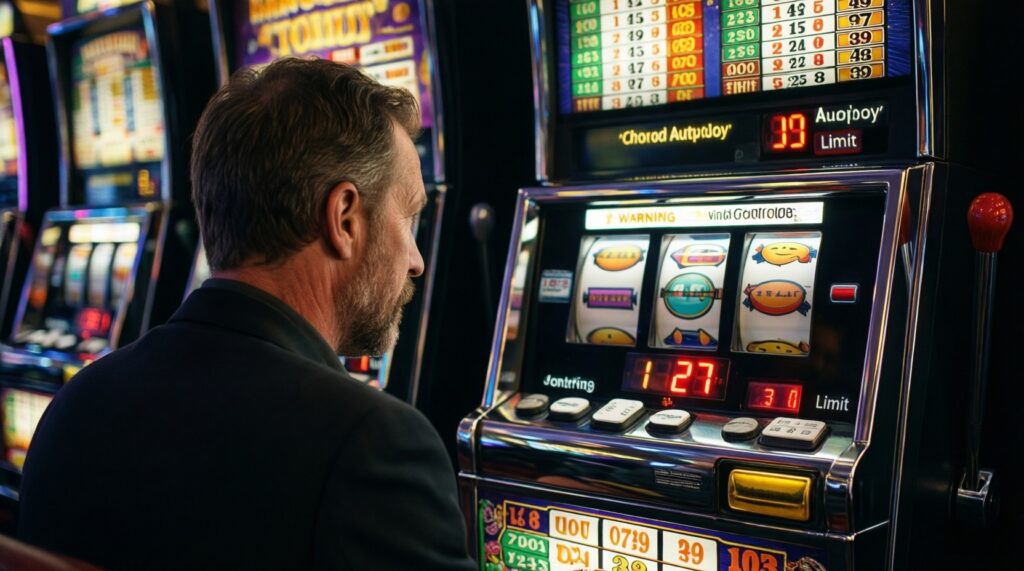
It can be safer than manual rapid-tapping only if you set hard caps, keep the stake fixed, and enforce timed breaks. Without these, autoplay often reduces stop points.
How can I tell if quick spin slots online are harming my decision quality?
Watch for plan deviations: extending sessions, changing bet size, disabling confirmations, or delaying stops after a trigger. If deviations rise in fast mode, decision quality is degrading.
What's the simplest way to measure how autoplay affects gambling losses for me?
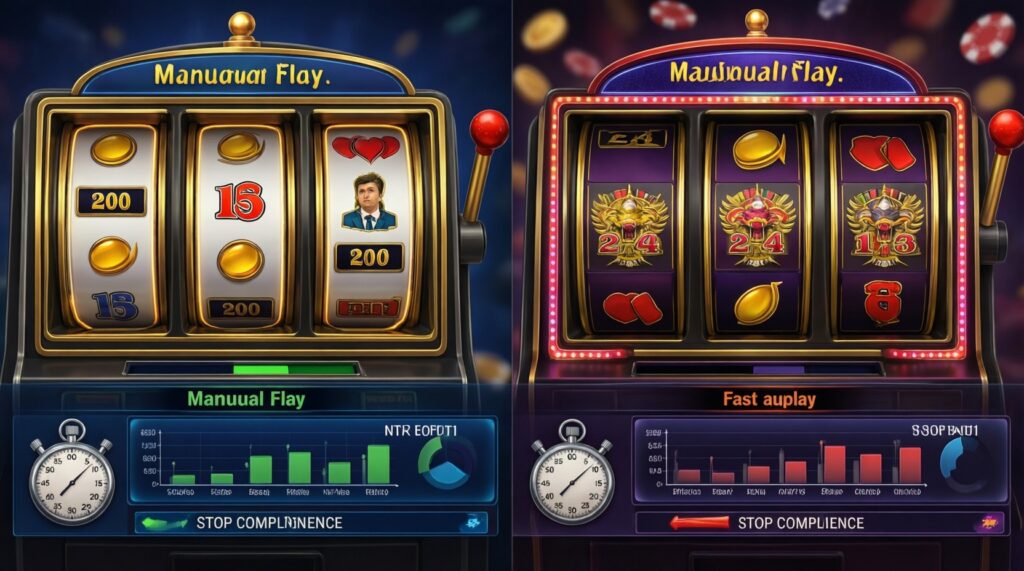
Run two sessions with the same game and stake: one normal/manual and one fast autoplay. Compare spins per minute and net change per minute, and record stop compliance.
Should I ever try to speed up slot spins to clear bonuses faster?
Only if you can keep strict limits and avoid chasing behavior; speed increases the rate at which you cycle money and may make overspending more likely. If you notice urgency or rationalizing, stop.