

To make responsible play limits actually work, define three linked controls: loss limits (money), time limits (session duration), and stop rules (automatic triggers that pause or block play). Implement them as clear, measurable thresholds, enforce them consistently across devices, and monitor override attempts and repeated hits. Use responsible gambling tools plus self-exclusion escalation for persistent risk patterns.
Core Responsible-Play Metrics Overview
- Loss-limit hit rate: how often players reach a loss cap per day/week/month.
- Time-limit hit rate: how often sessions reach online casino time limits (and how quickly).
- Stop-rule activation rate: frequency of stop loss rules gambling triggers (cool-off, forced log-out, hard block).
- Limit adoption: share of users who set limits proactively vs. only after prompts.
- Override/avoidance signals: attempts to raise limits, switch products, or create longer sessions after limits.
- Escalation outcomes: transitions from limits to gambling self exclusion options and re-entry behavior.
Defining Loss Limits: Principles and Calculation Methods
- Confirm the unit: net loss (stakes minus wins) in a defined period.
- Choose periods: session, daily, weekly, monthly (avoid only session-level).
- Decide enforcement: hard stop vs. cool-off vs. reduced functionality.
- Align with product scope: casino, sports, and cross-wallet consistency.
- Document user messaging and what happens at threshold.
What it is: A loss limit is the maximum net loss allowed within a period. If you want users to set gambling loss limits that protect them, calculate loss consistently (including bonus funds rules) and apply the same definition everywhere the player can spend.
Simple calculation method (net loss): Track net loss = total stakes − total winnings for the chosen period. When net loss reaches the cap, apply the configured stop action immediately and keep it active until the period resets (or until a longer cool-off expires).
Who it fits: Most real-money players, especially those with repeated high-velocity play, high deposit frequency, or large swings.
When not to rely on it (short): Do not depend on loss limits alone if the player shows repeated rapid re-deposits, frequent limit increase attempts, or multi-product switching to bypass caps; pair with time limits and escalation to self-exclusion.
Comparing limit types and what to measure
| Control type | What it limits | Pros | Common failure mode | Primary metrics to track |
|---|---|---|---|---|
| Loss limit | Net loss per period | Direct financial protection; easy to explain | Players switch products/wallets or increase limits | Hit rate; limit increase attempts; repeat hits within 30 days |
| Time limit | Session duration / total time per period | Targets fatigue and chasing; complements money caps | Multiple short sessions to reach same total time | Time-limit hit rate; average session length; sessions/day distribution |
| Stop rule | Behavioral triggers (e.g., rapid losses) | Adaptive; catches harm patterns early | Too noisy (false positives) or too lax (misses risk) | Activation rate; re-activation within 7/30 days; post-trigger spend reduction |
| Self-exclusion | Access (temporary or long-term) | Strongest protection; prevents continued play | Re-registration or channel hopping if enforcement is weak | Uptake; attempted access during exclusion; reinstatement outcomes |
Designing Time Limits Aligned with Player Behavior
- Access to session telemetry: login, gameplay start/stop, and inactivity timeouts.
- A single definition of "active time" (exclude idle periods consistently).
- Cross-device identity resolution (app/web) so limits cannot be bypassed.
- Rules engine or feature flag system to enforce online casino time limits.
- Notification channels: in-product banners + push/email (where permitted).
- Audit logs for limits set/changed/hit and all system actions taken.
Design choice that matters most: measure active play time (time between bets/spins with a strict inactivity cutoff) and enforce limits at the platform level, not inside a single game.
Implementation guidance: Provide at least session and daily caps, let players pre-commit, and show remaining time continuously once they enter the last portion of their allowance (for example: "time remaining in this session"). Keep the same behavior whether the user is winning or losing to avoid "just one more" loops.
Effective Stop Rules: Triggers, Escalation, and Exceptions

- Define the exact trigger inputs (loss velocity, deposit velocity, session duration, limit hits).
- Choose the stop actions (nudge, forced break, hard lock) and their durations.
- Decide escalation logic (repeat triggers lead to stronger actions).
- Write exception rules (fraud/chargebacks, admin reversals) with strict controls.
- Prepare player-facing messages and support playbooks.
-
Pick 3-5 triggers you can measure reliably
Start with simple, auditable signals: repeated loss-limit hits, unusually long sessions, rapid re-deposits after losses, and frequent attempts to raise limits. Avoid opaque scoring at launch; it is harder to explain and harder to test.
- Use platform-wide events (wallet + gameplay), not only game-level logs.
- Prefer triggers that are hard to spoof (e.g., net loss over time).
-
Attach a clear action to each trigger
Map each trigger to one of: (a) warning + responsible gambling tools link, (b) mandatory break (cool-off), or (c) hard stop that blocks wagering. Keep actions consistent and immediate at the moment of threshold.
- Warning: on-screen nudge and "review limits" prompt.
- Cool-off: forced log-out or wagering lock for a set duration.
- Hard stop: block deposits and wagering until period reset or longer lock.
-
Implement escalation based on repeat behavior
If the same stop rule fires again within a short window, automatically increase the strength or duration. This is where stop loss rules gambling become protective rather than cosmetic.
- Example pattern: first hit = warning, second = cool-off, third = hard stop.
- After repeated hard stops, surface gambling self exclusion options prominently.
-
Lock down limit increases and stop-rule overrides
Allow increases only with friction: delayed activation and clear confirmation. If you allow immediate increases, you undermine the system and train users to bypass it.
- Apply a waiting period before higher limits take effect.
- Keep reductions immediate (safer direction).
- Log every attempt and outcome for audits.
-
Define exceptions without creating loopholes
Exceptions should be rare and controlled: system errors, voided bets, or regulatory corrections. Never use "VIP discretion" as an exception to responsible-play enforcement.
- Require admin reason codes and immutable audit logs.
- Run weekly reviews of all exception usage.
Integrating Limits into Player Journeys and UX Signals
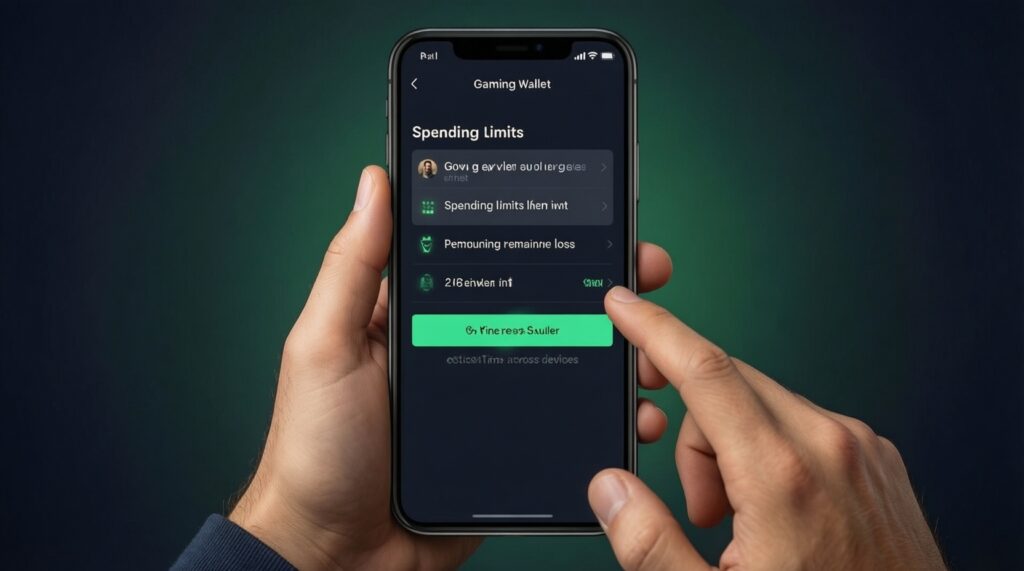
- Place limit setup during onboarding and first deposit, not only in settings.
- Display remaining loss/time in-wallet and in-game consistently.
- Use plain language: what is limited, until when, and what happens at the cap.
- Ensure limits apply across all products and devices.
- Prepare support scripts for "why was I stopped?" cases.
Verification checklist for a working experience
- Players can set loss limits and online casino time limits before high-intensity play begins.
- Limits are visible during play (remaining amount/time), not hidden in a submenu.
- When a limit is hit, the system enforces immediately and consistently (no "one last bet").
- Deposit, wager, and game-launch paths are blocked according to the configured stop action.
- Limit reductions apply instantly; increases take effect only after a delay.
- Users see clear pathways to cool-off and gambling self exclusion options at the moment of risk.
- Support can view a single timeline of triggers, limits set/changed, and enforcement actions.
- Cross-device tests confirm no bypass via web/app switching or product switching.
Monitoring, Measurement and Reporting Metrics
- Define event names and a single source of truth for session and wallet calculations.
- Create dashboards for hits, repeats, and avoidance attempts (not just adoption).
- Segment by product, channel, and tenure to catch localized failures.
- Review false positives and missed cases with support and safer gambling teams.
- Set alerting for spikes in limit hits and sudden override attempts.
Common mistakes that make limits ineffective
- Counting "loss" differently across products (casino vs. sports vs. bonus play), causing confusion and loopholes.
- Measuring time as "logged in" instead of active play, making online casino time limits either too strict or too easy to bypass.
- Allowing instant limit increases, which effectively cancels set gambling loss limits during the highest-risk moment.
- Hiding responsible gambling tools deep in settings, reducing pre-commitment and increasing crisis-only usage.
- Over-triggering stop rules (noisy signals), which leads to players ignoring warnings and pressuring support to override.
- Under-triggering stop rules (too lenient thresholds), turning controls into a compliance checkbox.
- No tracking of avoidance behavior (product switching, rapid re-deposits, repeated limit increase attempts).
- Missing audit trails, making it impossible to prove enforcement and investigate disputes.
Testing, Optimization and Compliance Validation
- Write test cases for each limit type and each enforcement action.
- Run cross-device and cross-product bypass tests.
- Validate edge cases: voids, partial settlements, bonus conversions.
- Confirm player messaging matches actual behavior at the threshold.
Alternatives when standard limits are not enough
- Cooling-off periods (mandatory breaks) when players repeatedly hit caps but are not ready for self-exclusion; use as an intermediate step before stronger measures.
- Deposit limits and spending caps when net-loss is hard to calculate in real time for certain products; still keep loss limits where feasible to prevent "chasing" dynamics.
- Reality checks and periodic summaries when early-stage users resist hard blocks; pair with prominent pathways to set limits and escalate if behavior worsens.
- Graduated access controls (reduced features after triggers) when a full block creates excessive support load; ensure the restriction is meaningful, time-bound, and logged.
Common Implementation Concerns and Practical Answers
Should loss limits be net loss or total stakes?
Use net loss for clearer protection and less confusion. If you also track total stakes, treat it as an additional metric, not a replacement.
How do we prevent players from bypassing limits by switching devices?

Enforce limits at the account and wallet level with consistent identity resolution across app and web. Validate with cross-device test scripts before rollout.
Can players increase limits immediately after setting them?
Limit reductions should apply immediately; increases should be delayed to reduce impulsive escalation. Log all increase attempts as an avoidance signal.
What is the minimum set of responsible gambling tools we should offer?
At minimum: loss limits, online casino time limits, cool-off, and clear gambling self exclusion options. Add reality checks and spend summaries as supportive layers.
How do we choose stop-rule triggers without a complex risk model?
Start with auditable triggers you already measure: repeated limit hits, unusually long active sessions, and rapid re-deposits after losses. Tune thresholds only after you can measure false positives and repeats.
What should happen exactly when a limit is hit?
Enforce the configured action immediately and show a plain explanation plus next steps (review limits, cool-off, self-exclusion). Avoid "one last bet" flows that undermine credibility.