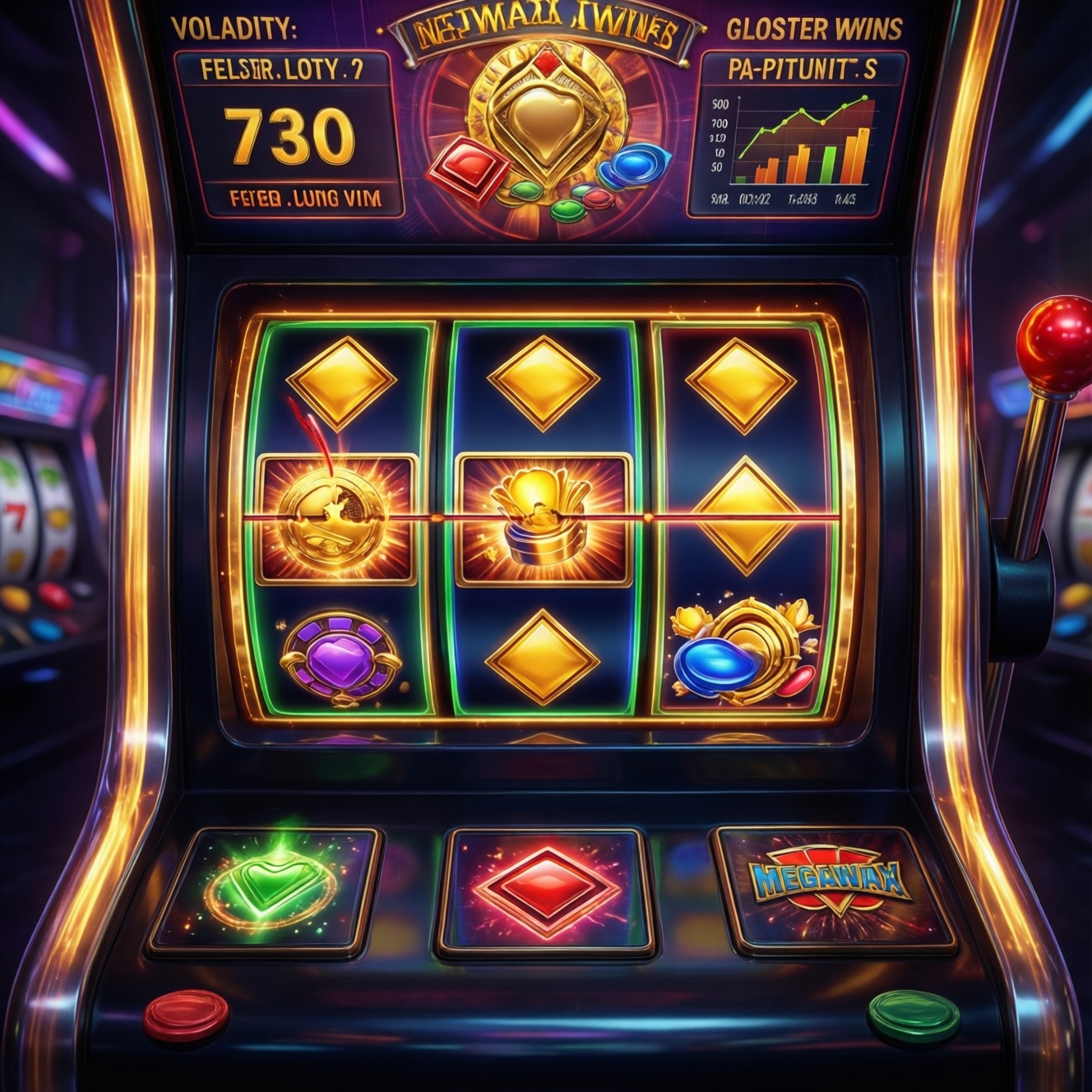

Near misses feel real because your brain treats them as informative feedback (almost-success) even when probability says they do not change the odds of the next trial. In psychology, near misses amplify attention, emotion, and motivation; in probability, they are usually just outcomes in the same distribution. The gap between these frames creates a convincing illusion.
Core concepts explaining why near misses feel convincing
- Near misses are processed as progress signals, not as neutral outcomes.
- Counterfactual thinking (it could have happened) makes the alternative feel concrete.
- Similarity to a win (spatial/temporal closeness) increases perceived meaning.
- Selective memory favors vivid almost-wins over ordinary losses.
- Misread randomness leads people to expect patterns after close calls.
Defining near misses: scope, edge cases, and illustrative examples
A near miss is an outcome that is objectively a failure but is perceived as close to success because it shares salient features with the winning outcome (position, timing, or partial completion). The near miss effect psychology focuses on how that perceived closeness changes feelings and behavior.
In many tasks, near misses contain no new information about future chances (e.g., a roulette ball landing next to your number). In other tasks, they can be informative when they reveal a controllable skill gap (e.g., missing a basketball shot by a small margin may point to technique).
Edge cases matter: "close" can be engineered by design (slot-machine reel layouts) or inferred by the mind (you notice one matching symbol and treat it as momentum). In near miss gambling psychology, the near miss is typically non-diagnostic for the next spin, yet it still boosts engagement.
Illustrative examples:
- Gambling: two jackpot symbols appear, third stops one position above; it feels like you "almost" won.
- Work: you were runner-up for a promotion; it feels like a sign you are "next."
- Health: symptoms almost match a feared diagnosis; the closeness drives worry even before evidence.
- Investing: you nearly bought a stock before it surged; the counterfactual feels like a missed certainty.
Cognitive biases that make near misses seem meaningful
Mechanism in one line: near misses hijack inference-your mind upgrades an emotionally vivid "almost" into a predictive signal.
- Counterfactual thinking: the brain simulates the minimal change needed to turn the loss into a win, making the win feel reachable.
- Availability bias: near misses are memorable; memory accessibility gets mistaken for likelihood.
- Representativeness heuristic: an outcome that "looks like" a win is treated as belonging to the same category as wins.
- Illusion of control: you overestimate how much your actions could have influenced a random process.
- Gambler's fallacy: you expect balancing behavior in independent events ("after so many close calls, a win is due").
- Confirmation bias: you interpret near misses as evidence for a prior belief (lucky streaks, destiny, being undervalued).
Probability fundamentals: objective odds versus perceived likelihood
Definition: in probability, a near miss is usually just another losing outcome; unless the process updates information, the objective odds of the next trial remain the same.
Where people most often confuse "close" with "more likely next time":
- Slot machines and reels: physical proximity of symbols creates perceived proximity of probability, even when the next spin is independent.
- Lotteries and number draws: matching some digits feels like you were "near," but partial matches rarely imply anything about the next draw.
- Sports betting: losing by one point feels predictive; unless it reflects stable team strength not already priced in, it may not improve future edge.
- Sales pipelines: "almost closed" deals can be informative if they reveal process bottlenecks, but not if "almost" is just hope without diagnostic signals.
- Exams/interviews: narrowly missing a cutoff can be meaningful when the cutoff is noisy and your true skill is near the threshold; it's less meaningful when selection is highly stochastic.
Practical takeaway: if you cannot name what new information the near miss revealed (about skill, constraints, or hidden state), treat it as emotionally loud but statistically quiet. If you want to formalize this intuition, a probability and statistics course online typically covers independence, conditional probability, and Bayesian updating-the exact tools near misses tempt you to misuse.
Emotional and motivational dynamics triggered by near misses

Definition: near misses trigger a blended state-frustration plus approach motivation-because the brain encodes closeness as "unfinished progress," not as "finished failure."
Potential upsides (when the task is skill-based)

- Learning signal: a close miss can highlight a specific adjustment (aim, timing, wording).
- Persistence: feeling close can increase effort when effort causally improves outcomes.
- Calibration: repeated near misses with clear feedback can help you estimate your true level.
Common downsides (when the task is luck-based or weakly controllable)
- Chasing losses: the near miss feels like momentum, leading to extra bets or extra risk.
- Overconfidence: you infer hidden skill or luck ("I'm getting better at random").
- Attention trap: near misses monopolize focus and distort your memory of overall results.
- Emotional mislabeling: arousal is misread as evidence (excitement becomes "signal").
Empirical evidence: key experiments, measurements, and limitations
What the research area generally tests: whether near misses change arousal, persistence, and perceived control compared with clear losses, even when outcomes are random.
- Myth: "A near miss increases the chance of winning next." Reality: in independent random systems, it does not; it mainly changes perception and behavior.
- Common measurement pitfall: using self-reported "feeling close" as if it were an accuracy metric; it often tracks emotion more than predictive validity.
- Design limitation: lab tasks can simplify real gambling contexts (money size, social cues, time pressure), which affects generalization.
- Confound risk: near misses can increase time-on-task; higher exposure alone can raise total wins, creating the illusion that near misses "worked."
- Boundary condition: when skill truly matters and feedback is actionable, near misses can be informative; when randomness dominates, they are mostly motivational triggers.
Applied responses: how to adjust decisions and communication around near misses
Definition: an applied response is a repeatable way to decide whether a near miss should update your beliefs (probability) or only your feelings (psychology).
A short verification algorithm (Psychology vs. Probability)
- Classify the process: Is the next attempt independent (random draw/spin) or dependent on your controllable actions (skill task)?
- Identify new information: What did the near miss reveal that you did not know before (technique error, constraint, hidden rule, market feedback)? If you cannot name it, assume "no update."
- Check the update rule: If independent, do not change the probability for the next trial. If dependent, update only the part linked to a controllable change.
- Separate affect from inference: Write two lines: (a) what you feel, (b) what you know. Only (b) can justify changing stakes, effort, or strategy.
- Set a guardrail: Pre-commit to a limit (time, money, attempts) before the next trial, because near misses increase pursuit.
Mini-case (Thailand context): near-miss messaging in product teams
In growth experiments, teams often label a metric as "nearly significant" and then escalate spend. Use the algorithm: if the experiment was underpowered or noisy, "near" is not evidence; it is a prompt to improve measurement, not to assume uplift.
- Communication heuristic: replace "we almost hit the target" with "we observed X, uncertainty Y, next test changes Z."
- Skill-based exception: if logs show a specific funnel step failing (e.g., OTP delivery), the near miss is diagnostic-fixing that step is a rational update.
Practical training options (for intermediate learners)
- If you want structured practice spotting these errors, look for a cognitive bias training course that covers gambler's fallacy, illusion of control, and debiasing checklists.
- To connect incentives and decision framing, a behavioral economics online course is useful for understanding why near misses are used in product design and marketing.
- To formalize "should I update?" decisions, revisit conditional probability and independence in a probability and statistics course online.
Common doubts and concise clarifications about near misses
Does a near miss mean I am improving?
Only in skill-based tasks with actionable feedback. In random systems, "close" is not progress; it is a perception created by outcome similarity.
Why do near misses feel more motivating than normal losses?
They trigger counterfactual simulations and approach motivation: the brain represents the win as reachable with a small change. That arousal can be misread as evidence.
Are near misses intentionally designed in gambling products?
Many interfaces highlight "almost" outcomes because they are attention-grabbing. Regardless of intent, the key point in near miss gambling psychology is that the near miss often remains non-diagnostic.
How do I know whether the odds changed after a near miss?
Ask whether the next event is independent and whether you learned new information that changes the model. If neither is true, the odds did not change.
Is the near miss effect psychology the same as gambler's fallacy?
No. The near miss effect is about how closeness changes feelings and persistence; gambler's fallacy is a mistaken belief about how random sequences should balance out.
Can near misses be useful in coaching or education?

Yes, if "near" points to a specific correction and the learner can control the next attempt. Without a clear correction, near misses mostly fuel persistence without improvement.