
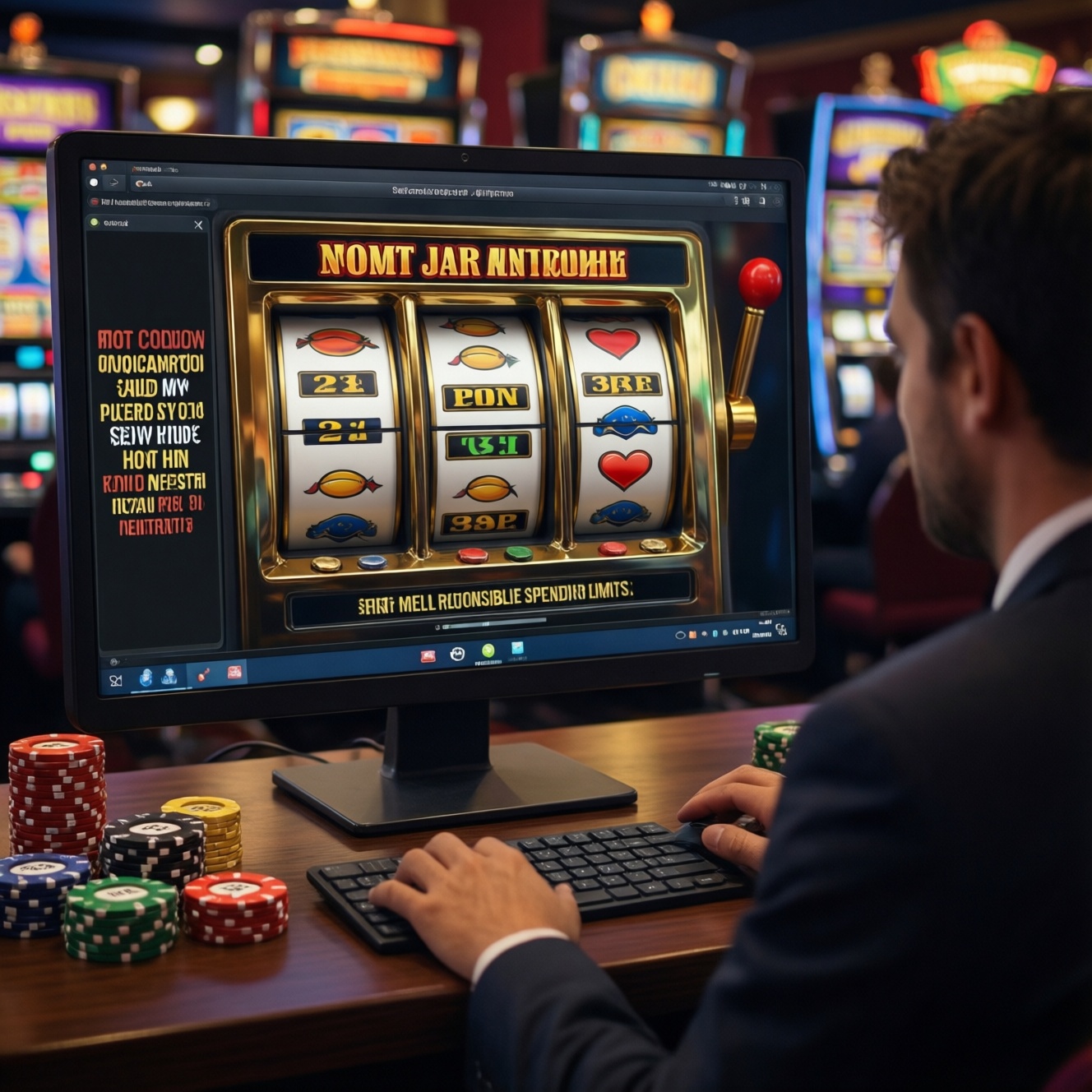
"Hot" and "cold" slots are a myth because each spin is generated independently by a random number generator (RNG); previous outcomes do not make a win more or less likely on the next spin. What you can control is safer play: choose reputable games, set limits, and avoid pattern-chasing-especially when playing real money slots online.
Essential principles of slot randomness
- Each spin is independent; past wins or losses do not change the next result.
- An RNG produces outcomes continuously; the moment you press spin simply "samples" that stream.
- Paylines and symbols define how outcomes are paid, not whether outcomes become "due."
- House edge is built into the paytable and rules, not into "hot" or "cold" streaks.
- Short sessions can look streaky; variance can mimic patterns your brain wants to explain.
How slot machines really operate: RNGs, paylines and house edge
Modern online casino slots rely on an RNG that generates unpredictable results. Your tap/click triggers the game to map a random outcome to reel symbols, then the payline rules determine whether that outcome pays. Nothing in this chain requires the machine to "remember" what happened before.
Paylines (or ways) are simply the definition of what combinations count as a win. They shape how often you see small hits versus rarer big hits, but they don't create "momentum." A long losing stretch can happen in any correctly random system, including games marketed as the best online slots.
The house edge comes from the game design (payout structure and rules). That edge does not need "cold mode" to exist; it is present even when you experience a winning run. Takeaway: if a game is fair-random, "temperature" is a story you add after the fact.
Where the 'hot' and 'cold' story came from: cultural and industry roots
- Human pattern detection: people naturally infer causes from clusters (three losses "means" something).
- Visible streaks: slots show near-misses and repeated symbols, making randomness feel intentional.
- Legacy of mechanical machines: older devices felt physical, encouraging beliefs about timing and "cycles."
- Casino folklore: tips spread socially (friends, forums, streamers) faster than math explanations.
- Selective memory: wins after switching machines are remembered; the many neutral switches are forgotten.
- Marketing language: "win big now" messaging nudges urgency, which easily turns into "it's hot."
Psychology in play: the Gambler's Fallacy and related biases
These myths show up most strongly when you're stressed, chasing losses, or trying to impose control on a high-variance game. Typical scenarios include:
- Loss-chasing after a "cold" run: you increase bet size because you feel a win is "due."
- Machine-hopping: you move between online slots casino real money titles after a few dead spins, assuming the next one must pay.
- "Hot streak" escalation: you press bigger bets because you think the game has entered a generous phase.
- Near-miss misread: two matching symbols are treated like the game is warming up, even though it's just a non-winning outcome.
- Confirmation scrolling: you search for "proof" that certain online casino slots are hot today, ignoring randomness.
Takeaway: the Gambler's Fallacy is not "being bad at math"; it's your brain trying to reduce uncertainty by inventing a cause.
Numbers that matter: independence, variance and expected value
A simple way to see independence: if a coin lands tails five times, the next flip is still not "more likely" to be heads just because you feel it should balance out soon. Slots behave similarly: the next spin is not corrected by the last spins.
- What helps you think clearly
- Independence: evaluate decisions as if this spin is the first spin of the day.
- Variance: expect clusters of losses and wins; randomness often looks "lumpy."
- Expected value: the long-run average is set by the game design, not by short-run streaks.
- Hard limits you cannot outplay
- No "due" wins: switching games or waiting does not force a payout to happen.
- Session results are noisy: a short win does not validate a method, and a short loss does not "prove" a game is cold.
- Edge persists: even with perfect discipline, the built-in advantage means outcomes can't be made favorable by pattern rules.
Applied strategy: what players should (and shouldn't) change
- Do change: your risk controls. Set a deposit limit, a loss limit, and a time limit before you open real money slots online.
- Do change: your game-selection hygiene. Use reputable platforms, understand rules/features, and avoid unclear promotions.
- Do change: your staking simplicity. Keep a stable bet size you can afford; treat increases as planned entertainment spend, not recovery.
- Don't change: machines because of "temperature." Machine-hopping is usually a disguised form of chasing patterns.
- Don't use: "casino slots strategies" that claim timing, spin counts, or "warming up" phases. If it relies on previous outcomes to predict the next, it's mainly storytelling.
- Don't confuse: convenience with edge. Autoplay, turbo, and long sessions can make losses arrive faster without improving chances.
Common myths dismantled with evidence and simple demonstrations
Mini-demonstration (thought experiment): imagine a slot where a win happens whenever a hidden number equals 7. Each press generates a new hidden number. If you fail to hit 7 for 30 presses, press 31 is still just "generate a number; check if it's 7." Nothing in that logic changes because you waited, switched, or feel the game is cold.
| Claim you hear | What randomness implies instead | Safer move |
|---|---|---|
| This slot is hot right now | Recent wins can cluster by chance; the next spin is independent | Keep your preset stake; stop on schedule, not on vibes |
| This slot is cold; a win is due | Long losing streaks can occur without any "correction" mechanism | Use a loss limit; take a break rather than raising bets |
| Switch machines to reset luck | Switching changes the game, not the independence of spins | Switch only if you prefer different features or budget fit |
Practical questions and concise clarifications
Can a slot become "hot" after paying out?
No. A payout does not make the next result more likely to be another payout; each spin is independent.
Are online casino slots different from land-based slots regarding "cold streaks"?

Not in the way the myth suggests. Both are designed to produce independent outcomes; streaks can appear in any random system.
Is switching between games a valid way to improve odds?
Switching can change features and volatility, but it does not turn randomness into predictability. Switch for preference and budget control, not temperature.
Do "best online slots" have fewer cold runs?
No guarantee. "Best" usually means popular design or features; it doesn't remove variance or make outcomes smoother in short sessions.
What is one safe rule for online slots casino real money play?

Decide your maximum loss and session length before you start, and stop when either limit is reached-regardless of whether you feel the game is hot or cold.
Do bonuses change whether a slot is hot or cold?
Bonuses change cost and conditions, not the RNG's independence. Always read wagering requirements and time limits before relying on a promotion.