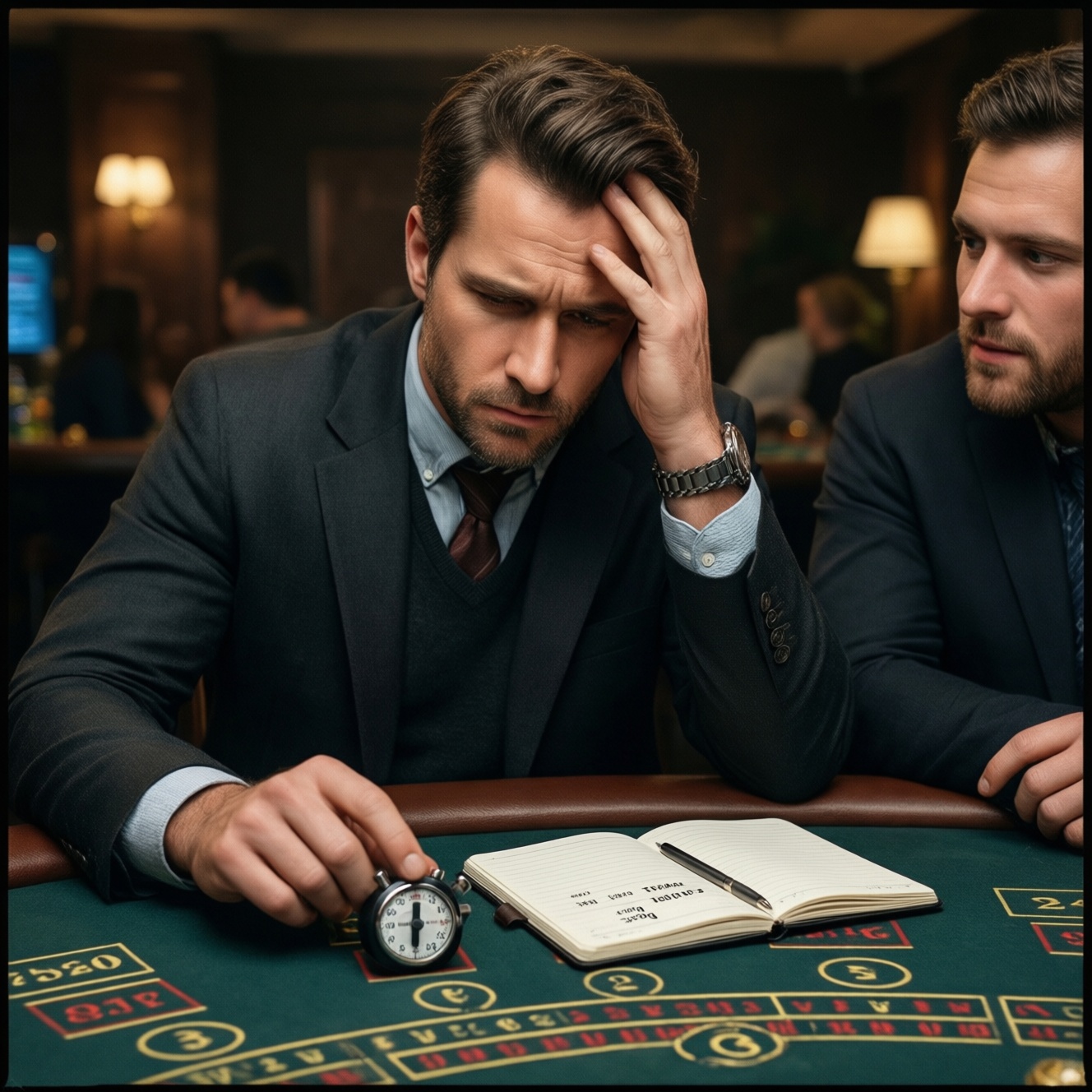

Slot outcomes are random per spin, but players routinely misread patterns, over-trust "streaks," and let emotions drive bet size. จิตวิทยาการเล่นสล็อต mainly shows up as Gambler's Fallacy (expecting a "due" win), chasing losses, and tilt. You can prevent most damage by using pre-set limits, friction (pauses), and a simple decision rule before you spin.
Quick psychological overview
- Seeing "hot" or "cold" streaks is a pattern-detection habit, not evidence of a changing probability.
- Gambler's Fallacy คืออะไร สล็อต in practice: believing a win becomes more likely after many losses, so you keep playing longer.
- Chasing losses often starts as "just one more" and quickly turns into larger bets to recover faster.
- Tilt is usually triggered by time pressure, stress, or a surprise near-miss, not by rational analysis.
- Impulse control improves when decisions are moved before play: budgets, stop rules, and planned breaks.
- Slot UX (sounds, near-misses, fast spins) is built to hold attention and reduce deliberation.
Common myths about slot streaks and randomness
Myth 1: "After many losses, a win is due." On standard slots, each spin is intended to be independent. A long losing run feels meaningful because your brain tracks sequences, but the machine does not "remember" your previous spins.
Myth 2: "If I change the bet, I change my luck." Changing stake can change the size of the outcome, but it does not magically fix a losing streak. The psychological trap is treating bet changes as a control lever for randomness.
Myth 3: "Near-miss means the next one will hit." Near-misses are designed to feel informative, yet they are not a forecast. They mainly increase arousal and keep you engaged.
Practical boundary: you can control session structure (time, budget, stopping rules), not the next spin. If you want a "skill" element, aim it at decisions around play-not at predicting streaks.
Gambler's Fallacy: how probability misjudgments develop
Gambler's Fallacy grows from a mismatch between how randomness looks and how it actually behaves in short sessions. People expect outcomes to "balance out" quickly, so they treat a streak as a signal that the opposite result is imminent.
- Pattern expectation: you believe random sequences should alternate more than they do.
- Selective memory: you recall the times a "due win" happened and forget the times it didn't.
- Story building: you narrate the session ("it's warming up") which makes continuing feel justified.
- Escalation logic: you think increasing bet size is rational because the win feels closer.
- Time distortion: the longer you play, the more sunk-cost pressure you feel ("I've already invested this much time").
- Confirmation loops: you search for "signs" (near-misses, bonus teases) that support staying.
Quick self-check: if your reason to keep spinning is "it must happen soon," you are inside the fallacy-not inside a strategy.
Chasing losses: why players escalate bets
Chasing losses is the decision to keep playing primarily to "get back to even," often by raising stakes or extending the session. If you've ever asked การไล่แพ้สล็อต แก้ยังไง, start by recognizing the common escalation scripts below.
- Recovery sprint: you double the bet after a drop because "one hit will fix it."
- Deadline chase: you continue past your planned stop because the session feels unfinished without a win.
- Bonus fixation: you keep feeding the game because it "owes" you a bonus round.
- Identity defense: you refuse to stop down because it feels like admitting you played badly.
- Borrowed bankroll: you move funds from a different budget category "temporarily," then repeat.
Mini-case: you start with a small budget, hit a losing streak, then raise stakes to speed up recovery. The higher volatility makes each spin feel more urgent, which shortens your decision horizon to "next spin only."
Emotional triggers in slot play: stress, excitement, and tilt
Emotion is not always the enemy-excitement can make entertainment enjoyable. The problem is when emotion becomes your betting algorithm.
What emotions can do well (when contained)
- Excitement: increases engagement and enjoyment when you stay within preset limits.
- Curiosity: keeps you focused on the experience rather than on "getting even."
- Challenge mindset: helps you follow rules you chose in advance (time box, budget box).
Where emotions reliably break decisions
- Stress relief play: using slots to numb stress can make stopping feel like losing relief.
- Anger after losses: narrows thinking and pushes "revenge spins."
- Near-miss arousal: spikes urgency even though nothing improved statistically.
- Social pressure: staying longer to match friends or chat momentum.
- Fatigue: reduces self-control and makes defaults (auto-spin, fast spins) more powerful.
If you're searching for วิธีคุมอารมณ์เวลาเล่นสล็อต, treat "tilt" as a state change that requires a protocol, not willpower.
Concrete techniques for impulse control and bankroll management

Most "discipline failures" are planning failures. Use techniques that reduce in-the-moment choice, because the moment is exactly when bias and arousal peak.
Fast prevention checklist (do this before the first spin)
- Define a hard stop-loss and stop-win: pick amounts that end the session automatically when reached.
- Set a time box: decide the end time and treat it as non-negotiable.
- Pre-commit bet size: choose a stake range and prohibit "recovery jumps."
- Create friction: plan a 60-120 second break every N minutes; stand up, drink water, reset.
- Separate funds: keep the session budget isolated from daily spending.
Typical mistakes to remove immediately
- Myth: "I can think my way out mid-session." In practice, arousal reduces access to your best rules; write them down first.
- Mistake: raising stakes to shorten time to recovery. This usually increases emotional intensity and worsens chasing.
- Mistake: treating "almost bonus" as progress. Near-miss is a feeling cue, not a metric.
- Mistake: extending the session to "end on a win." This trains your brain to require wins to stop.
- Mistake: playing to change mood. If mood repair is the goal, you will resist stopping when the mood dips again.
For เทคนิคเล่นสล็อตออนไลน์อย่างมีสติ, the core idea is simple: make your next decision depend on your rules, not on your last outcome.
How slot design leverages cognitive biases

Slot experiences are optimized for attention, speed, and emotional reinforcement. Features like rapid spin cycles, celebratory feedback for small wins, and near-miss presentation can amplify bias-driven decisions-especially when you are tired or stressed.
Mini-case: A player plans a 20-minute session. After multiple near-misses, they feel "close," shorten breaks, and increase stake "just for a few spins." The design didn't change odds; it changed urgency and focus.
// Simple mindful rule to counter bias-driven escalation
if (last_reason_to_continue in ["due win", "almost hit", "need to get even"]) {
  pause(90_seconds);
  if (limits_reached() || emotion_level_high()) stop_session();
  else resume_with_original_bet_only();
}
Concise answers to typical player concerns
Are slot streaks real signals or just noise?
Streaks can happen naturally in random sequences, but they are not reliable signals that the next spin will change. Treat streaks as entertainment context, not predictive information.
What is the fastest way to stop chasing losses once it starts?
Pause immediately and apply a pre-set stop rule (time or budget). If you don't have one, end the session and create rules before playing again.
How do I know I'm in Gambler's Fallacy thinking?
If your main reason to continue is "a win is due" after losses, that's the hallmark. Replace it with a rule-based reason (remaining budget/time) or stop.
Does increasing my bet improve my chances to recover?
It can change how fast money moves, not whether the next spin is favorable. Larger bets often increase emotional pressure and make you deviate from your plan.
What should I do when near-misses make me feel I'm close?
Label it as a trigger and take a short break. Resume only if you can keep the original stake and still respect the end time.
What's a practical way to control emotions during online slots?
Use planned micro-breaks and a written stop rule, not willpower. If you feel urgency, anger, or "tunnel vision," stop the session rather than negotiate with the feeling.