

Slot machines are primarily games of chance: your actions can manage cost, volatility exposure, and session risk, but they do not steer the next spin's result. Most "skill" claims are really about choosing games, setting limits, and avoiding mistakes-not predicting outcomes. Understanding RNG, RTP, and volatility helps you play smarter without chasing myths.
Myths About Skill in Slot Machines
- "Hot/cold streaks are real signals you can read." Random sequences naturally cluster; patterns don't predict the next spin.
- "Timing the stop button or tapping faster improves odds." The outcome is decided by RNG at spin start (or server-side), not by reflexes.
- "Betting systems can guarantee profit." Progressions change variance and bankroll burn rate, not the game's underlying edge.
- "Experienced players can consistently beat slots." Experience improves selection and discipline, not the RNG outcome.
- "Certain 'best online slots real money' always pay if you play long enough." A higher RTP (when published) affects long-run averages, not short-run certainty.
Common Myths That Overstate Player Skill
Most slots skill myths come from mixing two different ideas: (1) controlling decisions around a slot session (stakes, game choice, time, limits), and (2) controlling spin outcomes (symbols, bonus triggers). Only the first category is meaningfully "skill-like."
When people ask do slot machines require skill, the practical answer is: they require judgment to avoid self-inflicted losses, but they do not reward mechanical skill in the way poker or sports betting might.
Boundary you can rely on: if a tactic claims to change the probability of the next reel result without changing the game's rules, it's almost certainly a misconception. Takeaway: treat "skill" as bankroll and choice management, not prediction.
How Modern Slot Mechanics, RNG and RTP Actually Operate
To evaluate claims about how to win at slot machines, you need the basic mechanics: slots generate outcomes using a random number generator (RNG) mapped to reel stops and pay rules. RTP and volatility describe behavior over many spins, not guarantees in a short session.
- RNG produces independent outcomes; past spins do not influence future ones.
- Reel mapping converts RNG results into symbol positions; "virtual reels" can weight symbols differently than what you see.
- Paylines/ways define how wins are counted; changing bet per line changes cost per spin and win sizing, not "luck."
- RTP (return to player) is a long-run average under stated rules; it does not mean you will get that return in a session.
- Volatility/variance governs how results are distributed (frequent small wins vs rare big hits).
- Bonus features trigger by probability rules; "almost hit" animations do not imply higher future chances.
Takeaway: your "edge" is not created by timing or pattern reading; it comes from selecting rules and risk you can afford.
Legitimate Controls: Decisions That Affect Outcomes and Risk

You cannot pilot the reels, but you can control the conditions under which you play. This is where online slots tips and strategies are actually useful: risk control, not outcome control.
- Game selection (rules you accept): choose volatility level that matches your bankroll and tolerance; avoid extremes if you can't handle long losing stretches.
- Stake sizing: set a base bet that allows a meaningful number of spins without forcing desperate jumps.
- Feature buy / bonus buy decisions (if offered): you're swapping many base spins for fewer, higher-variance events; this changes the risk profile, not the house edge you "beat."
- Session limits: stop-loss and win-cap rules reduce tilt-driven overbetting and time-on-device exposure.
- Promo and wagering awareness: understand wagering requirements before treating a bonus as "extra EV."
Takeaway: real control is about budget, bet structure, and game choice-not forcing wins.
Elements Beyond Your Reach: What the House Always Controls
If a tactic claims to influence any of the items below without changing game rules, it's not a "strategy," it's a story.
- Per-spin probability: the chance of any specific outcome on the next spin.
- When a bonus triggers: you can't "set it up" by near-misses, pauses, or switching bet sizes.
- RNG independence: the game doesn't remember you and doesn't "owe" you a win.
- Payout distribution mechanics: symbol weights, virtual reel configuration, and paytable math.
- Long-run house edge embedded in the rules: you can choose among games, but you cannot rewrite the game's expected return.
- Operational controls: max bet, min bet, feature availability, and (where applicable) jurisdictional configuration.
- Platform constraints: latency, UI behavior, and animations do not change probabilities.
Takeaway: you can choose the battlefield, not control the dice.
Why Players Perceive Skill: Cognitive Biases and Misleading Signals
Slots are designed to feel interactive and "readable." That makes normal randomness feel like something you can master.
- Gambler's fallacy: believing a win is "due" after losses (or that a machine is "hot").
- Illusion of control: stop buttons, tap speed, and ritual behaviors feel causal even when they aren't.
- Selective memory: remembering dramatic wins and forgetting long flat or losing stretches.
- Near-miss effect: "two scatters landed, the third almost did" creates urgency without increasing probability.
- Outcome bias: judging a decision as "skilled" because it happened to win once.
Takeaway: when the interface feels like a skill test, treat it as a warning label, not a clue.
Practical, Evidence-Based Habits That Improve Session Outcomes
These habits won't let you "solve" slots, but they reliably reduce avoidable damage and improve decision quality-especially if you're hunting the best online slots real money options for your risk profile rather than chasing a guaranteed win.
Quick practical tips you can apply today
- Pick your volatility first, theme second: match the game to your bankroll, not to the trailer.
- Fix a base bet and don't ladder up after losses: loss-chasing is the fastest path to busted bankrolls.
- Use a hard stop-loss and a win-cap: precommit while you're calm, then follow it.
- Separate "fun spins" from "bonus buys": treat feature buys as a different product with different risk.
- Audit promos before depositing: wagering requirements can turn a "bonus" into a long, high-variance grind.
Mini-case: a simple session rule-set (pseudo-logic)
Use a rule-set like this to prevent emotional overrides-this is the closest thing to "strategy" that consistently helps.
bankroll = B
base_bet = choose so you can afford many spins comfortably
stop_loss = 0.3 * B   (example: set your own threshold, not a magic number)
win_cap   = 0.2 * B   (example: take profit and leave)

start_balance = B
while playing:
  if current_balance <= start_balance - stop_loss: stop
  if current_balance >= start_balance + win_cap: stop
  keep base_bet constant
  avoid raising bet to "force" a bonus
Takeaway: the only repeatable "win" is leaving on your terms.
Clarifications and Practical Answers
Do slot machines require skill?
No skill changes the RNG outcome, but skill-like discipline helps you control stakes, limits, and game choice so you don't magnify losses.
Is there a reliable way for how to win at slot machines?
There is no reliable method to force wins. The most reliable improvement is controlling bankroll, choosing appropriate volatility, and stopping on pre-set limits.
Are "hot" machines and slots skill myths the same thing?
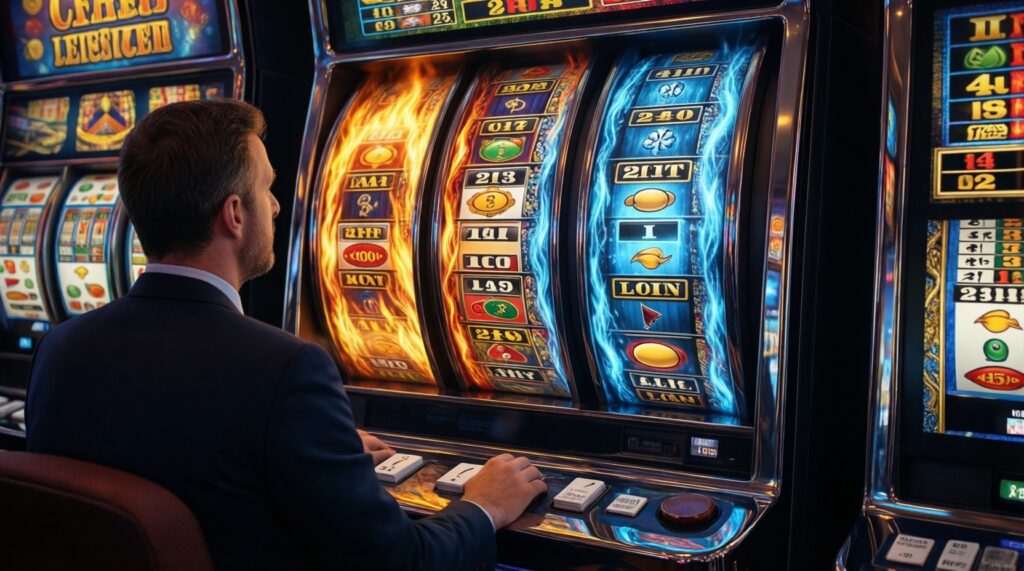
Yes-"hot/cold" beliefs are classic slots skill myths. They mistake normal randomness and clustering for a readable signal.
Do online slots tips and strategies ever matter?
They matter when they describe risk control (limits, stake sizing, promo terms). They don't matter when they claim to predict or influence the next spin.
How do I evaluate the best online slots real money choices?
Start with published rules: volatility, bet range, and whether features like bonus buys fit your risk tolerance. Treat RTP as long-run context, not a session promise.
Does changing bet size increase bonus frequency?
Not in a way you can exploit consistently; it mainly changes your cost per spin and the size of wins/losses. If a game has bet-dependent features, that's a rule difference, not "timing."
Is using autoplay or manual spins better?

Neither changes the RNG. Choose the mode that helps you stick to limits and avoid impulsive bet changes.