
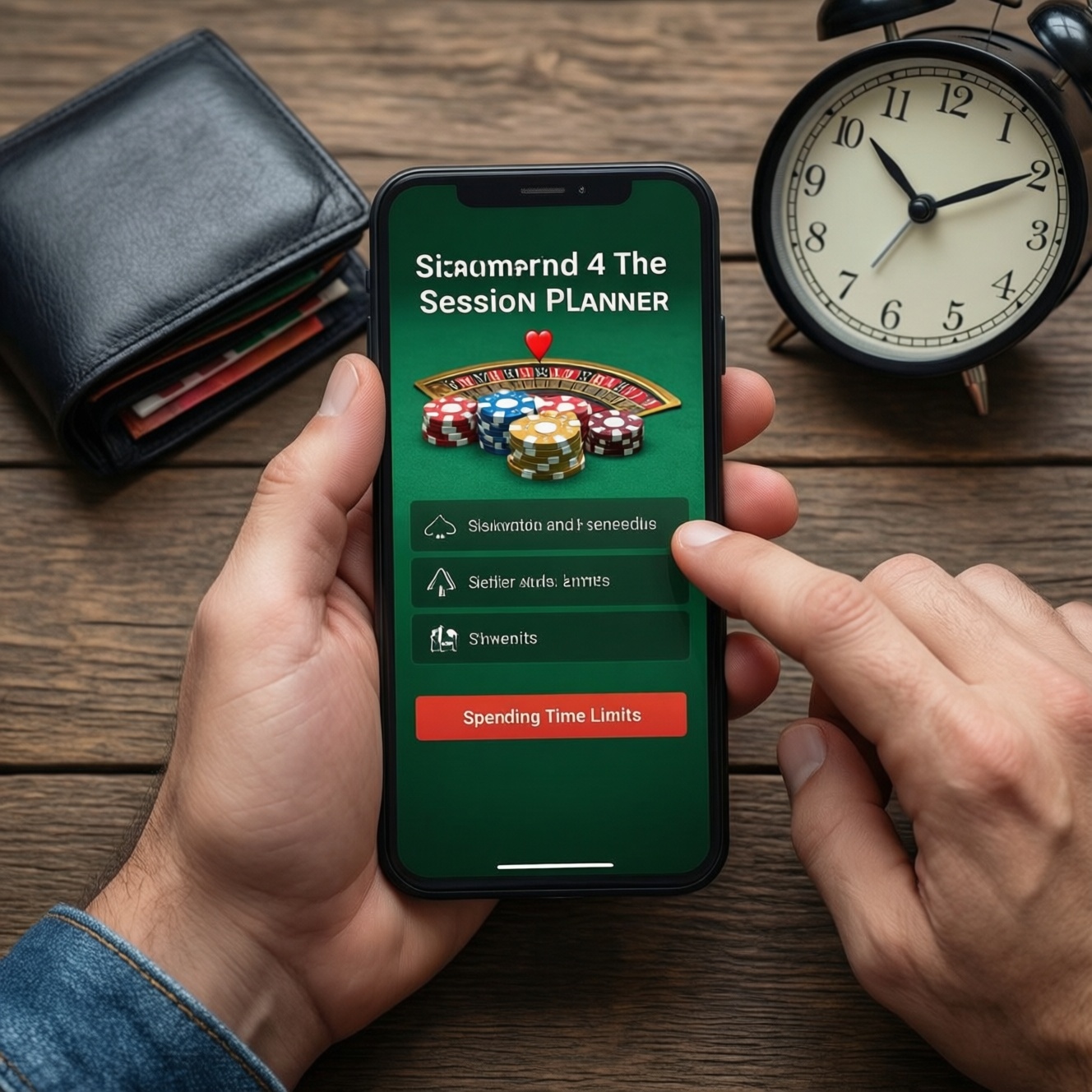
Turn an entertainment budget into controlled, responsible play by converting money and time into hard session rules: a fixed stake wallet, capped deposits, and a strict stop time. Use a session planning gambling app or simple notes to track spend and minutes in real time, then stop automatically when limits trigger-no "chasing," no top-ups.
Essential Principles for Budgeted Play Sessions
- Define the session as paid entertainment: you are buying time and experience, not "winning back" money.
- Separate "session money" from daily funds using a dedicated wallet/account and pre-commitment rules.
- Use platform controls first (deposit limits gambling sites), then back them up with device timers and notifications.
- Track two limits at once: maximum loss (money) and maximum duration (time).
- Predefine stop triggers and a cool-down action (log out, uninstall, hand phone to someone).
- Review each session briefly and tighten rules if you notice drift (more time, bigger stakes, more re-deposits).
Setting Clear Objectives for Play Sessions
Best for: people who already treat gambling as entertainment, can follow rules, and want a repeatable routine for online play (sports, casino, slots) in Thailand.
Not recommended right now: if you are trying to solve money problems, feel unable to stop once you start, hide play from others, or repeatedly break limits. In these cases, skip session planning and move to stronger barriers: account self-exclusion, uninstalling apps, blocking payments, and getting support from trusted people or professional services.
Translating Entertainment Budgets into Session Constraints
Prepare these items before you play (no improvising mid-session):
- Your monthly entertainment budget (one number you can afford to lose without impacting essentials).
- Your session schedule (days/times you allow play) and your maximum session length.
- A tracking method: a notes app, spreadsheet, or a responsible gambling budget tool inside the operator/app.
- Account-level controls: ability to set gambling limits online, including deposit caps and (if available) loss and wager limits.
- Device-level controls: a time limit gambling app, Screen Time/Digital Wellbeing, or a calendar timer with alerts.
- Payment discipline: one capped payment method (or prepaid balance) dedicated to gambling, with no overdraft/credit access.
Mini-template (copy into Notes): "Today I play for __ minutes. Max loss: __. No re-deposit. Stop at: __ (time). If limit hits: log out + close app + do __ for 15 minutes."
Designing Game Flow with Built‑in Risk Controls
- Risk: limits can be bypassed if you re-deposit. Counter: lock deposit limits in advance and remove stored cards.
- Risk: time distortion during continuous games (e.g., slots). Counter: hard stop timers and forced breaks.
- Risk: chasing losses after a "near miss" or a bad streak. Counter: prewritten stop script and no stake increases.
- Risk: switching apps/sites when one limit triggers. Counter: one-session policy + app/site blockers.
-
Choose one session window and one platform. Pick a start time and a fixed stop time; commit to a single operator/site so controls apply consistently. If you use more than one platform, limits become easier to evade.
- Example: "20:30-21:15 only, one site only."
-
Convert your budget into a session bankroll. Move only the session amount into a separate wallet or account; treat it as already spent on entertainment. Your session bankroll must be small enough that losing it doesn't trigger panic or "must win back" thinking.
- Rule: no borrowing, no credit, no transfers during the session.
-
Set platform limits before you place any bet. Use the operator settings to set gambling limits online: deposit limits gambling sites, and if available, loss and wager limits. Set them to match (or be stricter than) your session plan, not your "hope."
- Lock-in: if the platform has a cooling-off period for limit increases, keep it enabled.
-
Set a hard time cap on your device. Configure a time limit gambling app or your phone's native app limiter for the gambling app/site. Add two alerts: one mid-session warning and one "stop now" alarm.
- Example alerts: "10 minutes left" and "Stop-session over."
-
Define stake rules that prevent escalation. Decide your maximum stake size and forbid "progression" systems (raising stakes after losses). Keep bet size flat or use a preset low-to-high ladder that does not change due to emotions.
- Simple rule: "Same stake all session; never double after a loss."
-
Use a live tracker with two counters. Track (a) money in/out and (b) minutes played. A session planning gambling app can do this, but a simple note works if you update it at fixed checkpoints (e.g., every 10 minutes).
- Checkpoint routine: pause → record spend/time → continue only if both limits are safe.
-
Execute stop triggers without negotiation. When any trigger hits (time, max loss, deposit cap), stop immediately: cash out if applicable, log out, close the app, and switch activity for at least 15 minutes.
- Stop script: "Limits hit. I'm done for today."
- Barrier: remove the app shortcut and disable notifications.
Tools and Metrics for Real‑Time Spend Monitoring
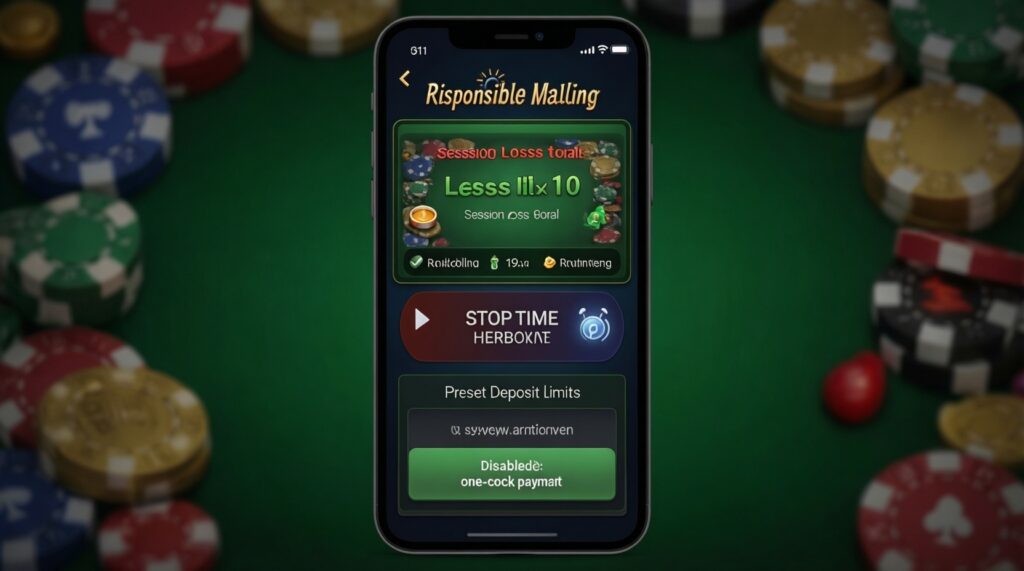
- I can see a single number for current session loss (not "net hope" or "almost won").
- I have a visible stop time and a working alarm that I cannot easily ignore.
- My deposit limits are set before play and match the session bankroll.
- Stored cards/one-click payments are removed; re-deposit would require extra steps.
- I update my tracker on a fixed cadence (e.g., every 10 minutes) without exceptions.
- I know my max stake and have not increased it after a loss.
- I can state, out loud, what ends the session: "time or max loss-whichever comes first."
- If I hit a trigger, I have an exit routine ready (log out → close → alternative activity).
- I do not open a second app/site when the first one blocks deposits or time.
Behavioral Techniques to Encourage Responsible Play
- Starting without writing limits down ("I'll be careful"). Fix: one-sentence plan in Notes before opening the app.
- Chasing losses by extending time or raising stakes. Fix: "no escalation" rule plus hard stop time.
- Re-depositing mid-session after a quick loss. Fix: deposit cap + remove stored payment methods + "no top-up" promise.
- Relying on willpower instead of barriers. Fix: platform limits + device timers + friction (logouts, blockers).
- Playing when dysregulated (stress, anger, intoxication, boredom). Fix: a "not today" checklist and alternate coping activity.
- Using wins to justify bigger risk ("house money"). Fix: treat all funds as real money; keep stakes unchanged.
- Ignoring time cues due to "one more round." Fix: alarms that require you to stop and stand up at the end.
- Switching games to reset emotions after losses. Fix: preselect one game type per session or stop when urge spikes.
Post‑Session Review and Iterative Budget Adjustments

Use one of these options depending on what happened; keep it brief and consistent.
- Tighten limits after drift: If you exceeded time, re-deposited, or felt strong chasing urges, reduce next session duration and lower the deposit/loss cap; add more friction (blockers, removed cards).
- Stabilize with fixed scheduling: If sessions spread across the week, restrict play to preset days/times and keep a single session per day maximum.
- Switch to "cash-only equivalent" funding: If digital deposits make spending too easy, use a prepaid balance or a separate account with a strict cap and no instant transfers.
- Escalate to stronger protection: If you repeatedly break rules, use self-exclusion and ask someone you trust to help with accountability and payment access.
Practical Answers to Common Budgeted‑Play Challenges
How do I set gambling limits online if the site's tools are confusing?
Look for "Responsible Gambling," "Limits," or "Safer Gambling" in account settings. Set deposit limits first, then add loss/time limits if available; if not available, enforce time with a phone timer and enforce deposits with payment friction.
Are deposit limits gambling sites enough on their own?
No-deposit caps stop adding money, but they don't stop time or chasing behavior. Pair deposit limits with a hard stop time and a written "no re-deposit, no escalation" rule.
What's the simplest responsible gambling budget tool if I don't want another app?
A Notes template plus two alarms is enough: one for midpoint and one for stop time. Update a single line: "Minutes played / Loss so far / Limit remaining."
How should a session planning gambling app be used without becoming another distraction?
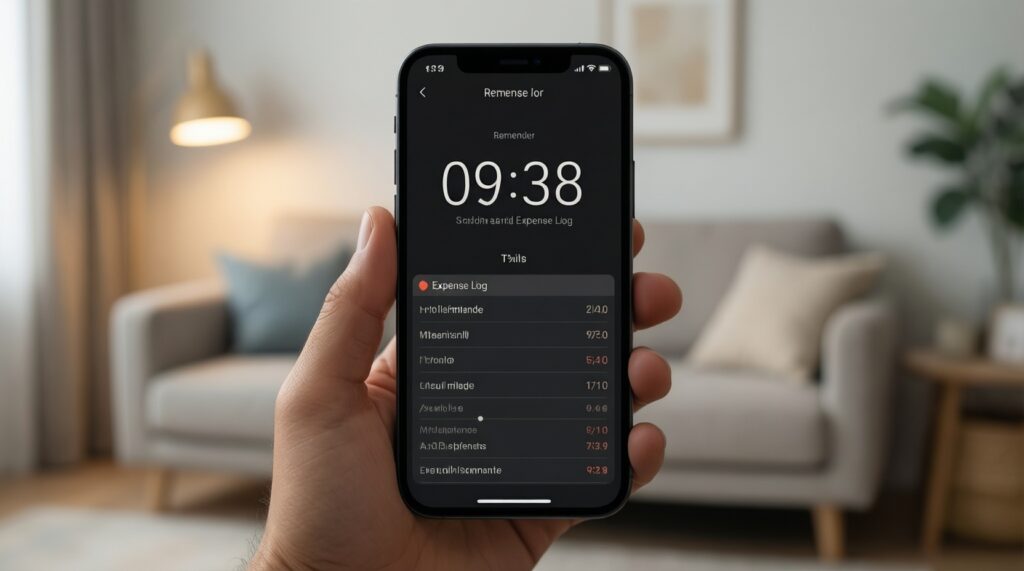
Use it only for timers, limit reminders, and a quick spend log-no browsing stats or "performance" views. Check it at fixed checkpoints, not continuously.
Which time limit gambling app approach works best?
Use the built-in iOS Screen Time or Android Digital Wellbeing where possible, because it's harder to bypass. Add a separate alarm as a backup in case the limiter fails.
What do I do if I hit my limit but feel a strong urge to keep playing?
Run a preplanned exit routine: log out, close the app, leave your phone out of reach, and do a 15-minute alternative activity. Do not negotiate for "one more bet"-that's the moment the plan is designed to stop.