

Two slot games can share the same RTP yet feel radically different because RTP is a long-run average, while volatility and feature architecture control how wins are distributed in real sessions. High volatility concentrates returns into rare big hits; feature-heavy designs shift payout into bonuses. The result: different hit frequency, bankroll swings, and perceived "fairness" despite identical RTP.
Myths First: Why Equal RTP Does Not Ensure Equal Play
- Myth: Same RTP means same "chance to win." Reality: RTP ignores when returns arrive; volatility governs timing and streakiness.
- Myth: More features automatically means "bonus breaks easily." Reality: Feature count is not a probability; trigger rates and bonus payout splits matter.
- Myth: A game that pays small wins often is "better." Reality: Higher hit frequency can mask lower average win size, changing bankroll stress.
- Myth: One "good" session proves the game is loose. Reality: Short sessions are dominated by variance, not RTP.
- Myth: If RTP is high, it must be easy to profit. Reality: Expected value does not remove risk; volatility can still produce long losing runs.
How Two Games with the Same RTP Yield Different Session Dynamics
Myth: "สล็อต RTP เท่ากันแต่แตกต่างกัน เพราะอะไร" is just marketing. Reality: RTP is an endpoint; distribution is the experience.
Definition boundary: RTP describes the long-run expected return per unit wager across an enormous number of spins. It does not specify hit rate, average win size, bonus frequency, or how much RTP is locked behind features.
Two games with equal RTP can therefore diverge on: (1) hit frequency (how often any win occurs), (2) win-size profile (small vs medium vs rare large), and (3) payout routing (base game vs bonus/feature payout). These differences shape session volatility, emotional swings, and bankroll survival.
| Design lever (same RTP) | Game A (steadier feel) | Game B (swingy feel) | Practical consequence |
|---|---|---|---|
| Hit frequency | More frequent small hits | Fewer hits overall | A feels "active"; B feels "dead" between spikes |
| Win-size distribution | More mid-sized wins | Rare large wins | B creates bigger bankroll cliffs and recoveries |
| RTP split | More RTP in base | More RTP in bonuses | B depends on feature access; droughts feel harsher |
| Bonus gating | Easier entry, smaller bonus EV | Harder entry, higher bonus EV | B triggers fewer but more dramatic events |
Volatility Explained: Measurement, Profiles, and Player Experience

Myth: "Volatility" is a vague label. Reality: It's the practical expression of variance in outcomes per bet, visible through observable session behavior even without internal math.
For intermediate analysis, treat volatility as a combination of measurable proxies you can observe or approximate:
- Hit frequency (HF): how many spins pay anything; higher HF usually smooths the ride.
- Average win size (AWS) conditional on a hit: if AWS is high but HF is low, swings intensify.
- Win-size dispersion: whether most wins cluster near bet size or include long-tail outcomes.
- Bonus trigger rate: how often special modes activate; low trigger rate increases "drought" perception.
- RTP allocation: how much expected return sits in base vs features; feature-heavy allocation increases volatility if features are infrequent.
- Loss-streak length tendency: practical indicator of bankroll pressure for a given bet size.
When players ask "เกมสล็อตความผันผวนสูง vs ความผันผวนต่ำ ต่างกันอย่างไร", the actionable answer is: high volatility compresses value into fewer spins (bigger spikes, deeper drawdowns), while low volatility spreads value across many small outcomes (more stable but often less dramatic peaks).
Feature Architecture: Bonus Triggers, Hit Frequency and Reward Distribution
Myth: "More features = more ways to win." Reality: More features often means more ways to reallocate RTP, not necessarily increase it.
Typical scenarios where feature structure becomes the main driver of perceived performance (even at equal RTP):
- Bonus-heavy RTP routing: base game looks dry because expected return is concentrated in free spins/hold-and-win modes.
- Layered triggers: e.g., "collect X symbols, then upgrade," which reduces apparent bonus frequency even if bonus value is high.
- Persistent meters: progress bars smooth engagement but can hide that value arrives in discrete jumps.
- Volatility multipliers inside features: a feature that sometimes pays tiny and sometimes enormous increases dispersion more than the trigger rate suggests.
- Near-miss design: frequent "almost bonus" outcomes raise perceived opportunity without changing expected return.
If you're searching "เกมสล็อตฟีเจอร์เยอะ โบนัสแตกง่าย แนะนำ", translate that into two questions: (1) is bonus access frequent (trigger rate), and (2) is bonus payout distribution tight or long-tailed? "Easy bonus" usually means frequent triggers, not necessarily higher profit.
Controlled Simulation: Methodology and Comparative Results
Myth: You need developer-grade tooling to compare two equal-RTP games. Reality: You can run a controlled, limited-resource simulation that answers the session-level question: "Which game will feel harsher on my bankroll at the same bet size?"
What a solid (but practical) methodology looks like
- Fix the stake and rules: same bet size, same number of spins per trial, no bet switching.
- Run multiple trials: repeat "session blocks" (e.g., blocks of a few hundred to a few thousand spins) rather than judging a single run.
- Track session metrics: ending balance change, max drawdown, longest losing streak proxy, bonus count, and largest single win.
- Separate base vs feature contribution: log wins that occur in bonuses vs base (even manually) to see RTP routing.
- Compare distributions, not averages: two games can share similar mean return while having very different downside tails.
Limits, pitfalls, and low-budget alternatives
- Limitation: Without massive spin counts, your measured "RTP" will wander. Workaround: focus on drawdown and streak metrics for experience comparison.
- Limitation: You may not know true HF/trigger rates. Workaround: count observed hits and bonuses over consistent spin blocks.
- Low-resource option: use a spreadsheet tally (spin index, win amount, bonus flag) for a few structured sessions per game.
- Low-resource option: screen-record sessions and later annotate bonus triggers and big-win spikes; pattern clarity often emerges quickly.
- Pitfall: switching bet sizes mid-test invalidates comparisons. Fix: lock stake; if you must change, restart the experiment.
Behavioral Outcomes: Bankroll Stress, Chasing, and Retention Effects

Myth: "It's just math, behavior doesn't matter." Reality: volatility and feature cadence systematically push players into predictable mistakes.
- Bankroll overbetting: high-volatility games punish stakes that ignore drawdown depth; equal RTP doesn't protect you from ruin risk.
- Chasing bonuses: feature-heavy routing increases the urge to "stay until the feature," turning variance into extended exposure.
- False calibration from frequent micro-wins: low-volatility, high-HF games can feel safe, encouraging longer sessions that still drift negative over time.
- Recency bias: a single bonus spike convinces players a game is "hot," despite unchanged probabilities.
- Misreading near-misses: repeated "almost" patterns can inflate perceived bonus probability, driving stake escalation.
Practical takeaway for "วิธีเลือกเกมสล็อตจาก RTP และความผันผวน": treat RTP as a baseline filter, then choose volatility and feature structure based on your bankroll tolerance and the session length you actually play.
Operational Implications: Balancing Game Design, Compliance and Fairness
Myth: Designers can "fix" player perception by raising RTP. Reality: perception is mostly shaped by distribution design-hit cadence, bonus gating, and how much return is locked in rare events-while still staying compliant with declared RTP.
Mini-case (practical illustration): two suppliers offer "high RTP" titles and you ask in Thai search terms "เกมสล็อต RTP สูง ซื้อที่ไหน". The purchase decision should not stop at RTP; you can request or infer a volatility/feature profile and match it to your venue or audience.
Decision checklist for limited information
- Ask for the RTP split: base vs bonus contribution (even a qualitative answer helps).
- Request volatility label + one supporting proxy: hit frequency range or typical max exposure to reach a feature.
- Do a quick acceptance test: fixed-stake, fixed-spin block; note bonus count and max drawdown.
- Align to player segment: short-session players generally tolerate higher HF; thrill-seekers accept droughts for spikes.
Simple selection logic you can implement internally
if RTP < your minimum threshold:
    reject
else:
    score = 0
    if volatility == "high" and your audience bankroll is small:
        score -= 2
    if bonus_trigger_rate seems low and bonus_RTP_share seems high:
        score -= 1  # feature-gated value, drought risk
    if hit_frequency seems high and avg_win_size seems tiny:
        score -= 1  # long grind, may reduce excitement
    shortlist titles with highest score and test in controlled sessions
Clarifying Persistent Misconceptions about RTP, Volatility and Features
Does identical RTP mean two games will pay similarly in a 30-60 minute session?
No. RTP describes long-run expectation; short sessions are dominated by volatility, hit frequency, and whether returns are concentrated in rare bonuses.
Is "high volatility" always worse for players?
Not always. High volatility increases drawdown risk but can suit players who prefer rare large wins and can bankroll longer droughts.
Can a feature-rich slot be "bonus breaks easy" by default?
No. "Easy bonus" depends on trigger probability and gating mechanics, not on the number of features shown on the screen.
Why does a game feel "dead" even if it's advertised as high RTP?
Because much of the expected return may be routed into infrequent features, producing long non-winning stretches despite a respectable long-run average.
What's the fastest practical way to compare two equal-RTP games without special tools?
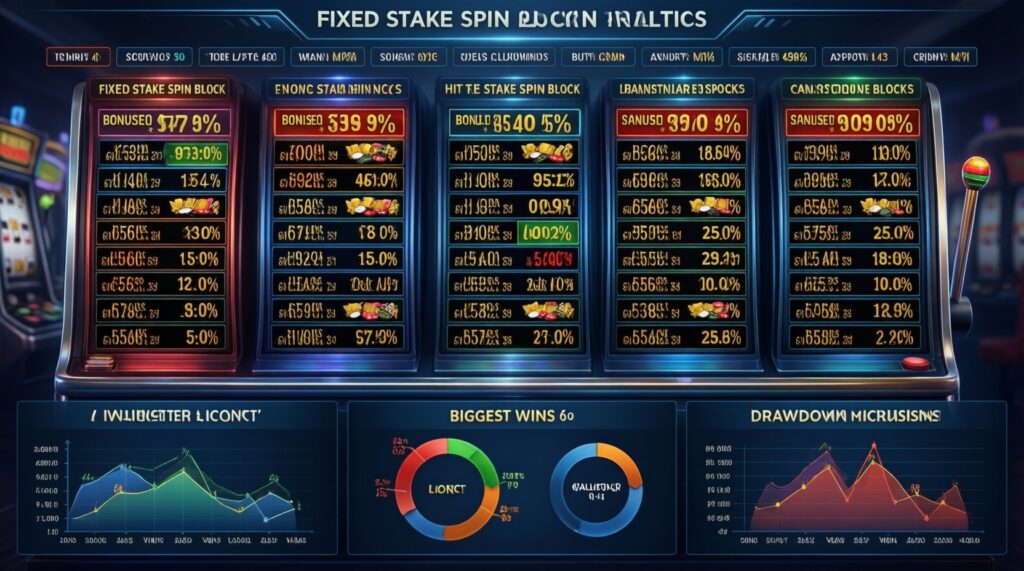
Run fixed-stake, fixed-spin blocks and record hit count, bonus count, largest win, and max drawdown. Compare the distributions across several blocks, not a single run.
Should I choose a slot based on RTP alone?
No. Use RTP as a filter, then decide using volatility and feature structure to match your bankroll and preferred session length.