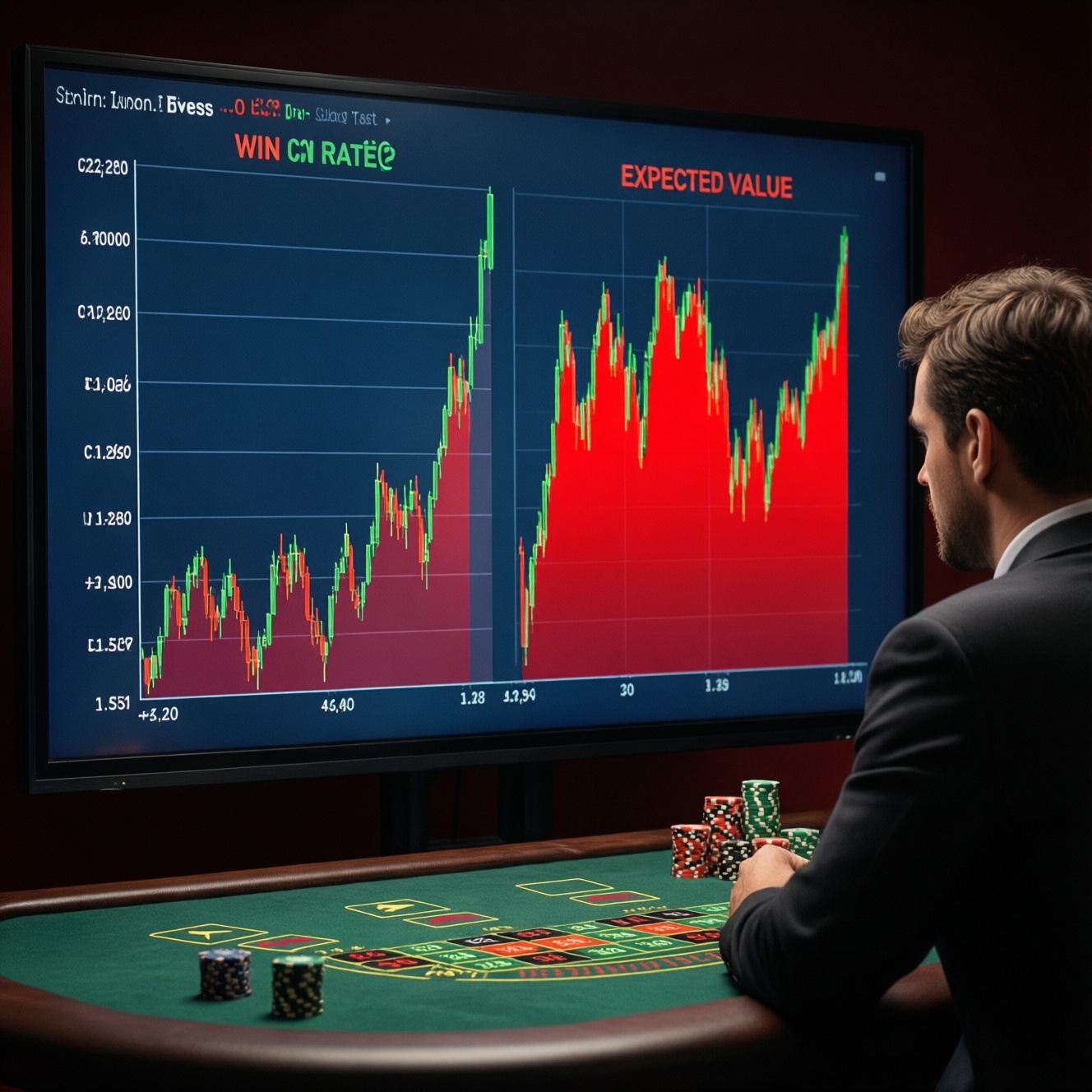

To practice responsible gambling with math, convert win probability and volatility into hard limits: a capped bankroll, a maximum session length, and predefined exit rules (stop-loss and take-profit). Use conservative assumptions, measure results, and adjust only from data-not feelings. This approach helps you set gambling limits that remain stable under losing streaks and high-variance games.
Core principles for probability-driven limits

- Budget outcomes, not intentions: plan for variance and streaks, not best-case scenarios.
- Separate funds: your gambling bankroll management is a closed system, never mixed with living money.
- Define limits as numbers you can follow when tilted: deposit, loss, time, and bet-size ceilings.
- Prefer conservative models first; relax parameters only after consistent tracking.
- Use probability inputs you can justify (published RTP/house edge, realistic hit rates, true odds).
- Make exits mechanical: stop-loss and target rules prevent "chasing" and "pressing."
Expected value, variance and why hope is a bad budgeting tool
Who this fits: intermediate players who can estimate probability/edge and want repeatable controls for responsible gambling. When not to do this: if you can't stick to limits, if you're using gambling to solve financial stress, or if you're increasing stakes after losses-use strict abstinence tools and support instead of "better math."
Minimal math: Expected value per bet is EV = (win probability × average win) − (loss probability × average loss). Variance (volatility) determines how wide outcomes swing around EV; high variance can produce long losing streaks even with a small edge.
Numeric example: If you place a bet where you win 45% and net +1 unit on wins, lose 55% and net −1 unit on losses, then EV = 0.45×1 − 0.55×1 = −0.10 units per bet. Even "almost winning" still trends downward; budgeting must assume that drift plus streak risk.
Converting win probabilities into practical bankroll rules
What you need:
- Your game's win probability (or hit rate) and payout structure (e.g., odds, paytable, rake).
- An estimate of volatility: for simple bets you can approximate outcomes as win/loss; for slots use "high/medium/low volatility" as a conservative proxy.
- A gambling odds calculator (any reliable one) to convert odds to implied probability and to sanity-check your inputs.
- A firm funding boundary: online casino deposit limits (daily/weekly/monthly) set at the cashier level where possible.
Bankroll rule (risk-first): pick a maximum acceptable "bust risk" for a session (many players choose "very low"), then cap bet size so a realistic losing streak can't wipe you out.
- Conservative streak budgeting: assume a worst-case losing run length L. Set max bet b so L × b ≤ session stop-loss.
- Probability-driven way to pick L: if your loss probability is q, the chance of L losses in a row is roughly qL. Choose L so qL is smaller than your comfort threshold.
Numeric example: If you lose 55% of the time (q=0.55) and you want the "all-losses streak" scenario to be very unlikely in a session, note that 0.5510 is already small. If your stop-loss is 2,000 THB, cap bet size at b ≤ 2,000/10 = 200 THB so a 10-loss streak triggers the stop cleanly instead of forcing a deposit top-up.
Deriving session time limits from streak length and variance
- Risk and limitations: probability models assume stable rules and stable bet sizing; changing stakes mid-session breaks the math.
- Short-term outcomes dominate: even if EV is near zero, variance can still produce large swings quickly.
- Faster games amplify risk: more bets per hour means streaks arrive sooner; time limits should be tighter for rapid-play formats.
- State matters: fatigue, alcohol, and tilt increase effective risk; your time cap should shrink under these conditions.
-
Estimate bets per hour (BPH). Track one typical session or use a conservative guess (faster is safer for planning). Slots and rapid live games often produce very high BPH compared with sports betting.
- If you can't estimate, time 10 minutes and multiply to an hourly rate.
- Pick a planning losing streak length (L). Use the same L you used for bet sizing, or increase it for higher volatility games. This is not "maximum possible," it's a realistic stress test.
-
Convert streak length to time risk. Approximate the time to experience an L-loss run as proportional to how many bets you take: more bets per hour means you encounter extreme sequences sooner. Set the session cap so you are unlikely to exceed your planned exposure.
- Practical rule: tighter time caps for higher BPH; looser for low-frequency betting.
- Anchor the session cap to a hard stop-loss. Time limits should not override money limits: if stop-loss hits first, you stop immediately. If time hits first, you stop even if you are up.
- Implement a cooldown buffer. Add a mandatory break after any large swing (up or down) before continuing. This prevents impulsive extension of the session beyond the time cap.
Numeric example: If your game pace is ~120 bets/hour and you planned for L=10 as a meaningful losing streak, you can reach that exposure quickly within an hour. Setting a 45-60 minute cap (plus a forced break) often prevents "just one more spin/hand" from turning into multiple hours that mathematically magnify streak risk.
Setting stop-loss and target exits using loss-run and hit-rate models
Use a stop-loss to cap downside and a target exit to cap upside-chasing. Base both on the same probability inputs (hit rate, payout) and enforce them mechanically.
- I set a session stop-loss that I can accept without redepositing (no exceptions).
- My bet size ensures a planned losing run (L losses) hits the stop-loss before I feel forced to chase.
- I set a profit target that is small relative to volatility (so it's reachable without marathon sessions).
- My target exit does not depend on "getting even" or "ending on a win."
- I stop immediately if I increase stake size outside the plan (this is a tilt flag).
- I stop if I'm about to override online casino deposit limits to continue play.
- I record results (time, bets, net) so my hit-rate model is based on data, not memory.
- I do not change stop-loss/target mid-session; changes happen only before the next session.
Numeric example: If your hit rate is 30% with net +3 units on a hit and −1 unit otherwise, you'll see long miss streaks. A conservative setup might be stop-loss = 20 units and target = 10 units. The target is intentionally smaller than the stop-loss to discourage long sessions where variance can reverse gains.
Adapting limits by game structure: slots, poker, sports and bets
- Slots: ignoring volatility-two slots with similar RTP can have very different downswings; your time and stop-loss should be tighter for high volatility.
- Slots: raising bet size after a bonus "to capitalize" breaks the bankroll plan and effectively increases risk per hour.
- Poker: confusing skill edge with short-term certainty; downswings exist even with a real edge, so set a buy-in stop and time cap.
- Poker: playing longer to "get unstuck" is the same as chasing; it increases exposure when decision quality is often worse.
- Sports: using posted odds without converting to implied probability; always sanity-check with a gambling odds calculator.
- Sports: stacking correlated bets (parlays, same-game combos) while assuming independence; this increases variance and should tighten limits.
- Table games: treating near-misses as informative; they are not evidence of a shift in probability.
- All games: setting limits in money but not in time; high pace makes "small bets" accumulate quickly.
Numeric example: If you place sports bets at 2.00 decimal odds, implied probability is ~50% before margin. If your true win rate is 48%, EV is negative even though wins feel frequent. Limits should assume that drift, not the occasional winning weekend.
Simple monitoring metrics and when to recalibrate your limits
Recalibrate only between sessions, using simple metrics that detect when variance or behavior is exceeding your plan. These alternatives can be used alone or combined, depending on how structured you want your gambling bankroll management to be.
- Fixed-fraction budget (ultra-conservative): allocate a small, fixed fraction of discretionary money per month and never exceed it; best when you can't reliably estimate probabilities.
- Loss-rate trigger: if you hit stop-loss in 2 sessions within a short period, reduce bet size or shorten time cap for the next sessions.
- Pace control alternative: cap number of bets (e.g., "no more than N bets") instead of time; useful when game speed varies widely.
- Deposit-only governance: rely primarily on online casino deposit limits and refuse any manual overrides; suitable when self-control is fragile.
Numeric example: If your plan is 8 sessions per month and you hit stop-loss in the first 2 sessions, a conservative recalibration is to halve bet size for the remaining sessions or cut remaining sessions in half. The goal is to prevent a single bad run from expanding exposure through repeated attempts.
Practical clarifications and common implementation pitfalls
How do I set gambling limits if I don't know the true odds?
Use conservative assumptions: treat the game as negative EV and size limits to survive realistic losing streaks. If you can't estimate probability credibly, rely more on deposit and time caps than on "edge-based" sizing.
Is a profit target really part of responsible gambling?
Yes, because it prevents extending sessions after wins, which increases exposure to variance. A modest target is a behavioral guardrail, not an income plan.
Should I change limits after a win or loss?
Not mid-session. Only recalibrate between sessions using tracked results; changing limits during play usually reflects tilt, not information.
What's the most common mistake with gambling bankroll management?
Re-depositing to continue the same session. If you need new funds, the session already exceeded its designed risk.
Do online casino deposit limits replace stop-loss rules?
No. Deposit limits cap funding, but stop-loss caps session damage and reduces chasing. Use both when available.
Can a gambling odds calculator make a negative game profitable?
No. It only helps you translate odds into implied probability and compare scenarios; it doesn't change the underlying house edge or variance.
How do I know my time limit is too long?
If you regularly violate it, or if most stop-loss hits occur late in sessions, it's too long. Shorten the cap and add a mandatory cooldown break.