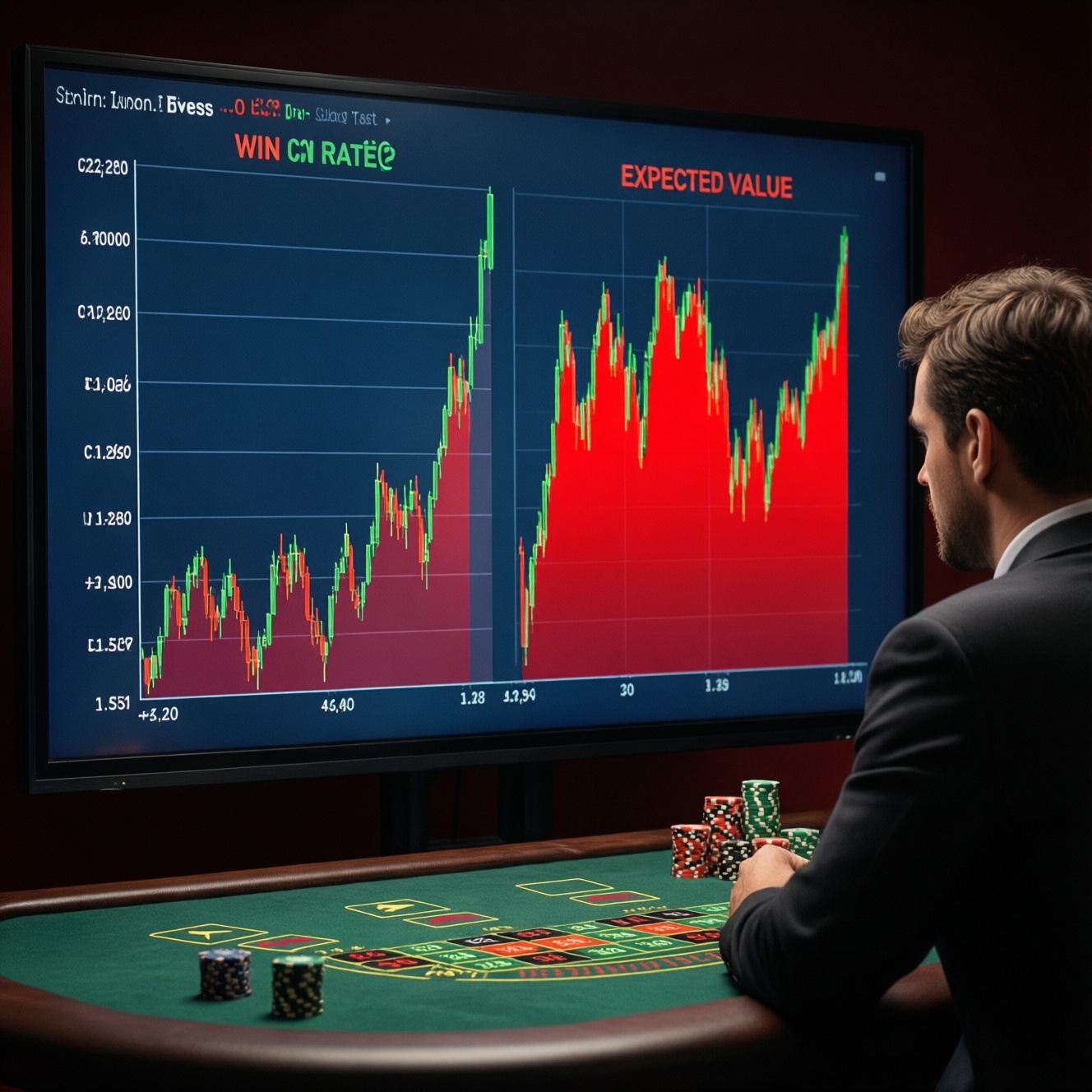

The phrase "almost got it" in slots is a predictable thinking trap called the near-miss effect: outcomes that look close to a win feel meaningful, even when they are still losses. This illusion increases motivation to keep playing, weakens self-control, and can override sensible limits-so safer play depends on recognizing the pattern and applying pre-set boundaries.
Core insights on the near-miss effect
- A near miss is a loss designed or perceived to look "close," which triggers renewed effort instead of stopping.
- Feeling "ใกล้ได้แล้ว" is information about your brain's learning system, not evidence you are due to win.
- Near misses can increase arousal and attention, making it harder to follow budgets and time limits.
- The effect is amplified by game presentation (sound, animations, celebratory feedback) rather than by real odds.
- Safety comes from external constraints (limits, friction, breaks), not from "playing smarter."
- Harm reduction is realistic; "beating" randomness is not.
Common myths about 'almost winning' and why they're misleading
Many players ask "ใกล้ได้แล้ว คืออะไร" and interpret it as progress toward a jackpot. In reality, a near miss is still a non-winning outcome; it only resembles a win in layout or timing. The feeling of momentum is psychological, not mathematical.
Myth: "I'm getting warmer, so a win is coming." Random outcomes do not "heat up" because you saw two matching symbols. The game can present patterns that look like progress while remaining independent spins.
Myth: "If I change my bet or timing, I can convert near misses into wins." Timing rituals and bet switching mainly change your subjective sense of control; they do not turn a loss into a higher-probability win on the next spin.
Practical takeaway: treat "almost" as a stop-signal-if your body reacts (urge, tension, tunnel focus), that's a cue to pause, not to chase.
Defining the near-miss effect: behavioral evidence and experimental paradigms

If you're searching "near-miss effect คืออะไร," the core definition is simple: near misses can increase persistence and motivation despite being losses. Researchers model this by comparing how people respond to clear losses, clear wins, and "close losses" that visually mimic a win.
- Outcome framing: The same loss can be framed to look close (e.g., a payline stopping one position away).
- Preference shift: People often report stronger urges after near misses than after ordinary losses.
- Persistence: Near misses can increase the likelihood of "one more try," even when expected value does not improve.
- Attention capture: Close outcomes draw more focus and are remembered more vividly than routine losses.
- Learning misfire: The brain's reward-learning system can react as if the player improved, even without reward.
- Context sensitivity: Effects strengthen under fatigue, stress, alcohol, and time pressure-conditions that reduce self-regulation.
Practical takeaway: if you notice "one more spin" thoughts after close outcomes, label it as a near-miss reaction and switch to a pre-decided rule (break or stop), not negotiation.
Neural and physiological mechanisms that make near misses compelling
Near misses are compelling because they can trigger arousal (heart rate, tension), heightened attention, and reward-related anticipation-signals that normally support skill learning. In gambling, those signals can be "hijacked" by presentation and uncertainty.
- Slots with near-aligned symbols: Reels stopping just short can feel like "control" or "precision," even though the outcome is already determined.
- Bonus rounds teased but not triggered: Two out of three scatters can produce a surge of anticipation and immediate chasing.
- Near-threshold wins: Outcomes that look like "missing by one" create a stronger bodily reaction than a distant loss.
- Mobile play in short bursts: Quick sessions can repeatedly re-trigger arousal without enough time to cool down.
- Social proof cues: Watching others "almost hit" or seeing big-win banners can prime the same anticipatory system.
Practical takeaway: when your body reacts (tight chest, fast tapping, narrowed attention), treat it as a physiological state to manage (pause, breathe, stand up), not as "intuition."
Cognitive and emotional pathways: how near misses drive continued play
This is the practical answer to "ทำไมเล่นสล็อตถึงเล่นต่อ": near misses create a loop of hope, frustration, and "repair" motivation. That loop can be stronger than simple enjoyment, and it often pushes play past planned limits.
Potential short-term upsides people mistakenly chase

- Hope restoration: "I was close" temporarily reduces the pain of losing by offering a story of progress.
- Sense-making: The brain prefers patterns over randomness; near misses supply a pattern-like narrative.
- Emotional escape: The intensity can distract from boredom, stress, or worries for a short time.
Limits and risks you should assume are present
- Chasing losses: Near misses can convert a stopping point into a "recovery mission."
- Control illusion: Rituals (timing, switching games, changing bet size) feel meaningful but don't create edge.
- Decision fatigue: After repeated near misses, self-control drops and "just a little more" becomes easier.
- Budget drift: Small exceptions ("one more") accumulate into larger-than-planned spending.
Practical takeaway: write down your stop rules while calm; your near-miss self will argue-so you need rules that don't require willpower in the moment.
Game features and operator tactics that amplify near-miss effects
Some players interpret "เกมสล็อตออนไลน์ได้เงินจริง" as evidence that persistence plus near misses will pay out. Be careful: marketing and interface design can make losing sessions feel productive or close to success.
- Celebratory feedback for non-wins: Sounds, flashes, and "win" labels on tiny returns can blur the line between profit and loss.
- Frequent near-bonus events: Regular "two-of-three" triggers keep anticipation high without delivering reward.
- Losses disguised as wins: Getting back less than you bet can still be presented as a "win," training you to continue.
- High-speed continuous play: Short spin cycles reduce reflection time and increase automatic tapping.
- Personalized prompts: Reminders, re-engagement messages, and "hot" framing encourage chasing after close outcomes.
Practical takeaway: judge outcomes only by net result (money in vs money out) and time spent, not by how "exciting" the game makes a loss feel.
Practical strategies for reducing harm and resisting the urge to continue
If your goal is "วิธีเลิกพนันออนไลน์," focus on making continued play harder at the exact moment a near miss spikes your urge. Use constraints you set in advance, plus a simple interruption script.
A safe, repeatable "near-miss interrupt" protocol
- Label: Say (out loud if possible) "Near miss-still a loss."
- Pause: Stand up, put the phone down, and take 10 slow breaths.
- Check rules: Compare today's spend/time to your pre-set limit; if you crossed it, stop immediately.
- Add friction: Log out, remove saved payment methods, or switch the device to airplane mode for 15 minutes.
- Replace the loop: Do a short alternative action (shower, walk, message a friend) before deciding anything.
Mini-case (Thailand context, mobile slots)
A player hits two scatter symbols and feels "I'm close-just a few more spins." They apply the protocol: label it as a near miss, pause for breathing, then see they already hit their daily budget. They log out and take a walk; the urge drops once arousal cools, preventing a chase session.
Rapid answers to common concerns about near misses and persistent play
Is a near miss evidence the game is about to pay?
No. It is a loss that looks close, and it does not make the next outcome more likely to be a win.
Why do near misses feel more intense than normal losses?
They trigger anticipation and arousal systems that normally support learning and goal pursuit, even though there is no real progress.
Does changing bet size after a near miss improve my chances?
It can change your spending rate, not the underlying randomness. It mainly affects emotions and perceived control.
What is the fastest way to stop a chasing spiral?
Add immediate friction: stop the session, log out, and create a forced delay (at least several minutes) until arousal drops.
Can I "train myself" to ignore near misses without strict limits?
Relying on willpower alone is fragile. Pre-commitment limits and breaks work better because they don't depend on mood.
When should I seek outside help?

If gambling is harming finances, sleep, relationships, or you repeatedly break limits, get support from a trusted person or a professional service.