

A near miss (เกือบชนะ) is an outcome that looks close to a win but is still a loss-yet it can feel motivating, not discouraging. It works by hijacking how the brain interprets randomness: visual proximity to success is misread as progress, triggering arousal, optimism, and persistence even when the underlying odds and expected value do not improve.
Essential concepts: how near‑misses operate and why they matter
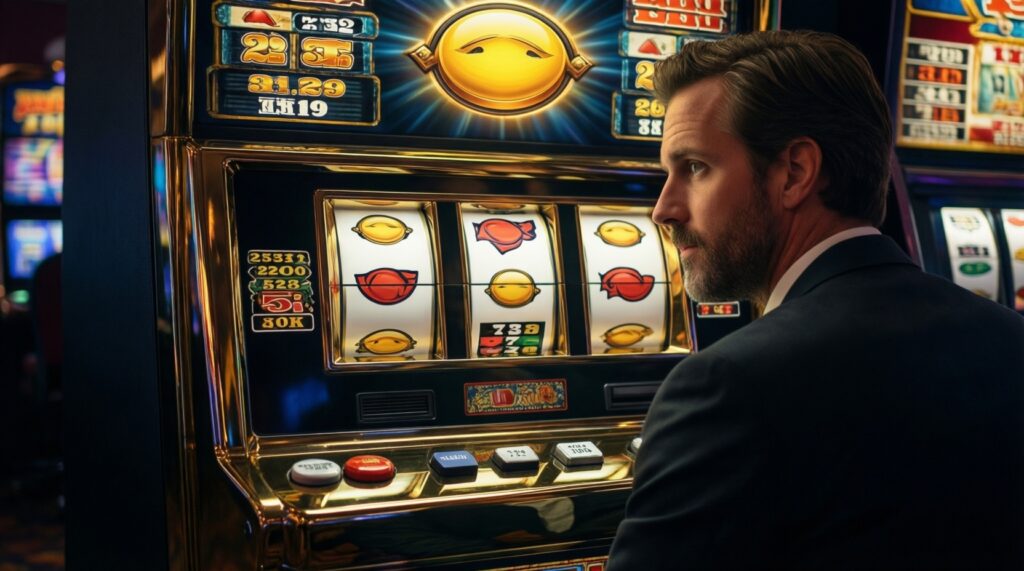
- Near misses are losses that simulate meaningful progress, which can increase the urge to continue.
- They do not change the true probability of the next outcome in independent random systems.
- "Almost" is a perception cue (layout, timing, framing), not evidence of skill or momentum.
- Attention narrows after near misses, making people chase patterns and ignore base rates.
- Repeated near misses can shift play from entertainment toward compulsion, especially under stress.
- Design choices can amplify or dampen the near‑miss effect, so mitigation is partly a product decision.
Common myths about near‑misses and why they mislead
Myth 1: "I'm getting closer, so the next one is more likely." In most games of chance and many random reward systems, each attempt is independent; the next outcome does not "know" you were close last time. Near misses often look like a trajectory, but the process is not a trajectory.
Myth 2: "Near miss means skill is starting to work." Near misses can appear in pure chance systems because display formats and thresholds create "almost" states. Unless you can reliably change outcomes through repeatable actions with feedback, closeness is not proof of learning.
Myth 3: "It's basically the same as losing." A clear loss tends to signal "stop." A near miss is a loss that carries a competing signal-"you were right there"-which can increase motivation and replay even when it is irrational for your goals.
| Outcome type | What you see | Typical interpretation | What probability says |
|---|---|---|---|
| Clear loss | Far from target | "Not working; pause" | Next attempt unchanged (if independent) |
| Near miss | Close to target | "Progress; keep going" | Next attempt unchanged (if independent) |
| Win | Target achieved | "Strategy confirmed" (even when random) | Past win doesn't raise future odds (if independent) |
Probability mechanics: reading 'almost wins' in random outcomes
- Independence: If each trial is independent (common in gambling-like systems), the chance on trial N+1 is not affected by trial N being a near miss.
- Closeness is a display variable: Many systems can represent a loss as "close" by arranging outcomes or thresholds; that closeness is not the same as being statistically closer.
- Sampling noise feels like a pattern: Short streaks naturally contain clusters of "almost" events; humans over-interpret these clusters as signals.
- Conditional thinking trap: People silently switch from "What is P(win)?" to "Given I was close, what is P(win next)?"-but the condition often has no causal link to the generator.
- Counterfactual pull: "One more step and I'd have won" is compelling, but it describes an alternative world, not a prediction model.
- Selective memory: Near misses are more memorable than ordinary losses, distorting your internal estimate of how often you "should" win.
Cognitive biases that magnify the near‑miss effect
- Gambler's fallacy: After repeated losses or near misses, you feel a win is "due," even when probabilities reset each trial.
- Illusion of control: Small choices (timing a tap, choosing a number, picking a box) create a sense that you can steer the result.
- Hot-hand belief: A near miss is treated like evidence of being "in form," similar to how people interpret streaks in sports.
- Outcome bias: If an action preceded a near miss, the action gets credited-"my approach almost worked"-even without evidence.
- Loss framing avoidance: "Almost winning" is emotionally easier than "losing," so the mind adopts the near-miss narrative to keep going.
Mini-scenarios: where "เกือบชนะ" shows up outside a casino
- Mobile games (gacha/loot boxes): You see rare-item animations or "almost" meters that stop just short of the prize, pushing "one more pull."
- Sales targets: Missing quota by a small margin feels like you're on the brink, increasing overtime and risk-taking (discounting too aggressively) next cycle.
- Exam prep: Scoring just below a passing threshold can either motivate structured practice or trigger unproductive cramming if you misread "close" as "almost guaranteed."
- Dating apps: A promising chat that fades can be experienced as a near miss, leading to compulsive checking and messaging rather than better filtering.
- Trading/speculation: A position that nearly hits take-profit before reversing can intensify "I was right," promoting revenge trades.
- Sports and fitness: "Almost a PB" can fuel healthy persistence, but can also push overtraining if rest signals are ignored.
Neural and emotional processes triggered by near‑misses
- Arousal and attention capture: Near misses can spike physiological arousal, making the next decision more impulsive and less reflective.
- Reward-system engagement without reward: The brain can respond to near misses with "approach" signals similar to reward anticipation, which encourages repetition.
- Counterfactual emotion: Frustration plus hope ("so close!") is a potent mix that pushes action rather than withdrawal.
- Limits: The effect weakens when outcomes are clearly non-controllable, feedback is transparent, or when someone deliberately reframes the event as a standard loss.
- Individual differences: Stress, sleep deprivation, and existing impulsivity can make near-miss reactions stronger and harder to regulate.
- Context matters: In skill learning, "almost" can be informative; in pure chance, it is often noise dressed as signal.
Behavioral outcomes: persistence, escalation, and betting patterns
- Chasing: Near misses can increase session length because stopping feels like quitting right before success.
- Stake creep: People raise stakes after a near miss to "capitalize" on imagined momentum.
- Rule-bending: You start violating your own limits (time, budget) because the near miss redefines the situation as "investment" rather than "spending."
- Search for patterns: Players invent rituals, timing strategies, or "systems" to regain control after a near miss.
- Misleading learning: Because near misses feel informative, they can teach the wrong lesson: persistence itself becomes the strategy.
Design and policy responses to mitigate near‑miss driven harm
Mitigation works best when you treat near misses as a predictable cognitive effect, not a "user weakness." The goal is to reduce misleading proximity cues, slow down escalation loops, and make randomness legible-especially in high-risk contexts like gambling-like mechanics.
Practical safeguards for products and environments
- Remove engineered proximity cues: Avoid layouts that visually imply "one step away" when all losses are equivalent.
- Add friction after arousing events: Insert a brief pause after near-miss-like outcomes to restore deliberation before the next attempt.
- Make independence explicit: Use plain-language reminders that each attempt is independent (where true), placed at decision moments.
- Budget-first controls: Encourage pre-commitment (time and spend limits) before play starts, not after escalation begins.
- Neutral feedback design: Replace celebratory near-miss sounds/animations with neutral loss feedback.
Mini-case (Thailand context): a safer reward loop for a mobile app
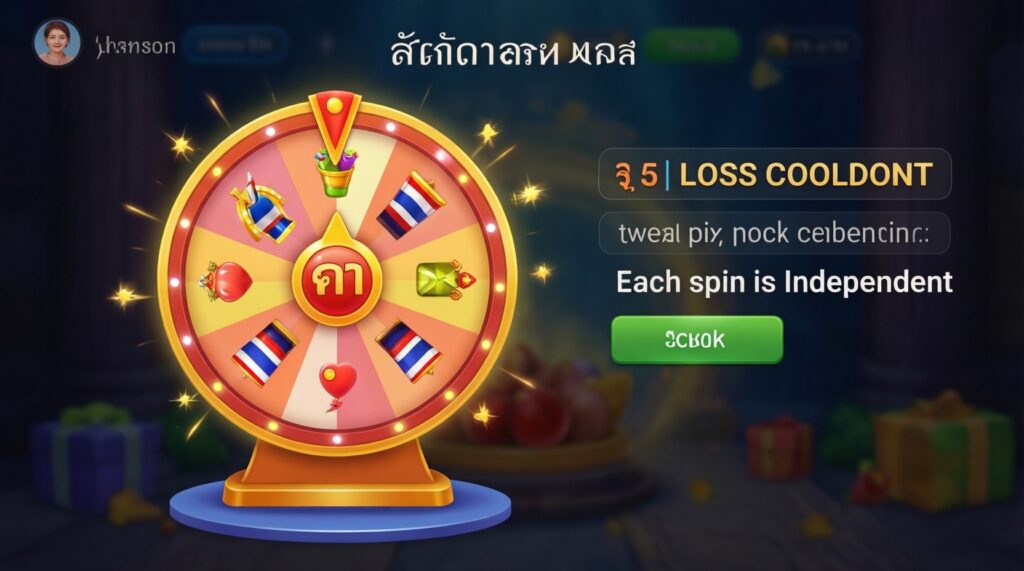
Scenario: a Thai-language app uses randomized "spin to win" coupons. Users report extended sessions after "เกือบชนะ" visuals. The redesign removes the "almost" animation and adds a cooldown after losses that appear close, plus a clear statement that each spin is independent.
if outcome == LOSS:
  showLossFeedback(neutral=true)
  if looksLikeNearMiss(outcome):   # proximity cue detected
    wait(cooldown)                # pause to reduce impulsive replay
    showMessage("Each spin is independent. Set a limit before continuing.")
recordSessionSpend()
if spendLimitReached:
  lockFurtherSpinsUntilTomorrow()
Concise clarifications and practical takeaways
Is a near miss actually "better" than a normal loss?
No-economically it is still a loss. It mainly changes how the loss feels and how strongly you want to continue.
Do near misses increase the chance of winning next?
Not in independent random systems. The next outcome's probability stays the same even if the last one looked close.
Why does "เกือบชนะ" feel like progress?
Your mind treats visual proximity as a learning signal. That works in skill tasks, but it misfires in chance-based outcomes.
Can near misses ever be helpful?
Yes in genuine skill learning where "almost" indicates a correctable error. In pure randomness, it usually encourages unproductive persistence.
What's the fastest self-check after a near miss?
Ask: "Did I gain new actionable information or just a stronger feeling?" If it's only a feeling, pause before the next attempt.
What should designers avoid if they want to reduce harm?
Avoid celebratory near-miss animations, "one step away" meters, and rapid replay loops. Add neutral feedback and decision-time friction instead.