

A slot paytable is the rulebook that links symbols, line/ways rules, special features, and betting units to specific payout outcomes-and it's the bridge between what you see on reels and the game's long-run return. Once you know how to read a slot paytable, you can predict payouts, compare volatility, and interpret slot RTP and paytable return correctly.
Paytable Essentials: Quick Reference
- Symbol payouts are usually quoted in bet units (per line or per total bet); always confirm which one the game uses.
- "Paylines" and "ways" change what counts as a win (fixed paths vs left-to-right symbol combinations across reels).
- Wilds substitute; scatters typically pay anywhere and/or trigger bonuses; bonus icons usually unlock feature modes.
- "Hit frequency" describes how often you win something; "volatility" describes how wins are distributed (small often vs big rarely).
- RTP is a long-run expectation, not a session forecast; the paytable shows the payout map, not your short-term results.
- Use a slot symbol values payout chart mindset: identify top symbols, minimum count to win, and the multiplier rules that amplify outcomes.
How Symbol Values Are Determined

In slot paytables explained simply: symbol values are the payouts assigned to specific symbol combinations under a defined win rule (paylines or ways) and a defined stake unit (per line bet or total bet). The paytable is not just "what each symbol pays"-it's also the conditions under which it pays.
Symbol value is shaped by two boundaries: (1) eligibility rules (left-to-right only, any direction, adjacent reels, etc.), and (2) interaction rules (wild substitution, multipliers, expanding wilds, and whether a symbol is "premium" or "low"). A premium symbol can pay more per win but appear under tighter conditions or lower frequency.
Practical reading rule: treat the listed payout as a multiplier on a stake unit. If a paytable says a combination pays "X," you still need to confirm whether the actual cash result is X × line bet or X × total bet.
| Symbol tier (typical) | Relative appearance | Typical pay behavior | Example payout expression (no numbers) |
|---|---|---|---|
| Low symbols (card ranks) | High | Small wins, frequent "buffer" payouts | (Paytable multiplier) × (line bet or total bet) |
| Mid symbols | Medium | Moderate wins, moderate frequency | (Multiplier) × bet, sometimes boosted by reel/feature multipliers |
| Premium symbols | Low | Large wins, lower frequency, often needs more-of-a-kind | (Higher multiplier) × bet, sometimes capped or feature-dependent |
| Wild | Varies | Doesn't usually pay like a regular symbol; increases completion of combos | Payout(combo with wild) = payout(replaced symbol combo) × wild multiplier (if any) |
| Scatter / Bonus icon | Varies | Often "anywhere" pay and/or feature trigger | Scatter pay = (scatter multiplier) × total bet; bonus = unlocks feature rules |
Paylines, Ways and Multiplier Mechanics
A paytable is only interpretable once you know the win topology (lines vs ways) and how multipliers stack. This is the core of how to read a slot paytable without mispricing a win.
- Fixed paylines: wins must follow a defined path across reels; the paytable may show "line pays" and require a minimum number of matching symbols.
- Adjustable paylines: you can activate fewer/more lines; payouts depend on active lines and the line bet.
- All-ways / Megaways-style: any matching left-to-right symbol on each reel counts; "ways" are combinations of reel positions, not drawn lines.
- Left-to-right vs both-ways: some games pay only from the leftmost reel; others pay both directions, altering practical hit patterns.
- Line bet vs total bet base: paytables may quote multipliers per line (common in paylines) or per total stake (common in many modern ways games).
- Multipliers: can be per-win, per-reel, per-cascade, or feature-only; stacking order matters (e.g., wild multiplier × free-spin multiplier).
Special Symbols: Wilds, Scatters and Bonus Icons
Special symbols modify the base payout mapping. In practice, they decide whether the paytable is "static" (regular symbol math) or "stateful" (feature-dependent).
- Substitution wild: replaces regular symbols to complete higher-paying combinations; confirm what it cannot replace (often scatters/bonuses).
- Multiplier wild: substitutes and multiplies the resulting win; check whether it multiplies only the line/ways win it touches or the entire spin.
- Expanding / sticky wild: changes future reel states (expands on a reel, sticks for respins/free spins), effectively increasing completion odds for premium combos.
- Scatter pays anywhere: may pay regardless of paylines/ways; confirm whether it pays per total bet and whether it also triggers free spins.
- Bonus icon as a mode switch: may not pay directly but unlocks a bonus game with its own payout table (pick, wheel, hold-and-win, etc.).
Fast Practical Tips for Comparing Paytables (TH context)
- Before you deposit, open the in-game info panel and verify whether payouts are per line bet or per total bet; this prevents the most common payout misunderstanding.
- When checking "best online slots high RTP paytable," focus on feature rules (multiplier growth, caps, retriggers) because they often dominate the return distribution.
- Scan for minimum win lengths (e.g., 3/4/5-of-a-kind) and whether wins require adjacent reels; this changes hit rate more than symbol art suggests.
- If the game has cascades/tumbles, confirm whether multipliers reset each spin or can increase across cascades.
- Take one sample stake and "unitize" it: write line bet and total bet as your two base units, then translate every paytable multiplier into those units.
Hit Frequency, Volatility and Their Impact on Payouts
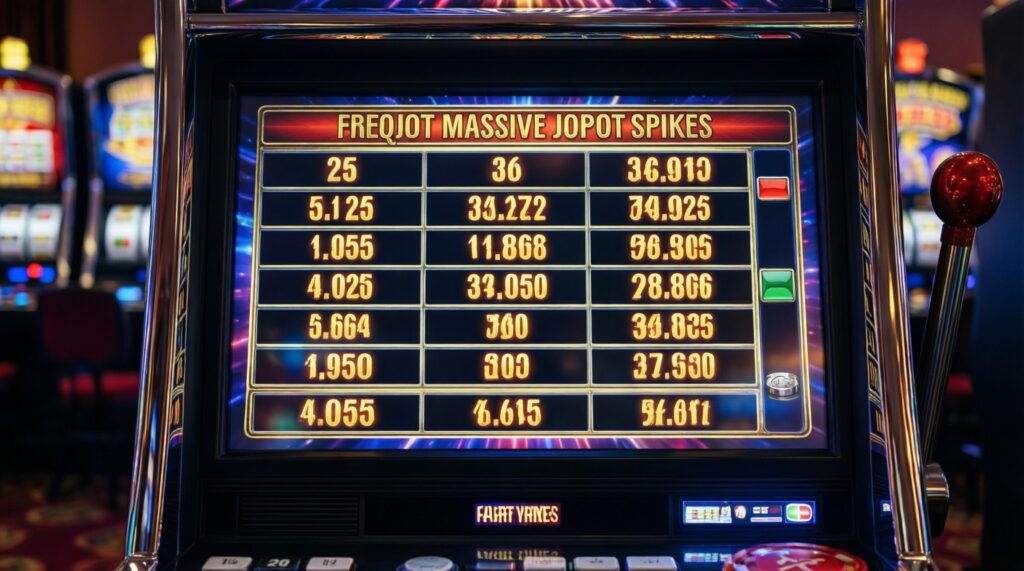
Hit frequency is about how often you get any payout; volatility is about how concentrated payouts are into rare spikes. The paytable hints at both through minimum symbol counts, special-feature dependency, and multiplier design.
What usually increases hit frequency
- All-ways formats and lower minimum counts for low symbols.
- More substitution wilds (especially if they appear on central reels).
- Cascades that allow multiple wins on one spin.
- Scatters that pay anywhere (small but frequent returns).
What usually increases volatility
- Large gaps between low and premium payouts (a steep payout ladder).
- Big multipliers locked behind free spins/bonus rounds.
- Sticky/expanding wild mechanics that can create rare "perfect states."
- High dependence on 5-of-a-kind (or maximum-length) combinations.
RTP, House Edge and the Mathematics Behind Return
RTP is the theoretical long-run expected return built from all outcomes and their probabilities. The paytable is only half the picture; probability weights (reel/virtual reel mapping) complete the math, which is why two games with similar-looking paytables can behave very differently.
- Myth: a higher top prize means better value. Reality: without probability, the top prize line is just a label; rare outcomes can dominate volatility without improving expectation.
- Myth: RTP predicts your session result. Reality: RTP is an average over a large number of spins; short runs are governed by variance.
- Mistake: mixing stake bases. Confusing "per line bet" and "per total bet" leads to wrong win estimates and false comparisons of slot RTP and paytable return.
- Mistake: ignoring feature-only multipliers. If most multipliers occur in bonuses, base-game paytable lines can underrepresent real return dynamics.
- Myth: changing bet size changes RTP. Reality: bet size usually scales outcomes; it doesn't typically change the underlying expected return, unless a game explicitly gates features by bet level.
Hands-on Examples: Reading a Paytable and Computing Payouts
This mini-case shows a repeatable method for how to read a slot paytable and convert it into a predictable payout calculation.
Worked example (single win)
- Identify the stake unit: Assume the paytable quotes wins as a multiplier of the line bet.
- Find the combination: "Premium Symbol A, 4-of-a-kind" pays M (a multiplier shown in the paytable).
- Apply wild/multiplier rules: If a multiplier wild applies at ×W to that win, the win becomes M × W.
- Compute payout: Payout = lineBet × M × W.
Quick pseudo-logic you can reuse

baseUnit = (paytableBasis == "line") ? lineBet : totalBet
winMultiplier = paytable[symbol][count]          // from the paytable
winMultiplier *= productOfApplicableMultipliers  // wild/feature rules
payout = baseUnit * winMultiplier
Use the same method to sanity-check any slot symbol values payout chart you see online: if the chart doesn't specify the stake basis and multiplier stacking, it's incomplete.
Practical Clarifications for Players
Where do I find the paytable in an online slot?
Open the in-game information or rules panel (often marked with an "i" icon). The paytable is part of those rules, not the lobby preview.
Does a paytable show the probability of each symbol?
Usually no. It shows payouts and conditions; symbol probability is determined by the reel mapping and RNG implementation, which is rarely listed in full detail.
Are paytable multipliers always applied to total bet?
No. Some games multiply line-based wins; others multiply total-bet wins, and some multipliers apply only inside bonus modes. Always confirm the base unit first.
What's the difference between paylines and ways in payout terms?
Paylines restrict wins to specific paths; ways count all left-to-right symbol combinations across reels. The paytable will label this, and the same symbol can effectively "hit" more often in ways formats.
Can two slots have the same RTP but very different paytables?
Yes. RTP can match while volatility differs because the payout distribution (rare large wins vs frequent small wins) depends on symbol frequency and feature math, not just the headline RTP.
Is "best online slots high RTP paytable" a guarantee of easier wins?
No. A higher RTP can still come with high volatility; the paytable and feature rules determine whether returns arrive as frequent small wins or rare spikes.