

Hit Rate and ความถี่โบนัส (bonus frequency) are different lenses: Hit Rate is how often any spin returns a win, while bonus frequency is how often a game triggers bonus features (free spins, respins, pick games). To choose the better metric first, start with your budget: low budgets prioritize predictable "small wins" (Hit Rate), while higher budgets can prioritize bonus-driven volatility.
Quick comparison: Hit Rate vs ความถี่โบนัส
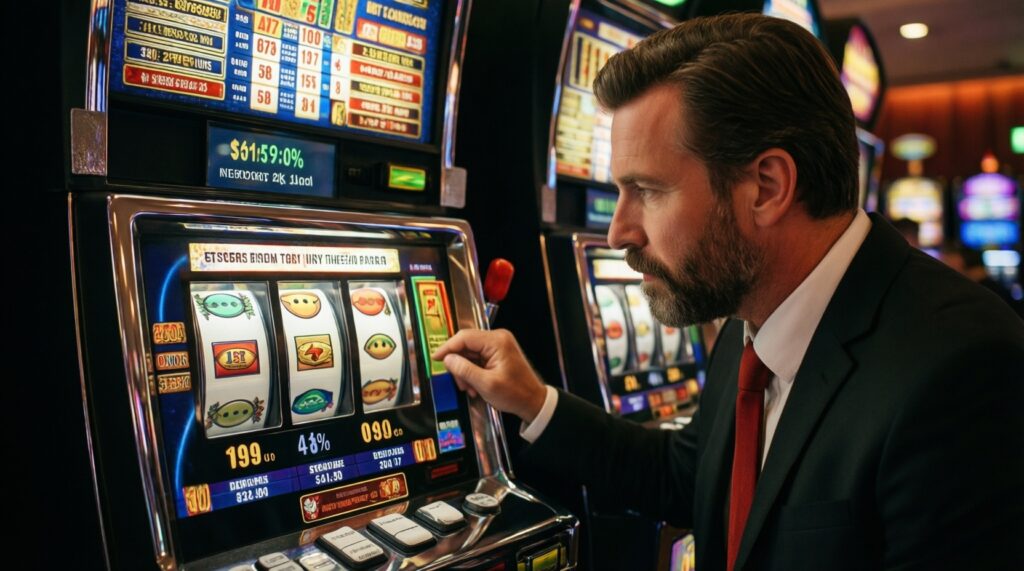
- Hit Rate answers: "How often do I win anything on a spin?"; bonus frequency answers: "How often do I enter a bonus feature?"
- For budget-first play, Hit Rate usually stabilizes bankroll faster; bonus frequency mainly shapes "big moments" and session feel.
- A slot can have high Hit Rate but rare bonuses (many small hits, few features), or lower Hit Rate but frequent bonuses (more feature-driven payouts).
- If you're comparing "เว็บสล็อต hit rate สูง โบนัสแตกบ่อย", treat them as two separate claims: frequent base hits vs frequent bonuses.
- Use consistent measurement windows; otherwise the same game can look "better" just due to counting rules.
| Aspect | Hit Rate | ความถี่โบนัส (bonus frequency) | Budget impact (practical) |
|---|---|---|---|
| What it measures | Probability of any win event per spin | Probability of triggering a bonus feature per spin/session unit | Hit Rate affects "how long you last"; bonus frequency affects "how often you get a feature shot" |
| Typical unit | Wins / spins (or % of spins with a win) | Bonuses / spins (or spins per bonus) | Helps forecast spend pacing vs feature cadence |
| What players feel | More frequent feedback, smaller swings | More "event moments", larger emotional spikes | Budget players often prefer steadier feedback; premium players may pay for peaks |
| Main risk when optimized alone | Many tiny wins that still lose money overall | Too many "dead spins" between features | Can cause either slow bleed or fast depletion depending on volatility |
Defining Hit Rate and ความถี่โบนัส (bonus frequency): what each measures
Use these criteria to decide which metric to look at first when comparing games or a provider portfolio (including when you're asking "hit rate สล็อต คืออะไร" or "ความถี่โบนัส สล็อต คืออะไร").
- Bankroll sensitivity: if users quit quickly when they see long losing streaks, prioritize higher Hit Rate.
- Session goal: "stay longer" aligns with Hit Rate; "chase features" aligns with bonus frequency.
- Feature value density: if most of the RTP/payout is packed into bonuses, bonus frequency matters more.
- Base game engagement: if the base game is simple and only bonuses feel exciting, bonus frequency becomes a key driver.
- Stake size distribution: smaller average stakes favor Hit Rate (more time/feedback per unit spend); larger stakes can tolerate feature variance.
- Promo/mission mechanics: "win any amount" missions interact with Hit Rate; "trigger bonus" missions interact with bonus frequency.
- Risk tolerance: risk-averse segments typically value Hit Rate; thrill-seekers value bonus frequency.
- Reporting maturity: if you cannot reliably tag bonus triggers, start with Hit Rate (simpler to compute consistently).
How measurement methods change the numbers: sampling, windows, and attribution
Many "สล็อต hit rate กับ ความถี่โบนัส ต่างกันยังไง" debates are actually measurement debates. Pick one method and stick to it across games; otherwise rankings flip.
| Variant | Who it fits | Pros | Cons | When to choose |
|---|---|---|---|---|
| Per-spin (raw) rate Count wins/bonuses per spin |
Analysts comparing many titles quickly | Simple; comparable across stakes | Ignores session behavior; sensitive to short samples | Early screening; dashboard ranking |
| Per-100 spins window Compute within fixed windows |
Operators needing stability for decision-making | Reduces noise; easier A/B comparisons | Still arbitrary; can hide "streakiness" | When you need consistent KPI tracking week-to-week |
| Session-based frequency Bonuses per session (or sessions with ≥1 bonus) |
Product/CRM teams focused on retention | Maps to player experience; good for segmentation | Depends on session definition; affected by timeouts | When designing missions, push, or reactivation logic |
| Attribution-adjusted bonus frequency Only count "meaningful" bonus entries (e.g., excluding forced tutorial spins) |
Teams optimizing acquisition funnels | Cleaner ROI linkage; fewer misleading boosts | Requires event taxonomy discipline | When you pay for traffic and must connect spend → behavior |
| Segmented by stake tier Compute rates separately for low/mid/high stakes |
Mixed portfolios with wide bet ranges | Prevents wrong conclusions from averaging | More complexity; needs enough volume | When "premium" and "budget" users behave differently |
Which metric matters first for budget-limited operations
Use "if..., then..." rules to pick the first metric to optimize. This is the fastest path to a practical answer to "วิธีเลือกสล็อต hit rate สูง โบนัสถี่ เล่นเว็บไหนดี" without relying on marketing labels.
- If your users have small bankrolls and churn after a few losing streaks, then evaluate Hit Rate first (aim for more frequent base wins, even if small).
- If your monetization depends on "feature excitement" (streams, social sharing, event quests), then evaluate bonus frequency first (ensure enough bonus entries per session to sustain interest).
- If you run budget acquisition (tight CPA/ROAS) and need predictable early-session engagement, then prioritize Hit Rate + early-session hit cadence before you care about bonuses.
- If you serve a premium segment (higher stakes, higher tolerance for variance), then prioritize bonus frequency + bonus value distribution because peaks matter more than constant small feedback.
- If support tickets mention "dead spins" or "doesn't pay", then check Hit Rate first; low Hit Rate often creates that perception even when bonuses exist.
- If players complain "bonus never comes", then check bonus frequency and how it's measured (per spin vs per session) before changing the game mix.
Practical calculation steps and a compact comparison table
- Define events clearly: what counts as a "win" (any payout > 0) and what counts as a "bonus trigger" (FS/feature entry only).
- Choose one window: per spin, per-100 spins, or per session; document it.
- Compute Hit Rate: wins ÷ spins for the same window and segment.
- Compute bonus frequency: bonus triggers ÷ spins (or sessions with ≥1 bonus ÷ sessions) using the same window rules.
- Split by stake tier: at minimum "budget stake" vs "premium stake" so you don't average away behavior.
- Rank games twice: one ranking by Hit Rate, one by bonus frequency; note games that are top in only one list.
- Decide by constraint: if your constraint is bankroll survival, pick Hit Rate leader; if it's feature cadence, pick bonus-frequency leader.
Interpreting trade-offs: revenue, user experience, and cost per activation
- Mistaking Hit Rate for profitability: a high Hit Rate can still be a net-loss experience if wins are tiny and volatility is harsh elsewhere.
- Ignoring "dead-spin run length": two games can share the same Hit Rate but feel very different if one clusters wins and the other spreads them.
- Counting re-triggers incorrectly: whether a re-trigger inside free spins counts as another "bonus" changes bonus frequency dramatically.
- Comparing different windows: per-spin vs per-session numbers are not interchangeable; they answer different questions.
- Not segmenting by stake: "เว็บสล็อต hit rate สูง โบนัสแตกบ่อย" claims might be true only at certain bet levels or for certain player types.
- Overweighting short samples: bonus triggers are rarer events; small samples swing rankings more than Hit Rate does.
- Optimizing to missions without checking cost: pushing "trigger bonus" quests can increase spend/activation cost if bonuses are rare and players over-chase.
- Forgetting UX context: animations, near-miss designs, and feature teases can make identical frequencies feel very different in practice.
Optimization checklist: experiments, KPIs, and decision rules
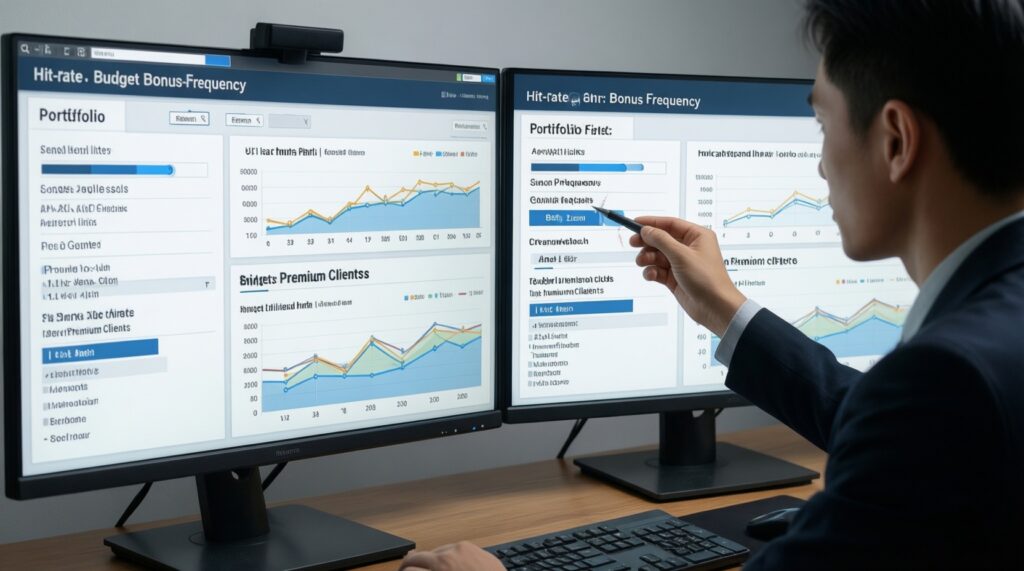
For budget-first portfolios, Hit Rate is usually the better first filter to protect session length and reduce early churn, then refine using bonus frequency to ensure enough "event moments." For premium-facing portfolios, start with bonus frequency and bonus value shape, then validate Hit Rate to avoid perceived dryness that hurts repeat play.
Short practitioner queries about choosing and using these metrics
What does "hit rate สล็อต คืออะไร" mean in operational terms?
It's the share of spins that return any payout. Operationally, it's a proxy for how often a player receives feedback that feels like a win.
What does "ความถี่โบนัส สล็อต คืออะไร" measure exactly?
It measures how often a slot triggers a bonus feature (not just any win). It's best treated as a cadence metric for feature entries.
สล็อต hit rate กับ ความถี่โบนัส ต่างกันยังไง when ranking games?
Hit Rate ranks games by base-win frequency, while bonus frequency ranks them by feature-entry frequency. A game can rank high on one and low on the other.
Can a game be "เว็บสล็อต hit rate สูง โบนัสแตกบ่อย" at the same time?
Yes, but it's not guaranteed-high Hit Rate doesn't imply frequent bonuses. Verify both metrics with the same window and event definitions.
Which should I check first if my players have small budgets?
Start with Hit Rate, then check bonus frequency as a secondary filter. This reduces early-session "all losing spins" experiences that burn bankroll quickly.
How do I avoid misleading bonus frequency numbers?
Document what counts as a bonus and whether re-triggers are included. Keep the same measurement window across all titles and segments.
วิธีเลือกสล็อต hit rate สูง โบนัสถี่ เล่นเว็บไหนดี-what's the practical decision rule?
Pick the game mix that matches your constraint: bankroll survival favors higher Hit Rate; "feature hunting" favors higher bonus frequency. Validate with segmented reporting (budget vs premium stakes) before rollout.