Bonus frequency (and hit frequency) can't be "read" reliably from a slot screen unless the game or provider publishes it, but you can often infer it from paytable features, volatility labels, and careful session logging. Understanding ความถี่โบนัส คืออะไร helps you predict pace, perceived "activity," and bankroll swing, not whether a slot will pay "soon."
Core Indicators of Bonus Frequency
- Whether the rules explicitly state a trigger rate (rare) or only describe symbols/features (common).
- How many independent trigger paths exist (scatters, collectors, hold-and-win, random features).
- Volatility label and maximum win design: higher caps usually mean less frequent meaningful events.
- Base-game "hit" density (small line wins) versus bonus-entry density (feature triggers).
- Presence of "feature guarantee" mechanics (e.g., progressive collectors) that shape perceived frequency.
- Observed hit interval during logging (spins between events), not a feeling from a short streak.
Defining Hit Frequency and Bonus Frequency: metrics and distinctions
When players ask Hit Frequency สล็อต คืออะไร, they usually mean: "How often do I get any win on a spin?" Hit frequency is the share of spins that return a payout (including tiny returns that may still be a net loss after the bet). A practical definition is: Hit Frequency ≈ (number of winning spins) ÷ (total spins).
Bonus Frequency สล็อต คืออะไร is narrower: "How often do I enter a feature?" That can mean free spins, bonus pick games, hold-and-win, respins, or any named feature state. A practical definition is: Bonus Frequency ≈ (number of bonus triggers) ÷ (total spins).
These two metrics can move in opposite directions. A slot can have frequent small base hits (high hit frequency) but rare features (low bonus frequency), or it can be "quiet" in the base game yet occasionally pop into features via collectors or random triggers.
| Metric | What it counts | What it predicts well | What it does NOT predict |
|---|---|---|---|
| Hit Frequency | Any paying spin | Pace and "activity" feel in the base game | Profitability per spin; timing of big wins |
| Bonus Frequency | Feature entry events | How often the game changes state (free spins/bonuses) | Average bonus value; whether the next bonus is "due" |
| Volatility (label) | Win distribution shape (provider-defined) | Expected swinginess and bankroll stress | Exact trigger rates unless disclosed |
How game engines and RTP tables expose frequency-related data
For สล็อต ความถี่โบนัส ดูยังไง, the key is knowing what information is actually exposed by a game client and what is hidden inside the RNG math model. Most slots do not display hit/bonus frequency as a numeric stat, but you can often read clues from documentation and mechanics:
- Paytable / rules screen: lists trigger conditions (e.g., "3+ scatters start free spins"). It rarely gives the probability, but it shows the path to a bonus.
- Volatility indicator: "Low/Medium/High" (or similar) can hint whether meaningful events are dense or sparse, but it is not a measured frequency.
- RTP disclosure: some providers split RTP contributions (base vs features) in info panels. This still doesn't equal frequency, but it signals where the value is concentrated.
- Collector / meter mechanics: if a game has a meter that fills and then triggers, it effectively enforces a certain pace of bonuses (without revealing exact odds per spin).
- Random features: "random wilds," "random multiplier," "mystery bonus" can increase perceived hit activity without increasing true bonus-entry frequency.
- Bet-dependent triggers: some features scale with bet size or require max-bet side bets. That changes your effective bonus access, not the underlying RNG structure.
Alternative options for limited resources: if you don't have access to provider sheets, math reports, or long test sessions, prioritize what's free and visible: the rules screen, volatility label, and a short but structured logging method (below). Avoid relying on "this slot feels hot today."
Estimating frequency from sessions: sampling, run-lengths, and hit intervals
If the game doesn't publish rates, you can estimate them. This is not about proving exact probabilities; it's about building a usable expectation for pace. Use these common, practical scenarios (concept-to-practice):
- Quick comparison between two slots: log 200-300 spins each and compare (a) % winning spins and (b) bonus triggers. Even if noisy, it's more reliable than memory.
- Checking whether a "busy" slot is only busy with tiny returns: track net result of each winning spin (payout minus bet) to see if frequent hits are mostly losses in disguise.
- Estimating typical wait for a bonus: record the hit interval as "spins between bonuses." Example: if you see 4 bonuses in 500 spins, your rough estimate is 500/4 ≈ 125 spins per bonus (very rough).
- Budget planning for a feature-hunt session: if you estimate ~120 spins per bonus and you can afford 300 spins, expect 2-3 entries on average, but be ready for fewer due to variance.
- Testing a side bet / feature buy alternative: compare "natural bonus entries per 100 spins" versus the cost and frequency of guaranteed entry (feature buy) if offered, focusing on bankroll stability.
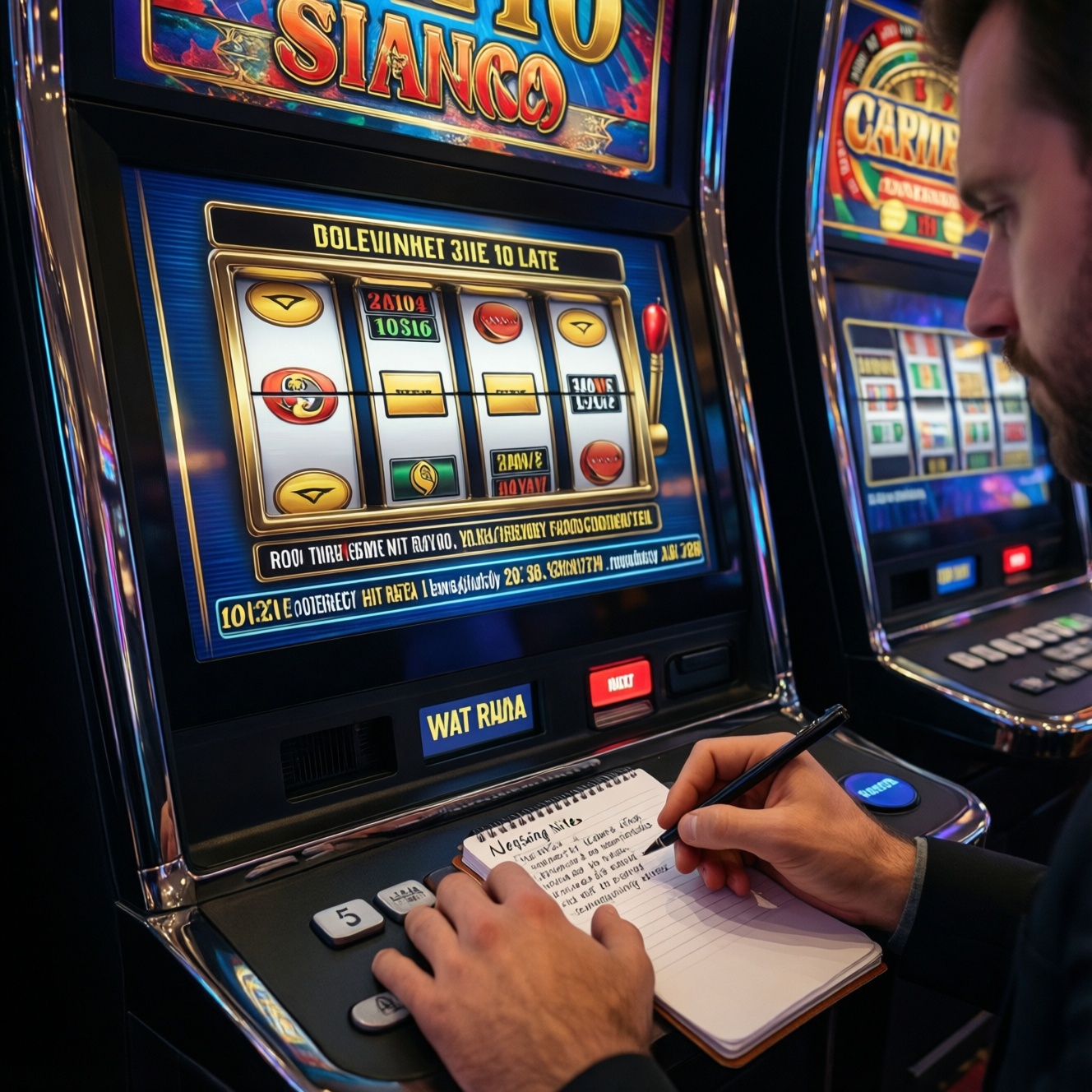
Low-effort logging template (limited resources): in notes, mark each spin as W/L, and mark "B" when a bonus triggers. Also record the spin count when "B" happens (e.g., B@37, B@190). From that you can compute winning-spin share and bonus intervals without any tools.
Common statistical traps: variance, clustering, and misinterpreting short samples

- Clustering illusion: bonuses can appear close together or far apart naturally; a cluster does not mean the slot is "warming up."
- Short-sample overconfidence: 50-100 spins can easily mislead you on both hit frequency and bonus frequency.
- Mixing definitions: counting "any animation feature" as a bonus inflates your estimate; define bonus as a distinct feature state (free spins/bonus game/hold-and-win).
- Ignoring bet configuration: paylines, bet level, and optional side bets can change triggering conditions in some games, making your session non-comparable.
- Confusing RTP with frequency: RTP is long-run average return; it doesn't tell you how often bonuses happen.
- Equating frequent hits with "สล็อตแตกบ่อย": "often paying" may just mean many small payouts; it doesn't guarantee good outcomes.
- Survivorship from highlights: watching big-win clips biases your expectation of how often the bonus pays well.
- Chasing a due bonus: RNG outcomes are not scheduled; "it hasn't hit in a while" is not evidence of imminent triggering.
Player experience effects: pace, volatility perception, and satisfaction
- Pace and attention: higher hit frequency usually feels more engaging because something happens often, even if results are negative.
- Perceived generosity: frequent micro-wins can feel like progress; players may underestimate net loss per spin.
- Emotional swing: low bonus frequency with high volatility can create long "dead" stretches followed by rare spikes, which some players prefer.
- Time-on-device: games with frequent feature teases (collectors, near-misses) can extend sessions without improving value.
- Satisfaction mismatch: choosing a "high bonus frequency" slot when you actually want big-feature moments often leads to disappointment-more entries, smaller average bonus outcomes.
Operational and design responses: tuning, messaging, and responsible play
If you're selecting games, managing a small bankroll, or advising others, treat frequency as a session-shaping variable. When someone asks สล็อตแตกบ่อย ความถี่โบนัสสูง แนะนำ, the responsible answer is: recommend a process (rules check + volatility fit + logging), not a promise of outcomes.
Practical selection flow (works with limited information)
- Read the rules: list all bonus entry paths (scatters, collectors, random features).
- Classify the feel: if volatility is "High," expect longer waits for meaningful events, even if base hits exist.
- Run a small test log: 200 spins; compute: hit frequency = winning spins/200; bonus rate = bonuses/200.
- Decide your goal: "busy base game" (higher hit frequency) vs "feature chasing" (higher bonus frequency) vs "swing hunting" (high volatility).
Mini pseudo-code for a simple tracker

spins = 0
win_spins = 0
bonuses = 0
last_bonus_spin = null
bonus_intervals = []

for each spin:
  spins += 1
  if payout > 0: win_spins += 1
  if bonus_triggered:
    bonuses += 1
    if last_bonus_spin != null:
      bonus_intervals.append(spins - last_bonus_spin)
    last_bonus_spin = spins

hit_frequency = win_spins / spins
bonus_frequency = bonuses / spins
typical_bonus_wait = median(bonus_intervals)   # if you have enough intervals
Responsible play guardrails tied to frequency
- Set a spin budget, not a "until bonus" goal; low bonus frequency can bait extended chasing.
- Stop rules: if you hit your loss limit before a bonus, you stop anyway-no "due" logic.
- If you need steadier sessions, prefer moderate volatility and accept that "more frequent" often means "smaller."
Typical player questions about interpreting bonus frequency
Can I see bonus frequency directly inside the slot game?
Usually no; most games only show rules and volatility labels. If the provider publishes detailed stats, they're typically outside the main gameplay screen.
Is hit frequency the same as bonus frequency?
No. Hit frequency counts any paying spin, while bonus frequency counts feature entries like free spins or bonus games.
If a slot hasn't paid a bonus for a long time, is it more likely to trigger soon?
No. RNG outcomes are independent; long gaps can happen naturally and don't make a bonus "due."
How many spins do I need to estimate frequency in a useful way?
More is better, but even a few hundred spins with clear definitions can help you compare two games. Very short samples are dominated by variance.
Does higher bonus frequency mean the slot is better?
Not necessarily. More frequent bonuses can be smaller on average; overall value depends on the full payout distribution, not just how often a feature starts.
Why does a "high hit frequency" slot still drain my balance quickly?
Many hits can be smaller than your bet, so you lose money despite frequent payouts. Track net results, not just the count of wins.
What's the safest way to use frequency info for my bankroll?

Use it to choose session pace and volatility fit, then set fixed limits (time/spins/loss cap). Don't extend play just to "reach the bonus."