

Bonus round frequency is the practical way to describe how often a game's bonus feature triggers, how long "dry spells" can last, and how volatile the experience feels even when math is correct. Model triggers as probability events, measure droughts against expected intervals, then tune variance using stake distribution and prize structure while monitoring live telemetry for drift.
Core Principles for Frequency and Variance in Bonus Rounds
- Separate trigger rate (how often a bonus starts) from bonus value variance (how wildly outcomes swing after it starts).
- Always define the unit: per spin, per paid spin, or per line/ways; mixing units makes comparisons meaningless.
- Use an expected interval rule-of-thumb: if trigger probability is p per spin, expected spins between triggers is roughly 1/p (before considering caps or adaptive logic).
- Droughts are not bugs by default: quantify them with percentiles and thresholds, then decide whether to adjust or to message expectations.
- For "high volatility slots bonus round frequency" discussions, treat "frequency" as one axis and "spread of bonus payouts" as a different axis.
- Operationally, trust production telemetry over assumptions: content changes, jurisdiction settings, or RNG integration errors can shift observed rates.
How Bonus Triggers Work: Types, Probabilities, and Activation Logic
A bonus round triggers slot machine mechanic is usually one of three families: (1) independent chance per spin, (2) symbol/collector progress, or (3) gated events (must pass multiple conditions). Choose based on your audience tolerance for streaks and your ability to monitor fairness. Avoid complex multi-gates if you cannot explain them internally or validate them in telemetry.
- Independent trigger: a fixed probability p each spin (simple to model; droughts can feel harsh).
- Symbol count trigger: requires k scatters (frequency depends on reel math and bet config).
- Progress/collector: triggers after accumulating tokens (reduces perceived drought but adds state and edge cases).
When it fits: comparing a "bonus round frequency slot" across builds, doing QA on RTP/feature rate, or tuning player-facing feel for TH-style short sessions. When not to do it: making marketing claims like "slots with frequent bonus rounds" without a clearly defined measurement window and stake conditions.
Choosing a Frequency Model: Poisson, Binomial, and Empirical Fits
Pick a model based on the data you can reliably capture. Minimum tooling: (1) event logs for spin outcomes and bonus starts, (2) a notebook/BI tool to compute rates and percentiles, (3) versioned configuration snapshots so you know what changed.
- Binomial (per N spins): use when you count triggers in fixed windows. Rule-of-thumb: expected triggers in N spins is N·p.
- Poisson (rate per spin): useful when events are rare and independent; estimate a single rate λ (triggers per spin).
- Empirical fit: best when you have progress meters, caps, or conditional logic; model the actual observed distribution of gaps.
Short example: if you test 200,000 spins and observe 2,000 bonuses, you estimate p ≈ 2,000/200,000 per spin. Use empirical gap percentiles to decide if drought complaints are within expectation.
Detecting and Quantifying Droughts: Metrics and Thresholds
-
Define your trigger event precisely.
Decide what counts as a trigger: entering free spins, launching a pick game, unlocking a bonus wheel, etc. Keep it consistent across builds so you can compare "best slots with frequent bonus features" internally without moving goalposts.
- Use one event name for "bonus start" and separate events for "bonus award" and "bonus end".
- Log stake, game version, jurisdiction settings, and session identifiers.
-
Estimate baseline trigger probability (or rate).
Compute p = triggers / eligible spins for the period you trust (stable config, no A/B overlap). Rule-of-thumb expected gap is roughly 1/p spins for independent triggers; treat this only as a baseline.
- Exclude non-eligible spins (re-spins, recovery spins, bonus-only spins) if they cannot trigger.
-
Measure gap distribution, not just averages.
Calculate the spins-between-triggers distribution and store percentiles (median, upper percentiles). Droughts are about tails, so percentiles are more actionable than the mean.
- Track by segment: stake band, device, and game version.
- Use rolling windows to spot drift after releases.
-
Set operational drought thresholds.
Create a threshold that triggers investigation, not panic. Practical rule: alert when the observed upper-tail gap (e.g., a high percentile) shifts materially versus your baseline for the same config.
- Use separate thresholds for independent triggers vs progress-based mechanics.
- Require a minimum sample size before acting.
-
Diagnose root cause with a structured checklist.
If drought metrics worsen, check config diffs and eligibility first. Many "frequency drops" come from hidden gating (bet requirements, mode flags) rather than RNG changes.
- Verify reel set selection and feature enablement per stake/jurisdiction.
- Check for unintended caps, cooldowns, or state reset bugs.
- Confirm that "eligible spins" are counted correctly in analytics.
Fast mode workflow (3-5 steps)
- Log eligible spin and bonus start events with version + stake.
- Compute p = triggers / eligible spins; note expected gap ≈ 1/p.
- Build the gap percentile report; watch the upper tail for drought perception.
- Alert on material tail shifts after releases; investigate eligibility and config diffs first.
Variance and Player Experience: EV, Std Dev, and Perceived Fairness
- Check that trigger rate is stable across stake bands and modes (base game vs any sub-modes).
- Validate bonus payout spread: two games can share the same frequency but feel radically different due to payout variance.
- Confirm that the average gap is not your only KPI; track upper-tail gaps to manage drought perception.
- Segment by session length: short sessions amplify perceived unfairness when the tail is heavy.
- Ensure progress systems have clear state rules (persist, decay, reset) and that telemetry matches those rules.
- Look for "false droughts" caused by eligibility filtering (e.g., spins that cannot trigger included by mistake).
- Run regression checks after every content/config change (reel set, weights, bet rules, jurisdiction toggles).
- Document how you compare titles marketed as "slots with frequent bonus rounds": same stake, same definition of trigger, same measurement window.
Design Strategies to Control Frequency Without Breaking Fun
- Mistake: tuning only the trigger probability. Fix: tune both trigger rate and bonus payout distribution; frequency alone won't solve frustration.
- Mistake: adding hidden gates (min bet, mode flags) without analytics visibility. Fix: log eligibility reasons and gate states.
- Mistake: using hard caps/cooldowns silently. Fix: if you cap, make the rule explicit in design docs and verify in telemetry.
- Mistake: progress meters that reset unpredictably (disconnects, re-entry). Fix: define persistence and recovery behavior and test it.
- Mistake: comparing titles using different units (per ways vs per spin). Fix: standardize on eligible spins and document it.
- Mistake: optimizing for "best slots with frequent bonus features" as a headline. Fix: optimize for a coherent experience: frequency, bonus size, and drought tail that fit your audience.
- Mistake: ignoring distribution tails during QA. Fix: always review high-percentile gaps and extreme payout clusters.
- Mistake: changing multiple parameters at once. Fix: isolate changes (one lever per release) so observed shifts are attributable.
Operational Monitoring: Telemetry, Alerts, and Adaptive Corrections
When you need alternatives to static tuning, choose an operational approach that matches your risk tolerance and compliance constraints.
- Release-gated telemetry validation: best when you ship often. Use automated checks on trigger rate and gap percentiles before widening rollout.
- Segment-based monitoring: best when TH traffic varies by device, time, or stake. Monitor rate and drought tails per segment to catch localized issues.
- Configuration drift alerts: best when many jurisdictions/skins share logic. Alert on any config diff that affects eligibility, reel sets, or feature toggles.
- Controlled, rules-based adjustments: best when you must correct obvious defects fast. Only adjust via predefined rules with audit logs; avoid opaque adaptive behavior that you cannot explain or validate.
Targeted Practical Answers for Implementation Challenges
What is the cleanest definition of bonus frequency for reporting?
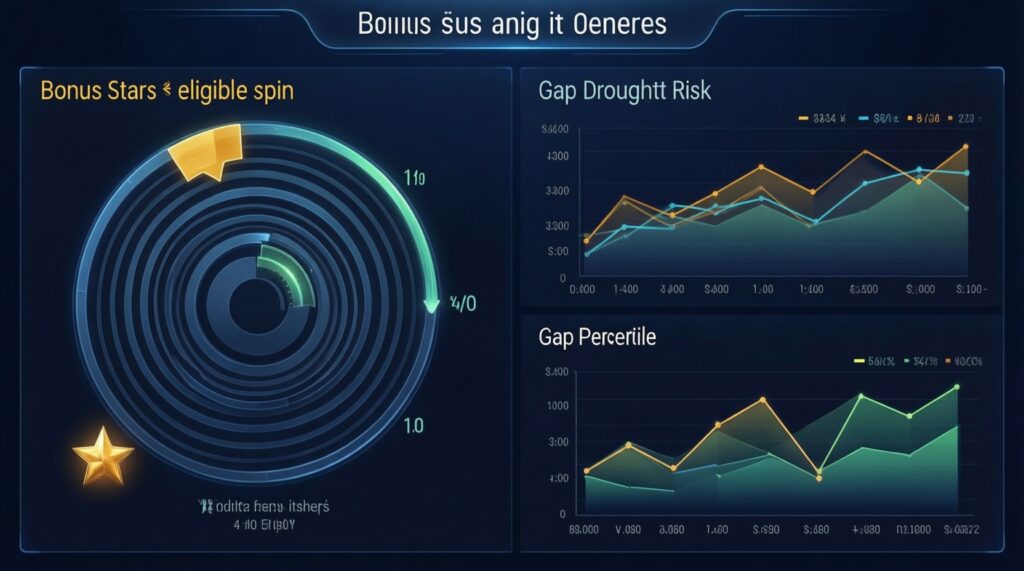
Use bonus starts per eligible spin for a given config and stake band. Report it alongside gap percentiles so drought risk is visible.
How do I compare two games claiming "frequent bonuses"?

Standardize stake, define the same trigger event, and compare both the trigger rate and the upper-tail gaps. Otherwise "frequent" can be marketing rather than measurement.
Why do players report droughts even when math is correct?
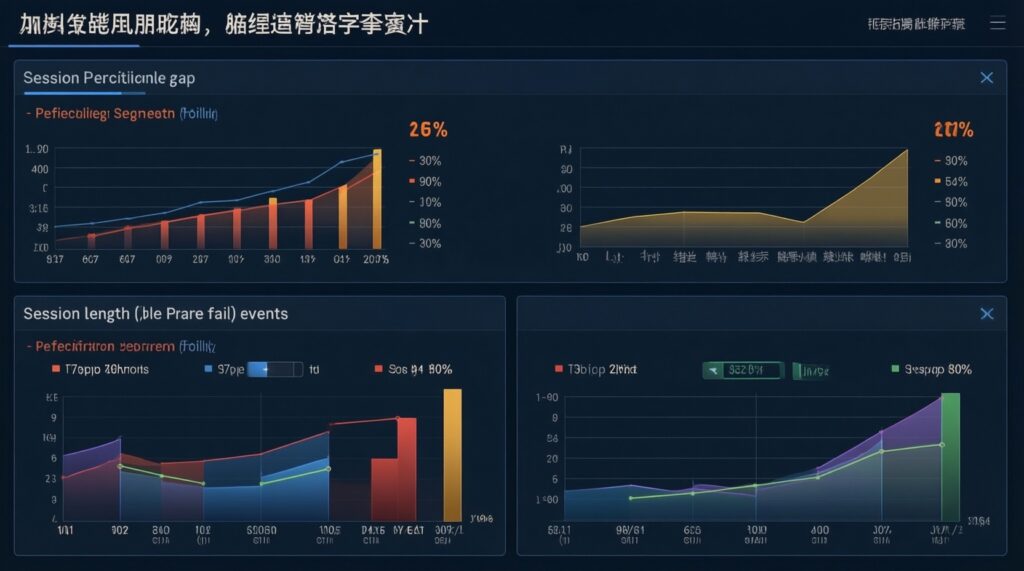
Because tail events happen naturally, and short sessions over-sample the tail emotionally. Track high-percentile gaps and session-length segments to see what players actually experience.
When should I prefer an empirical model over Poisson/Binomial?
When triggers depend on state (collectors, meters, caps, multi-step gates). Empirical gap distributions capture the real behavior without assuming independence.
What's the fastest way to catch a broken trigger after a release?
Monitor eligible spins, bonus starts, and the gap percentile dashboard by version. A sudden drop in eligibility or a shifted upper-tail gap is a strong signal.
How can I reduce perceived volatility without increasing bonus frequency?
Reduce the spread of bonus payouts (less extreme outcomes) while keeping the trigger rate constant. Players often interpret payout spread as "fairness" more than frequency.