

A practical slot bankroll plan sets a fixed budget, hard session limits, and clear exit rules before you spin. Use a dedicated bankroll (money you can afford to lose), split it into sessions, cap bet size per spin, and define stop-loss/stop-win points. This keeps volatility manageable and reduces "chasing losses" behavior.
Core Bankroll Principles for Slot Play

| Action | Metric to set | Checkpoint (before play) |
|---|---|---|
| Separate bankroll from living money | Bankroll amount (THB) for a period | Bankroll is "loss-tolerant" and not borrowed |
| Define session boundaries | Time limit, spin limit, session buy-in | Limits written down and visible |
| Control risk per spin | Bet size as % of session bankroll | Bet size rule selected for volatility level |
| Use pre-committed exits | Stop-loss, stop-win, "cool-off" rule | Exit triggers decided before outcomes |
- Run your bankroll like a budget: pre-allocate, don't "top up" mid-session.
- Set both a stop-loss and a stop-win; either one ends the session.
- Keep bet size stable within a session; only change between sessions.
- Match bet sizing to slot volatility; higher volatility needs smaller risk per spin.
- Track sessions briefly; your rules should survive both winning and losing streaks.
Setting Your Initial Bankroll: How Much to Allocate
| Action | Metric to set | Checkpoint |
|---|---|---|
| Pick a time window for your bankroll | Daily / weekly / monthly bankroll | One window only (avoid overlapping budgets) |
| Choose a fixed bankroll cap | Max THB you can lose in that window | Cap is affordable; no credit, no borrowing |
| Split bankroll into sessions | # of sessions + buy-in per session | Session buy-in supports your planned bet sizing |
This is the foundation of a แผนบริหารเงินทุนสล็อต: decide a bankroll you can afford to lose, then divide it into smaller session allocations so one bad run cannot wipe out your entire budget.
- Best for: players who want consistent control, play multiple sessions per week, or switch between games/providers.
- Not recommended when: you're trying to recover losses, you feel pressure to "win back," you're using borrowed money, or you can't commit to ending a session on a limit.
Session Structure: Establishing Time and Spin Limits
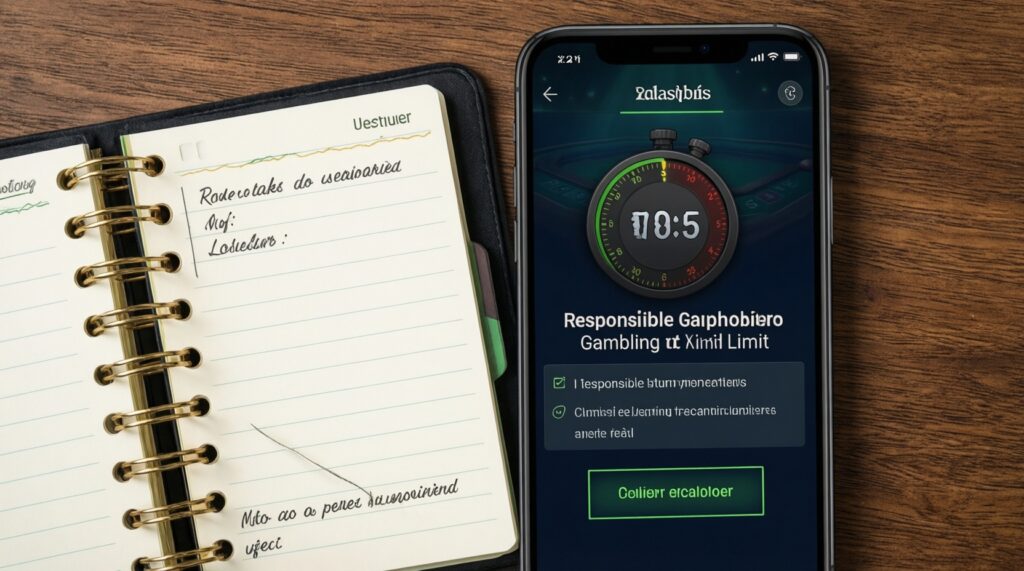
| What you need | Why it matters | Checkpoint |
|---|---|---|
| A timer (phone/alarm) | Prevents time-blindness | Timer set before first spin |
| A notes app or simple ledger | Records session buy-in, end balance, rules followed | 1-line log per session is ready |
| Platform responsible gambling tools (if available) | Helps enforce limits you might override manually | Deposit/loss limits reviewed and enabled |
| One chosen game profile | Switching games mid-session often increases variance of outcomes | Slot volatility category noted |
For ตั้งขีดจำกัดการเล่นสล็อต, define sessions in two dimensions: time and volume. Use whichever limit hits first to stop.
- Set a hard time cap. Choose a duration you can stop at without negotiation (work, sleep, commitments). When the timer ends, you cash out and stop.
- Set a hard spin cap. Decide a maximum number of spins; stop even if you are "one bonus away." This prevents extending a session during variance spikes.
- Set a session buy-in. Treat it as spent the moment the session starts; do not reload from the main bankroll mid-session.
- Define what ends the session first. Time cap, spin cap, stop-loss, or stop-win-whichever occurs earliest is the rule you follow.
Bet Sizing Models: Volatility, RTP, and Risk per Spin
| Action | Metric to set | Checkpoint |
|---|---|---|
| Classify slot volatility | Low / medium / high (as shown by provider) | Volatility noted before choosing bet size |
| Pick a risk-per-spin rule | % of session bankroll per spin | Rule written and not changed mid-session |
| Set a max bet cap | Absolute max bet size | Cap protects you from "tilt raises" |
| Predefine bet change conditions | Only between sessions | No reactive increases after losses |
- Know your slot's volatility label and whether you're comfortable with long dry streaks.
- Decide your session bankroll (buy-in) first; bet sizing comes second.
- Write down your max bet for the session and commit to it.
- Choose an exit rule (stop-loss/stop-win) that doesn't depend on luck "turning."
-
Start from risk per spin (core control).
Use a simple rule: Bet size = Session bankroll × Risk-per-spin%. Lower risk per spin increases survival through variance; higher risk per spin increases bust probability.- Practical guideline: keep risk per spin small enough that a short losing streak won't force you to break rules.
-
Adjust risk by volatility, not by emotions.
High-volatility slots generally require a smaller risk per spin than low-volatility slots because outcomes are more clustered into rare, larger hits.- Rule of thumb: if you feel tempted to "double the bet to get it back," your chosen risk per spin is too high.
-
Treat RTP as selection input, not a win promise.
RTP is a long-run property; it does not protect a single session. Use RTP only to compare games, then rely on bankroll rules for protection. -
Set a session max-bet cap that you never exceed.
A cap is essential for บริหารเงินทุนเล่นสล็อต because bet spikes are the fastest way to break stop-loss plans.- Example one-line rule: "Max bet = planned bet size; no increases until next session."
-
Only change bet size between sessions (planned review).
If you want to play higher stakes, end the current session, log results, then start a new session with a new buy-in and the same risk rule.
Goal Planning: Short-Term Wins and Long-Term Targets
| Action | Metric to set | Checkpoint |
|---|---|---|
| Define the purpose of the session | Entertainment budget vs. structured play | Goal does not rely on "must win" thinking |
| Choose stop-win and stop-loss | Amount or % of session bankroll | Both limits set before first spin |
| Set a long-term cap | Max loss per week/month | Prevents cumulative overspend across sessions |
For วิธีตั้งงบเล่นสล็อต, your "goal" is not to force profit; it's to define when you stop. Use targets as exit triggers that protect your bankroll and your mood.
- I set a session stop-loss and will end the session immediately if it hits.
- I set a session stop-win and will cash out if it hits.
- I set a time limit and a spin limit; the first one reached ends the session.
- I can explain, in one sentence, why I chose this slot's volatility for today.
- I will not increase bet size to recover losses (no "martingale" behavior).
- I have a weekly/monthly bankroll cap; I won't add extra funds outside the plan.
- I will take a break if I feel anger, urgency, or the need to "get even."
Monitoring and Adjustment: Records, Metrics, and Exit Triggers
| Action | Metric to track | Checkpoint |
|---|---|---|
| Log each session | Buy-in, cash-out, time, game volatility, bet size | Logged within 2 minutes of stopping |
| Review after a fixed count of sessions | Rule adherence rate (yes/no per session) | Adjust rules, not emotions |
| Use exit triggers consistently | Stop-loss/stop-win hits | No "one more spin" exceptions |
Use a lightweight log to test whether your สูตรบริหารเงินทุนสล็อตออนไลน์ is actually being followed. The goal is consistency: if rules are frequently broken, simplify and tighten limits.
- Error: Resetting stop-loss after a partial recovery. Fix: stop-loss is final for the session.
- Error: Increasing bet size after losses ("tilt raise"). Fix: lock max bet; change only between sessions.
- Error: Switching to higher volatility mid-session. Fix: game selection happens before the session starts.
- Error: Treating a win as "house money" and abandoning limits. Fix: same limits apply when winning.
- Error: Extending time/spins because you feel close to a bonus. Fix: limits are independent of game state.
- Error: Not tracking sessions, relying on memory. Fix: one-line session log only.
- Error: "Top-ups" from outside the bankroll plan. Fix: enforce a strict period cap (weekly/monthly).
Behavioral Risks: Tilt, Chasing Losses, and Discipline Tactics
| Alternative | When it's appropriate | Checkpoint |
|---|---|---|
| Short "cool-off" break (end session) | Any sign of tilt, urgency, or anger | You can stop without negotiating |
| Lower-stakes session (new session rules) | You want to continue but limits were hit | New buy-in; no transferring losses |
| Switch to non-monetary entertainment | You're playing to change mood rather than for fun | Replace behavior, don't escalate it |
| Use platform limit tools or self-exclusion | You repeatedly break limits | Friction added before the next deposit |
- End the session immediately and take a cool-off. Best when you feel tilt or the urge to chase; it protects bankroll and decision quality.
- Start a new, smaller session only after a reset. Appropriate if you still want entertainment but you already hit a limit; use a fresh buy-in and the same risk-per-spin rule.
- Replace the activity. Use a non-gambling alternative when you notice you're playing to fix emotions, not to enjoy the game.
- Increase friction with responsible gambling tools. Appropriate when you repeatedly override your own rules; external limits support discipline better than willpower alone.
Concise Clarifications on Bankroll Rules
| Question area | What to decide | Checkpoint |
|---|---|---|
| Budget scope | Daily/weekly/monthly bankroll cap | Cap is fixed and affordable |
| Session design | Time/spin limits + buy-in | Limits are set before you play |
| Bet sizing | Risk per spin + max bet | No mid-session bet escalation |
| Stopping rules | Stop-loss + stop-win | Whichever hits first ends the session |
What is a bankroll in slot play?
A bankroll is the fixed amount of money you pre-allocate for slots over a chosen period. It is separate from essential spending and is treated as fully at risk.
How do I split my bankroll into sessions?
Decide how many sessions you plan to play in the period, then assign a session buy-in to each. Do not move extra funds into a session once it starts.
Should I increase my bet size after a losing streak?
No. Increasing bets to recover losses is a common path to breaking limits; keep bet size stable and change it only between sessions based on your plan.
Do RTP and volatility guarantee anything in a single session?

No. RTP is long-run and volatility describes payout distribution; both inform selection, but bankroll rules control your short-run risk.
Which limit matters more: time, spins, stop-loss, or stop-win?
Use all of them and stop at the first one you hit. Multiple limits reduce the chance of "just a bit longer" decisions.
What's the simplest way to know my plan is working?
If you consistently stop at your limits without exceptions, your plan is working operationally. If you often break rules, tighten limits and reduce bet size risk per spin.