
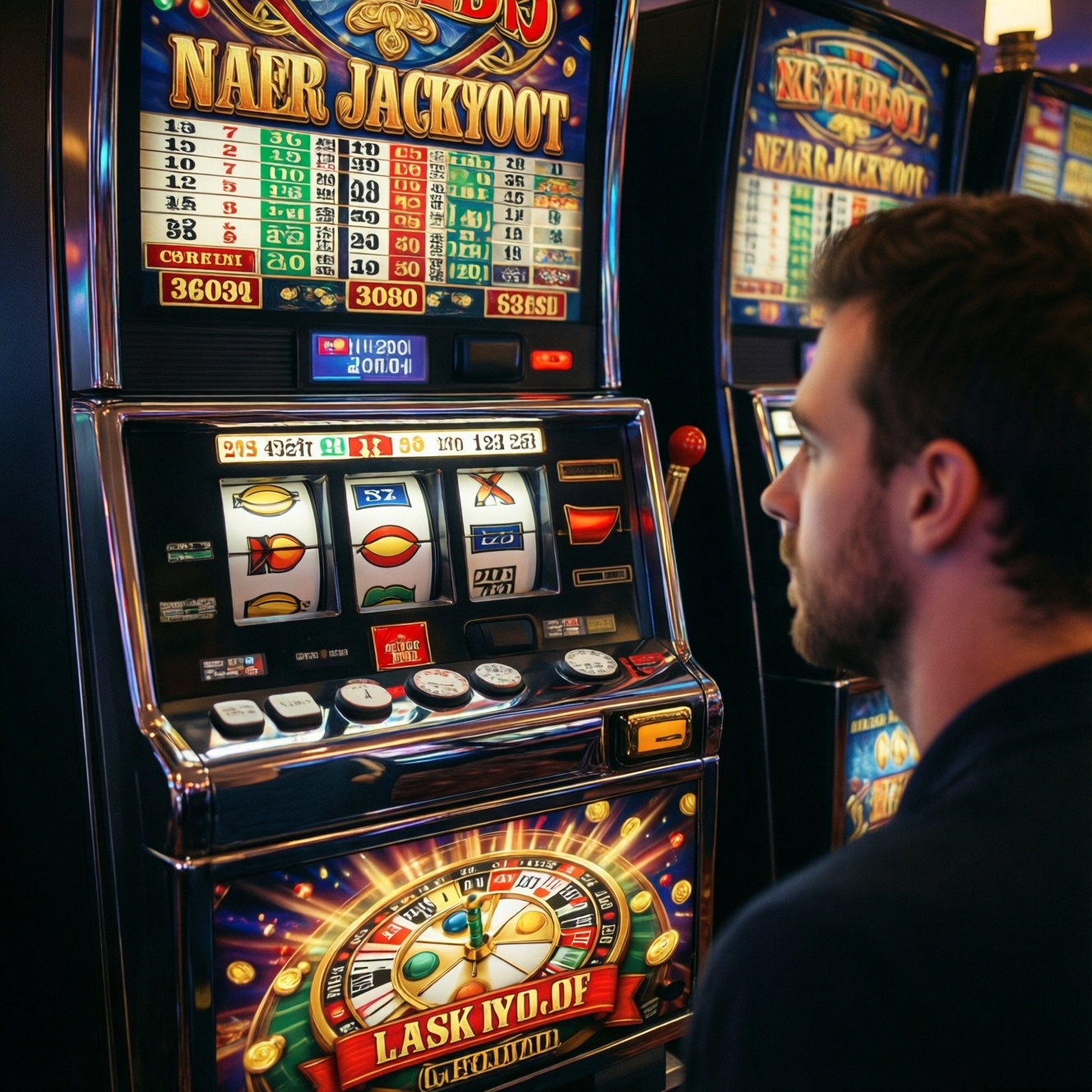
A "near miss" (looking like you almost hit a jackpot) does not mean the next spin is more likely to win. That belief is the gambler's fallacy: treating independent random events as if they have memory. In slots, each spin is a new draw; perceived momentum is psychological, not mathematical.
Practical summary: probability versus perception
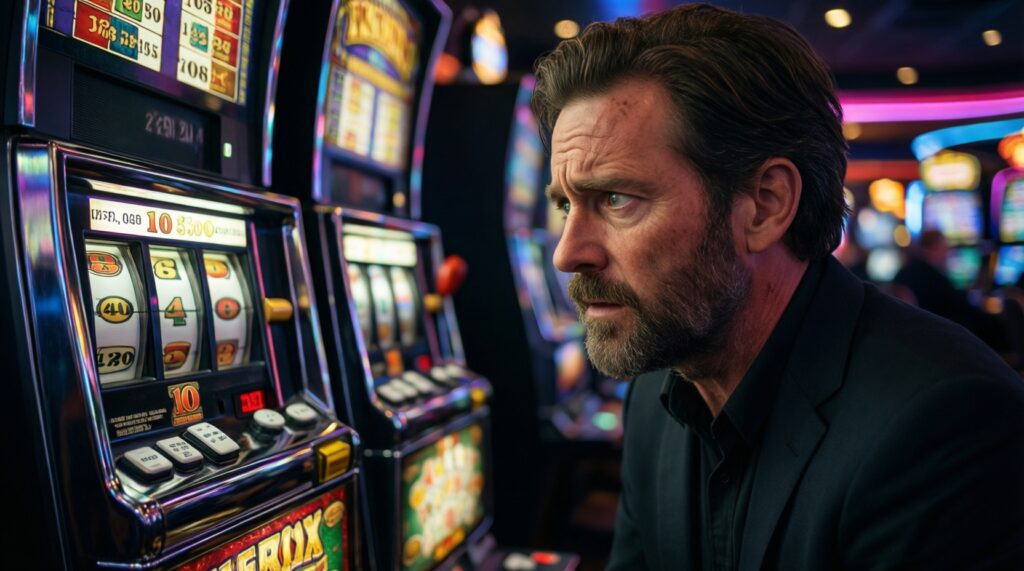
- "Almost hit" is a perception cue, not evidence of increased odds on the next spin.
- Past outcomes don't "push" the machine toward a jackpot; independence is the default assumption.
- Chasing after a near miss is exactly what makes สูตรเล่นสล็อตใกล้ได้แจ็กพอต feel real, even when it isn't.
- The only stable levers you can evaluate are rules, payouts, and limits-not streaks.
- Use a quick check: ask whether the event is independent; if yes, reset your expectation every spin.
Persistent myths about 'near misses' and jackpots
Myth: "I was one symbol away, so the next spin is hotter." This is the core confusion behind many claims of วิธีเพิ่มโอกาสถูกรางวัลสล็อตแจ็กพอต. A near miss is an outcome category designed to look informative, but it usually carries no predictive signal about the next result.
A near miss is not "almost winning" in the mathematical sense. It is simply a non-winning outcome that is visually close to a winning pattern (for example, two matching symbols and a third that doesn't complete the line). The closeness is defined by the display rules, not by probability.
Boundary: in normal RNG-based slots, "near miss" does not mean your probability is drifting upward. The only time "progress" exists is when the game explicitly defines it (for example, a visible meter that increases by stated rules). If the game does not state a progress mechanic, treat spins as independent.
Practical takeaway: If you can't point to a published mechanic that accumulates across spins, don't infer one from "almost" patterns.
Cognitive mechanisms that create the gambler's fallacy
- Pattern completion bias: your brain treats "two out of three" as unfinished business, even when each spin is a fresh draw.
- Outcome clustering illusion: random sequences naturally contain streaks and clumps; people interpret them as "phases."
- Availability: near misses are more memorable than ordinary losses, so they feel more frequent and meaningful.
- Control narratives: players prefer actionable stories (timing, bet switches, "hot/cold") over acknowledging randomness.
- Loss-chasing framing: "I'm due" reframes a series of losses as an investment toward a payoff.
- Reward anticipation: near misses can amplify arousal, which is misread as "better odds now."
Practical takeaway: When your reason to continue starts with "because I nearly...", label it as a cognitive cue, not a probabilistic one.
Statistical independence: why past spins don't change odds
For independent spins, the probability of a jackpot on spin n+1 does not depend on what happened on spins 1..n. A simple way to express the idea is: P(win next) = constant (unless the rules explicitly say otherwise).
Common situations where players mistakenly assume dependence:
- After multiple near misses: believing the machine is "aligning" and must "finish" soon.
- After a long losing streak: interpreting losses as increasing "owed" wins.
- After someone else wins: thinking a jackpot "just hit so it won't hit again" (or the opposite).
- After changing bet size/lines: assuming the game "responds" to higher bets with better timing.
- After switching games: thinking you can find a "ready" machine by observing recent outcomes.
This is why questions like สล็อตออนไลน์โอกาสออกแจ็กพอตเท่าไหร่ can't be answered by watching recent spins. You can only answer it from the game's stated math (or verified disclosures), not from your session history.
Practical takeaway: If outcomes are independent, your last 50 spins contain entertainment history-not predictive information.
Designing near-misses: how games exploit perceived momentum
Near-miss presentation is a design technique: the game can show "close" layouts more vividly than ordinary losses. This can create a feeling of momentum without changing the underlying odds.
Why near-miss presentation is effective for players
- It converts a loss into an emotionally "almost" outcome, which keeps attention engaged.
- It encourages "one more spin" thinking by implying proximity to a goal.
- It makes players search for personal tactics, including คาสิโนออนไลน์ เทคนิคเล่นให้ได้กำไร, even when the correct move is setting limits.
Limits of what near misses actually imply
- A near miss does not prove the RNG is trending or that a jackpot is imminent.
- Visual closeness is not the same as probabilistic closeness; it can be purely a display artifact.
- Without an explicit progress rule, "momentum" is not a measurable variable.
Practical takeaway: Treat near-miss graphics as persuasion/UX, not as a diagnostic signal.
Empirical evidence: experiments and casino analytics
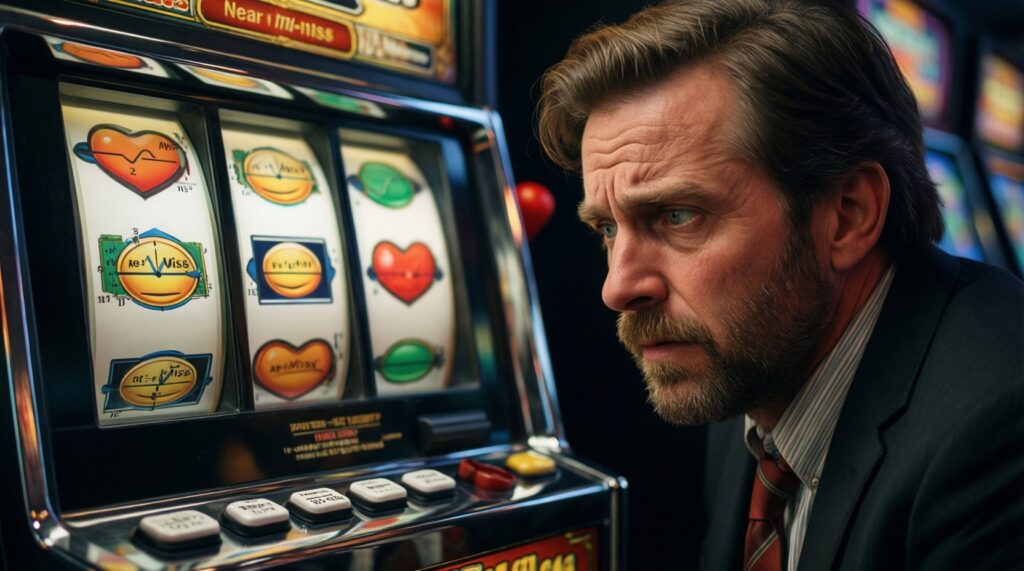
- Myth: "Near misses predict future wins." Correction: without a stated carryover mechanic, they are just another loss category.
- Myth: "If I adjust my bet after a near miss, I can capture the 'next' jackpot." Correction: bet changes don't create memory in an independent RNG process.
- Myth: "RTP proves I'll get the jackpot back if I play long enough." Correction: RTP is an average over many plays, not a guarantee for your session.
- Myth: "I can choose a game by watching who won recently." Correction: recent public outcomes don't reliably reveal your next-spin chance in an independent system.
This is where many players get stuck on RTP สล็อต คืออะไร เลือกเกมยังไงให้คุ้ม: RTP can be useful for comparing games in principle, but it does not turn a near miss into a higher next-spin probability.
Practical takeaway: Use disclosed rules (RTP/volatility descriptions where available, and your own budget limits), not "almost" patterns, to guide decisions.
Decision rules and tools to avoid fallacious betting
Use this short algorithm to check yourself right after a near miss-before you increase stake, extend time, or chase losses.
Quick near-miss reality-check algorithm (1 minute)
- Name the trigger: "I want to continue because it was close."
- Classify the game: Is there an explicit progress mechanic stated in rules (meter, guaranteed drop, visible accumulation)?
- If no explicit progress: assume independence; the next-spin chance is unchanged.
- Decide with limits: compare your remaining budget/time to your preset stop rules.
- Act: either continue at the planned stake (no escalation) or stop.
Minimal pseudocode you can reuse
if reason == "near miss" then
  if game_has_explicit_progress_rule == false then
    belief = "odds unchanged"
  end if
end if

if remaining_budget <= stop_loss or time_spent >= time_limit then
  stop()
else
  continue_at_planned_stake()  # no chase, no escalation
end if
Practical takeaway: If your plan requires escalating after "almost," it's not a plan-it's a reaction.
Clarifying common questions about near-miss effects
Does "almost jackpot" mean I'm due to win soon?
No. In independent spins, "due" is a feeling, not a probability update.
Is there any real "สูตรเล่นสล็อตใกล้ได้แจ็กพอต" that works?
A near-miss-based "formula" cannot change next-spin odds. The only reliable "method" is budgeting and choosing games based on disclosed rules, not streaks.
What's the most realistic วิธีเพิ่มโอกาสถูกรางวัลสล็อตแจ็กพอต?
You generally can't increase jackpot probability by reacting to outcomes; you can only choose different games/stakes with different stated structures. Your controllable improvement is reducing loss-chasing and sticking to limits.
So สล็อตออนไลน์โอกาสออกแจ็กพอตเท่าไหร่ depends on my previous spins?
Not in an independent RNG model. Your previous spins don't change the next one unless the game explicitly states a carryover mechanic.
RTP สล็อต คืออะไร เลือกเกมยังไงให้คุ้ม in practice?
RTP is a long-run average return concept, useful for comparing games, not for predicting a session outcome. "Worth it" should include your bankroll, volatility tolerance, and stop rules.
Are there คาสิโนออนไลน์ เทคนิคเล่นให้ได้กำไร that are actually safe?

There is no guaranteed profit technique for games with a house edge. The safest techniques are risk management: fixed stake sizing, time limits, and stopping rules.