
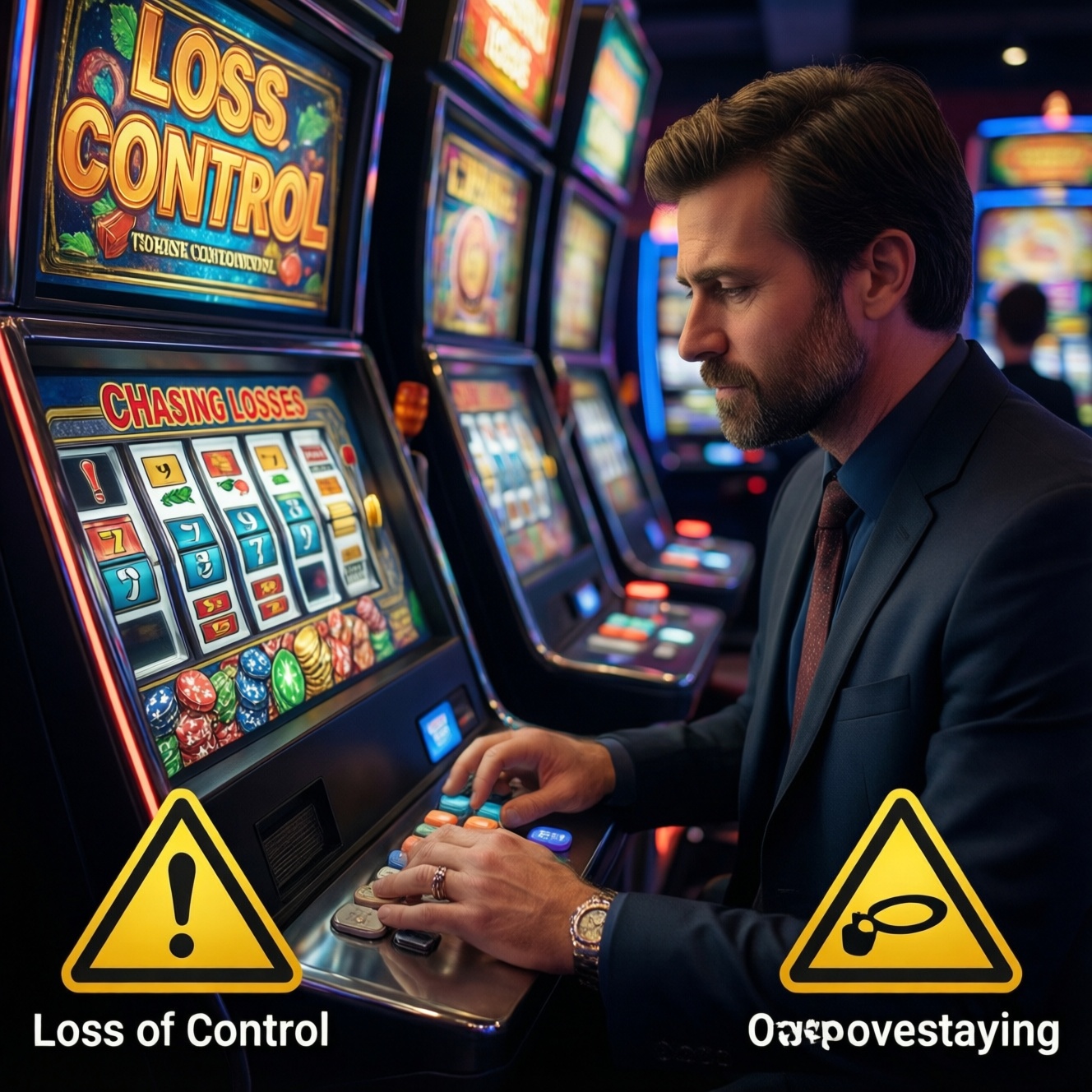
Use responsible play metrics to decide it's time to stop by combining three signals: (1) loss-of-control behavior (speed, repetition, ignoring breaks), (2) loss patterns that trigger chasing, and (3) engagement drift (longer sessions, fewer pauses). When two or more signals persist beyond your pre-set thresholds, switch to a hard stop and escalate to support.
Critical Indicators of Harmful Play

- You override your own limits (time, spend, or deposit) more than once within the same monitoring window.
- You increase stake size or bet frequency immediately after losses (classic chasing response).
- Session breaks shrink or disappear, especially after a negative outcome.
- You switch to higher-risk formats or faster games when under pressure to recover.
- Play starts replacing essentials (sleep, work, relationships) or becomes secretive.
- You repeatedly return after deciding to stop, without a clear reason other than urge relief.
Behavioral Metrics to Monitor in Real Time
Who this is for: intermediate players, product teams, or RG practitioners who want objective "stop rules" using personal logs or platform dashboards, including responsible gambling tools offered by licensed operators in Thailand.
When not to do this: if tracking triggers urges (e.g., it becomes a "score"), or if you already feel unable to stop-skip metrics and move directly to problem gambling help via a trusted service or clinician.
- Core real-time metrics: bet frequency (bets/min), rapid re-buys, repeated game switching, and "stop-decision reversals" (decide to stop → resume within the same window).
- Control metrics: pause compliance (did you take the planned break?), limit compliance (did you stay within your own caps?).
- Context tags: playing while tired/stressed, playing alone late, playing after conflict-store as simple labels.
Financial Signals: Loss Patterns and Chasing
To use financial signals safely, you need a way to separate "variance" from "chasing." The goal is not to predict outcomes; it's to detect when decision quality degrades after losses.
- Access to records: transaction history (deposits/withdrawals), bet history (stakes, timestamps), and session summaries. If you don't have exports, use your operator's history pages or a manual log.
- Limits setup: decide your personal caps first, then set gambling limits online so the platform enforces them (deposit, loss, wager, and time where available).
- Minimal tooling: a notes app or spreadsheet with columns: timestamp, game, stake, result, mood tag, break taken (Y/N), limit override attempt (Y/N).
- Safety defaults: treat any borrowing, bill-money use, or "just this once" exception as an automatic stop trigger.
Engagement Shifts: Session Length, Frequency and Breaks
Risks and limitations (read before applying stop rules):
- Metrics are for harm prevention, not for optimizing play or "earning back" losses.
- Stop rules only work if they are enforced; willpower-based rules fail under stress.
- If tracking makes you play longer, stop tracking and use hard blocks instead.
- Long sessions can be caused by external factors (e.g., free time); focus on loss-of-control patterns, not just duration.
-
Define your monitoring window and baseline
Pick a consistent window (e.g., "per session" and "per day") and write a baseline from recent normal play: typical session start time, typical break cadence, and typical spend pattern. Keep it descriptive (e.g., "usually take breaks between games") rather than numeric if you don't have reliable data yet.- Baseline fields: break habit, typical formats played, typical reason for stopping.
- If you have platform summaries, use them; otherwise use your last few sessions' notes.
-
Create hard stop rules using variables (not vibes)
Turn "I'll stop when it feels bad" into rules you can follow. Use placeholders that you can set to your own safe values:T_time(max time),L_loss(max loss),D_deposit(max deposit),B_break(minimum break requirement).- Example rule format: "If session time ≥
T_timeOR net loss ≤ −L_loss, then stop forB_breakand do not resume today." - Make at least one rule "non-negotiable" (no exceptions).
- Example rule format: "If session time ≥
-
Detect engagement drift (the early warning)
Flag when your pattern shifts away from baseline: breaks shorten, sessions stack back-to-back, or you return soon after deciding to stop. This drift is often earlier than a financial red line.- Drift markers: "skip break after loss," "restart after stop decision," "switch to faster game to recover."
- If two drift markers appear in one window, treat it as a stop event.
-
Apply a chasing detector to losses
Chasing is not "losing"; it's changing behavior because you lost. Use simple logic: after a loss, do you increase intensity (stake, speed, risk) or ignore breaks?- Pseudocode:
if (loss_event) and (stake_up or speed_up or break_skipped or game_risk_up) then chasing_flag = true - If chasing_flag is true, stop immediately and enforce a cool-off period.
- Pseudocode:
-
Enforce the stop with tools, not promises
Implement your stop rules using platform controls: time-outs, deposit limits, and notifications. If your operator supports it, enable reality checks and blocking features.- Use responsible gambling tools to make the stop automatic.
- If you repeatedly override controls, move to self exclusion gambling options rather than "stronger discipline."
-
Review and adjust your thresholds safely
After a cool-off (not right after a loss), review what triggered the stop and whether the rule was too soft or too hard. Adjust only in the direction of more protection if you saw chasing or secrecy.- Never increase limits to "make it back."
- If stops happen often, focus on reducing exposure (fewer sessions) rather than "better control."
Psychological Risk Markers Extracted from Interaction Data
Use this checklist to confirm whether your metrics are capturing real risk (not just normal fluctuation). If several items are true, treat it as a "do not continue" state.
- You feel relief only while playing, and discomfort returns immediately when you stop.
- You hide play details (time, spend, or outcomes) or feel you must justify them.
- You notice irritability or agitation when interrupted or asked to take a break.
- You keep playing to change mood (numbness, stress escape) rather than for entertainment.
- You reinterpret limits as negotiable ("only today," "just one more") in the moment.
- You feel compelled to recover losses specifically, not to continue entertainment.
- You experience "time loss" (surprised by how long you played) more than occasionally.
- You resume play automatically after a trigger (loss, notification, boredom) without conscious choice.
Defining Thresholds and Designing Automated Interventions
- Setting thresholds after you're already activated: define
T_time,L_loss, and break rules when calm, not mid-session. - Relying on a single metric: time alone or loss alone can miss risk; require a combination (e.g., drift + chasing flag).
- Allowing exceptions: "one-time exceptions" train overrides; design rules with zero exception paths.
- Using notifications as the only intervention: a message without a friction step is easy to ignore; pair with time-outs or enforced breaks.
- Confusing higher volume with higher skill: more sessions or faster play increases exposure; it's not evidence of control.
- Designing for re-engagement: if the system's goal is retention, your personal safety rules must be external and enforceable.
- Not defining an escalation ladder: when a threshold repeats, you must move from reminders → time-outs → exclusion.
- Ignoring money-source integrity: any sign of using borrowed funds or essential money should bypass all "soft" interventions.
Effective Outreach: Timing, Tone and Escalation Steps
When metrics show repeated stops or chasing flags, use a simple escalation path. Choose the least intrusive option that is still enforceable.
- Immediate cool-off with a scripted message to yourself: write one sentence you will follow ("I stop now; I review tomorrow"). Use it at the first chasing flag to reduce negotiation in the moment.
- Platform-enforced controls: time-out, lower limits, and reality checks. If you keep trying to bypass them, escalate rather than "retry."
- Hard exclusion: use self exclusion gambling when you repeatedly breach limits or conceal play. This is a protective decision, not a punishment.
- Professional support: if urges feel compulsive or harm is escalating, seek gambling addiction treatment via a qualified clinician; combine it with practical blocks and financial safeguards.
Practitioners' Quick Answers on Intervention Triggers
What is the simplest reliable trigger to stop immediately?
A chasing flag: any increase in intensity right after a loss (speed, stake, risk, or skipped break). Treat it as a hard stop, not a warning.
How do I set thresholds without picking arbitrary numbers?
Use variables (T_time, L_loss, B_break) and anchor them to "what I can comfortably lose/time I can comfortably spend without consequences." Then enforce them with platform controls rather than willpower.
Which responsible gambling tools matter most for stopping on time?
Time-outs/cool-offs and deposit/loss limits are the most actionable because they add friction. Reality checks help, but they should support hard controls, not replace them.
When should I move from limits to self-exclusion?

When you repeatedly override limits, hide play, or return immediately after stopping despite clear harm. Escalate to self exclusion gambling sooner if you're using unsafe money sources.
What if my metrics show risk, but I feel fine?
Follow the stop rules anyway. Harmful play often looks "fine" in the moment; the metric is there to prevent delayed consequences.
Where should someone in Thailand look for problem-focused support?
Start with problem gambling help through trusted local health services or licensed provider support channels, and add practical blocks (timeouts, exclusions) at the same time.
What indicates it's time to seek clinical treatment rather than self-management?

If stopping feels impossible, harm is escalating, or you experience withdrawal-like agitation when not playing, consider gambling addiction treatment with a qualified professional alongside exclusion and financial safeguards.