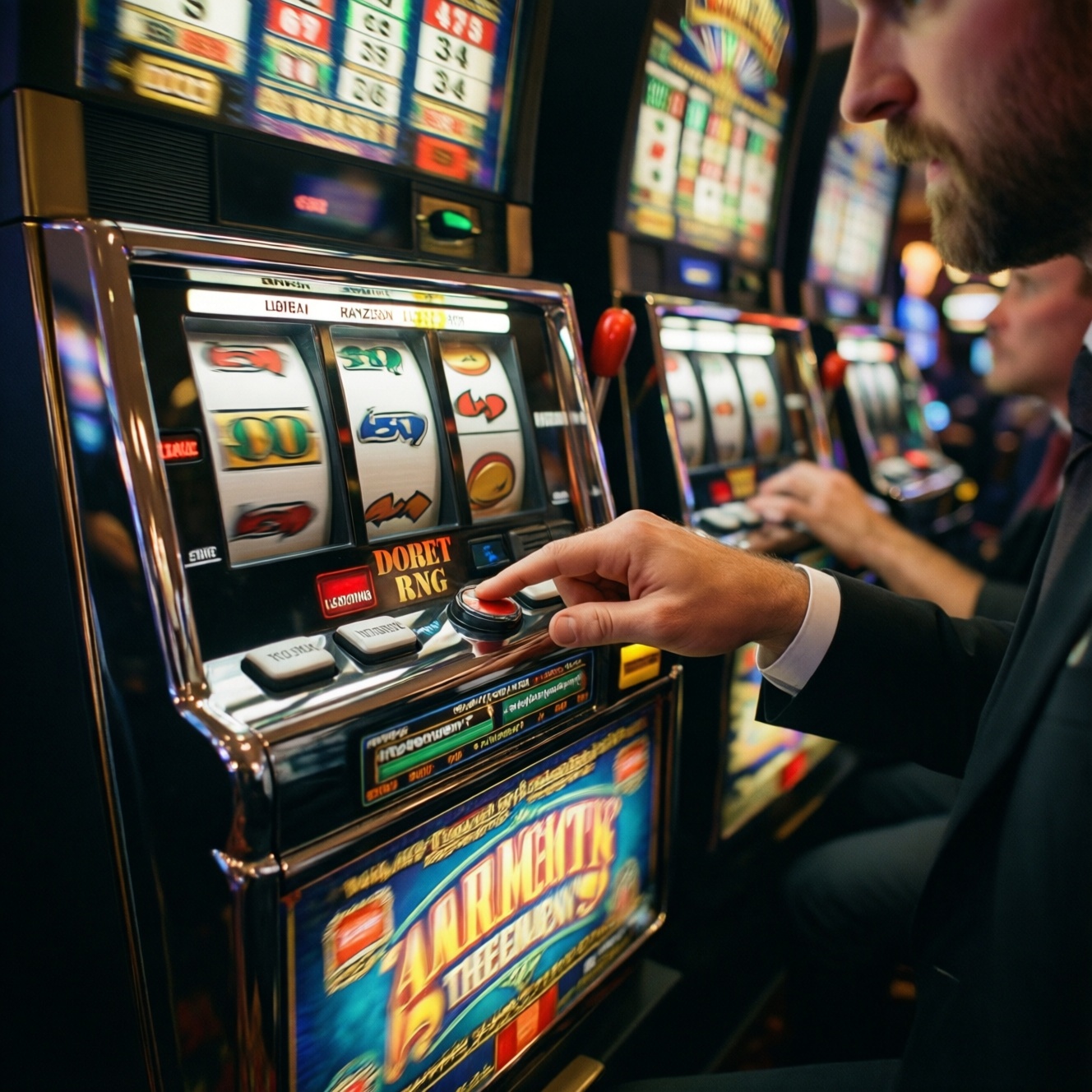

The near-miss effect is a cognitive-perceptual bias where an outcome that is objectively a loss feels subjectively close to a win, boosting arousal, attention, and persistence. In gambling contexts, it can make people keep playing despite unchanged odds. Math helps separate true probability from perceived closeness by checking whether the "almost" outcome actually increases future success.
Core concepts to keep in mind about near-misses

- A near-miss is defined by perceived proximity to a goal, not by improved probability.
- The near miss effect psychology literature treats near-misses as motivationally powerful because they invite "I was close" interpretations.
- In near miss gambling psychology, near-misses can act like partial reinforcement: not a win, but not felt like a normal loss.
- The slot machine near miss effect is strongest when the display implies skill or progress (alignment, timing, "one symbol away").
- In most systems, near-misses do not change the underlying odds; they change attention, emotion, and choice.
Defining near-misses: categories and real-world examples
A near-miss is an outcome that fails to meet a success criterion but is represented in a way that makes it feel close to success. The key boundary is this: a near-miss is not "a better loss" in probability terms; it is a closer-looking loss in psychological terms.
Two practical categories help keep definitions clean. Structural near-misses are baked into the outcome space (e.g., one digit off in a code, one number away in a lottery). Representational near-misses are created by how results are shown (e.g., animation stops "just before" a jackpot symbol, a progress bar fills to 99%).
Real-world examples include "almost catching the train," narrowly missing a sales target, and many cases of the near miss effect in gambling where reels stop with a winning symbol just above or below the payline.
Cognitive mechanisms: why near-misses feel meaningful
- Counterfactual thinking: the mind automatically generates "if only..." alternatives, making the loss feel informative rather than final.
- Illusion of control: when timing, choice, or interaction is present, people infer skill could convert a near-miss into a win next time.
- Goal-gradient logic: perceived closeness increases motivation, even when closeness is cosmetic.
- Misattribution of randomness: people treat random variation as a "trend" (e.g., "I'm getting warmer").
- Value of information (felt, not real): near-misses feel like feedback that can be used, even in tasks with no learnable structure.
- Memory weighting: near-misses are more distinctive than ordinary losses, so they are recalled and overcounted.
Perception and attention: how sensory processing alters outcomes
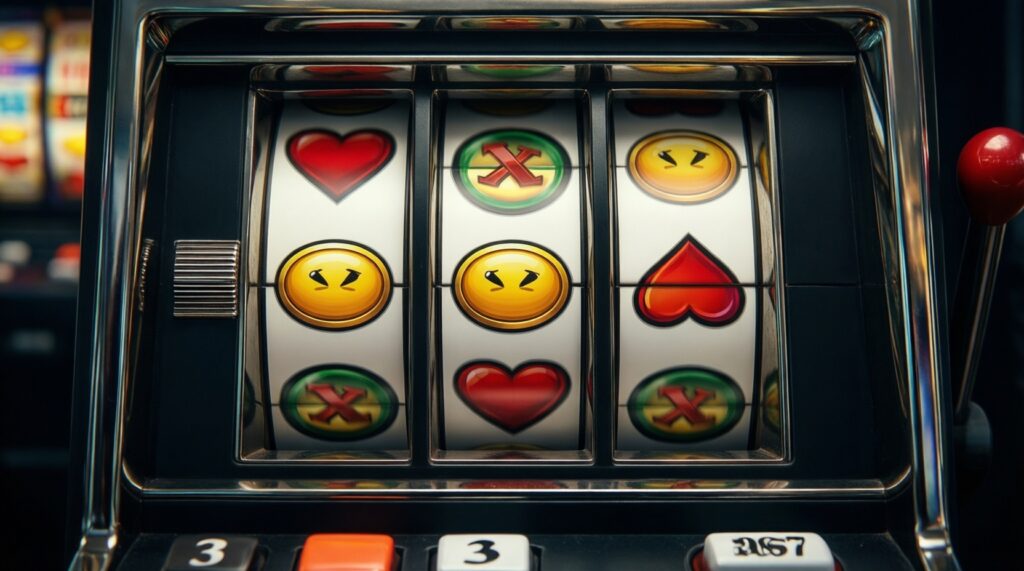
Near-misses become stronger when perception and attention are guided toward "almost." Typical scenarios include:
- Temporal framing: slowed animations, suspense sounds, or delayed reveal increase attention and make the outcome feel closer.
- Spatial framing: placing "winning" elements adjacent to the success boundary (e.g., above the payline) supports the near-miss interpretation.
- Progress cues: meters, streak counters, or "level almost complete" interfaces emphasize distance-to-goal, not probability.
- Near-threshold discrimination: when differences are small (photo finish, tiny margin), the perceptual system treats it as "almost achieved."
- Highlighting alternatives: showing what you "could have won" intensifies counterfactual comparisons.
These framing choices don't change the underlying draw; they change what the brain encodes: closeness, controllability, and salience.
Probability and models: formalizing near-miss statistics
Math is useful here because it forces a separation between (a) visual distance to success and (b) probability of success. A simple check is to compare conditional probabilities.
Probabilistic illustration: Let W be "win on next trial" and N be "near-miss on current trial." If the process is memoryless (independent trials), then:
P(W | N) = P(W)
If your data or system design implies P(W | N) > P(W), then the near-miss is informative (the process has state/learning). If not, the near-miss is psychologically potent but probabilistically empty.
What the formal view is good for
- Detects "fake closeness": reveals when the near-miss effect gambling narrative ("I'm due") conflicts with independence.
- Separates learning from noise: clarifies whether feedback can actually improve future success.
- Enables audits: you can test whether near-misses occur at rates consistent with the mechanism generating outcomes.
Limits you should not ignore
- Closeness needs a metric: "distance to win" must be defined (spatial, numeric, temporal), and different metrics change conclusions.
- Representation can bias measurement: what counts as a near-miss depends on what is shown to the user, not only on the underlying state.
- Human response is non-linear: subjective impact doesn't scale smoothly with objective distance (one symbol away may feel disproportionately strong).
Behavioral consequences: choices, motivation, and learning
- Myth: "Near-misses mean I'm improving." In many tasks (notably random draws), near-misses provide no evidence of skill or trend.
- Error: chasing with higher stakes. A near-miss can raise arousal and urgency, leading to riskier bets or more attempts.
- Mislearning from non-diagnostic feedback. People invent rules ("press earlier," "choose machine B") when outcomes are not controllable.
- Selective recall. Near-misses and wins are remembered; ordinary losses fade, skewing perceived hit rate.
- Persistence without value. The near miss effect gambling pattern often appears as "keep going" behavior even when expected value is unchanged.
Measuring and manipulating near-misses in experiments and design
A clean way to study or audit near-misses is to (1) define a near-miss metric, (2) log outcomes and displays, and (3) test whether near-misses predict anything real beyond motivation. Below is a short algorithm you can apply to your own logs or observations (including near miss effect in gambling situations).
Short algorithm to verify what a near-miss means
- Define success clearly: specify the exact win condition (e.g., "three matching symbols on the payline").
- Define "near" operationally: pick a distance rule (e.g., "two matches + third symbol one position away" or "within 1 unit of threshold").
- Check independence: test whether the next outcome depends on the previous one by comparing P(W | N) vs P(W | not N).
- Check display bias: verify whether the interface shows near-misses more saliently than other losses (animation, sound, highlighting).
- Interpret accordingly: if probabilities are equal, treat the near-miss as a motivation trigger, not evidence of improved odds.
Mini pseudo-code for a quick audit
# Given a sequence of trials with fields:
# outcome: "win" or "loss"
# near_miss: true/false based on your operational definition

p_win = count(win) / count(all)

p_win_given_near = count(trial[i].outcome=="win" where trial[i-1].near_miss==true) /
                   count(trial[i-1].near_miss==true)

p_win_given_not_near = count(trial[i].outcome=="win" where trial[i-1].near_miss==false) /
                       count(trial[i-1].near_miss==false)

if approximately_equal(p_win_given_near, p_win_given_not_near):
    conclude("near-miss changes perception, not odds")
else:
    conclude("system has state/learning or definition is leaking information")
Self-check checklist before you trust the "almost" feeling
- Can you state the win condition and the near-miss rule without using vague words like "close"?
- Did the odds actually change after a near-miss, or did only the display/feeling change?
- Are you inferring skill in a process that is mostly random?
- Would you make the same next decision if the loss looked ordinary (no dramatic reveal)?
Practical questions readers commonly encounter
Is a near-miss a type of reinforcement even when it's a loss?
It can function like partial reinforcement psychologically because it feels informative or progress-like. Objectively it remains a loss unless it changes future probabilities.
Does the near miss effect psychology claim near-misses increase actual winning chances?
No; it explains why near-misses feel motivating and meaningful. Whether chances increase depends on the task structure, not the feeling.
Why is near miss gambling psychology so strong in slots?
Slots can display outcomes in a way that emphasizes "one away" patterns and suspense. That representation amplifies counterfactual thoughts and persistence.
Is the slot machine near miss effect evidence that a machine is about to pay?
Not by itself. A near-miss is not reliable evidence of an upcoming win unless you can show P(win next | near-miss) is higher than baseline.
How can I tell if a near miss effect in gambling is manipulating me?
Check whether the interface dramatizes losses that look close (slowdown, highlight, "almost"). If the odds are unchanged but arousal and urgency spike, it's likely leveraging the near-miss response.
Can near-misses be useful outside gambling?

Yes, when they reflect true feedback in learnable tasks (sports, skill training). They help only if "close" corresponds to controllable improvements.
What's the fastest way to stop overreacting to a near-miss?
Run the conditional-probability check in your head: "Did this outcome change the odds or just my feeling?" Then decide based on expected value and limits, not momentum.