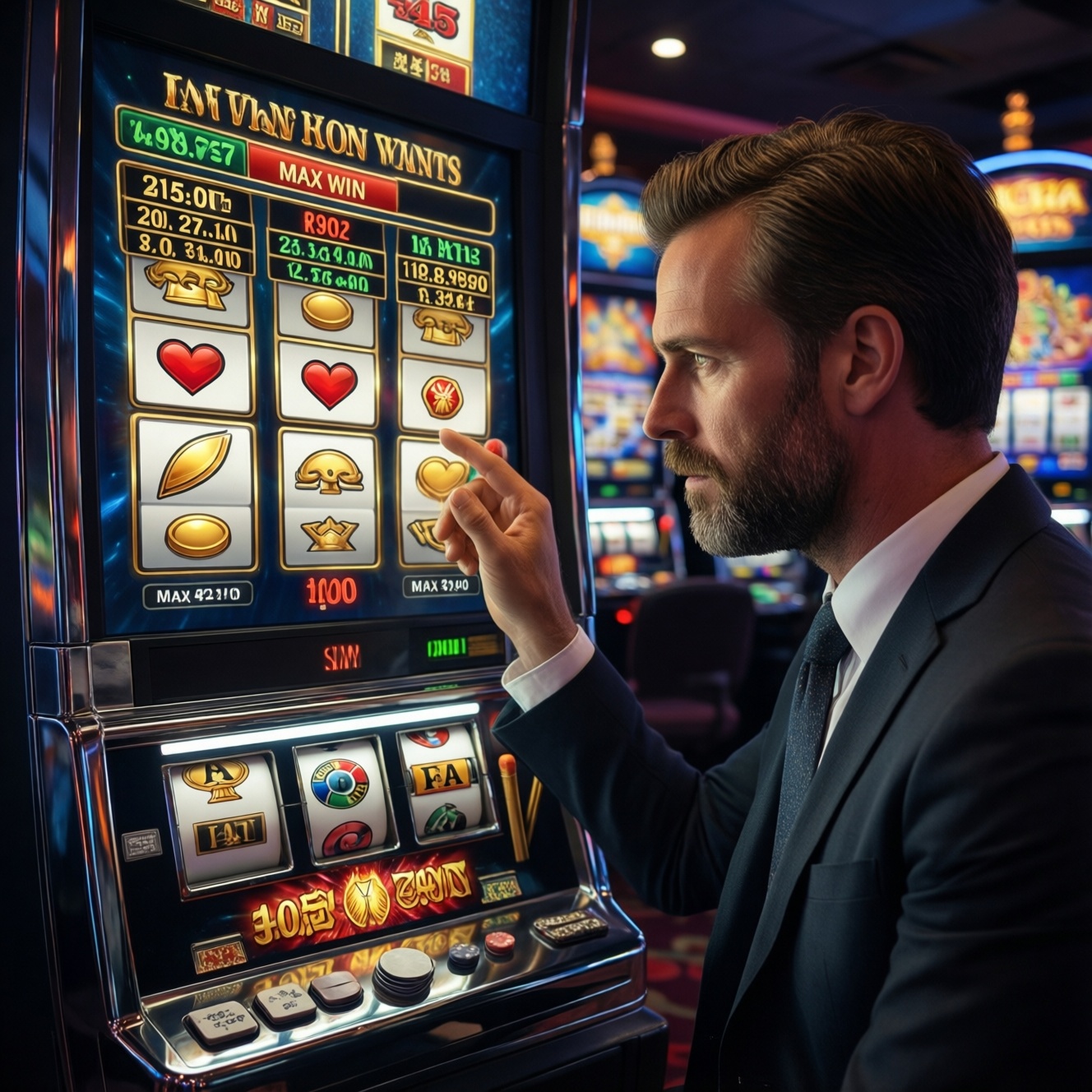
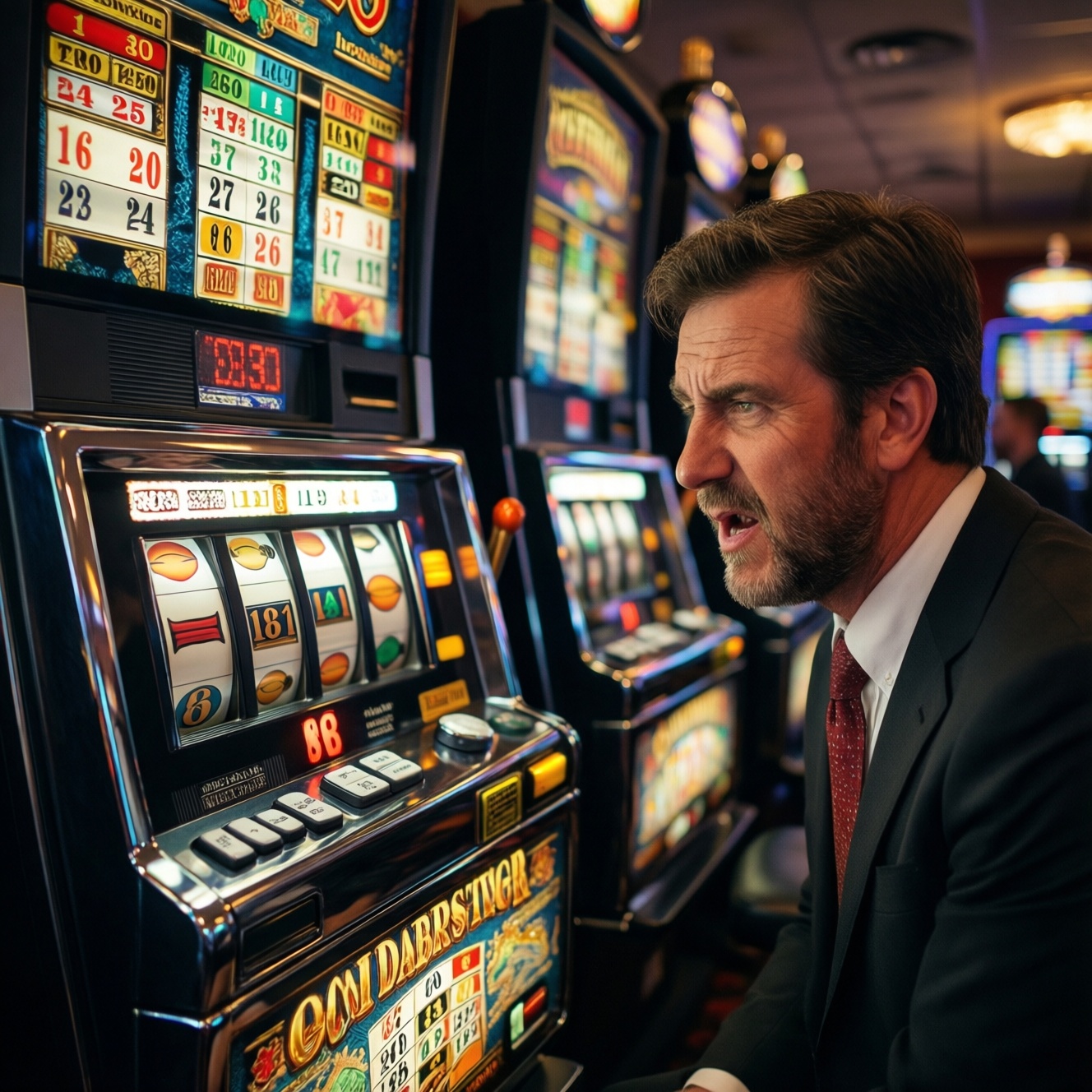
The near miss effect is a psychological response where an outcome that looks close to a win increases motivation to continue, even though it is objectively a loss. In near miss gambling contexts (including casino near miss slots), "almost won" is a designed perception-not a measurable performance metric-so treating it as a statistic leads to flawed analysis and risky design decisions.
Core insights on near-miss mechanics
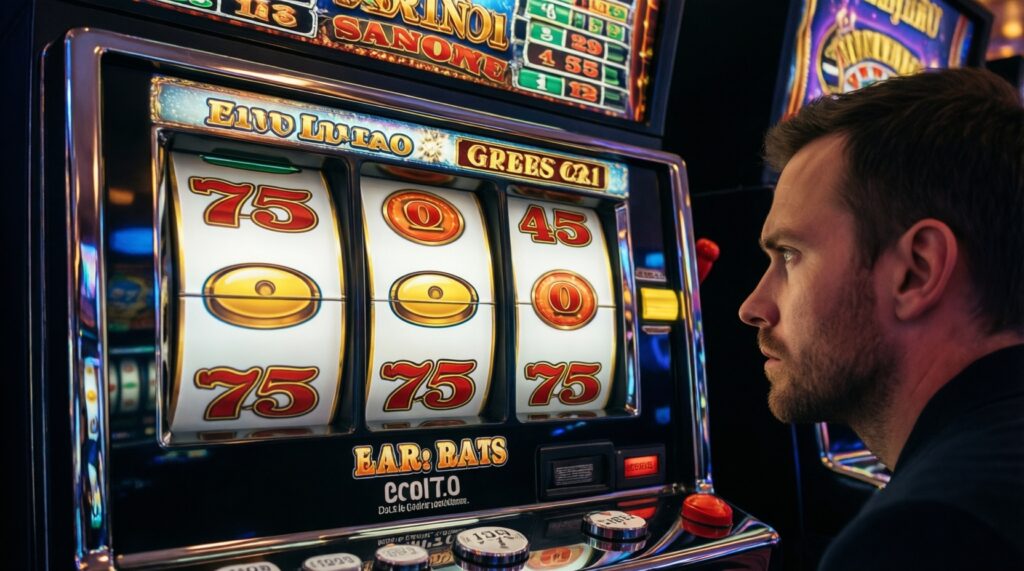
- A near miss is a loss that is presented with win-like structure, increasing perceived controllability and "I was close" reasoning.
- The near miss effect can raise persistence without improving actual skill, value, or odds.
- Near-miss impressions are created by presentation layers (animations, sequencing, framing), not by objective proximity to winning.
- "Almost won" cannot be reliably counted across games or sessions because it lacks a stable, user-independent definition.
- In near miss gambling, the same mechanic can amplify harmful play patterns, intersecting with gambling addiction psychology.
- Ethical game design treats near-miss intensity as a risk variable to cap, test, and monitor-not a growth lever.
Myths first: common misconceptions about 'almost winning' and the evidence that refutes them
Myth 1: "A near miss means the player was objectively close to winning." In most digital products, "close" is a visual or narrative construction. Two outcomes can look equally close while being equally losing states in the underlying math or rules.
Myth 2: "Near misses are the same as progress feedback." Progress feedback points to a stable improvement path (skill, mastery, completion). Near-miss displays often mimic progress without guaranteeing that repeated play increases success probability-especially in chance-driven systems like casino near miss slots.
Myth 3: "If users feel close, the metric is valid." Feelings are real but not automatically measurable. "Almost won" is an interpretation that varies by UI framing, user expectations, session context, and prior outcomes. That makes it unsuitable as a cross-user statistic unless you define it with strict, game-agnostic rules (which most teams do not).
Cognitive processes triggered by near-miss displays
- Counterfactual thinking: Users simulate a small change ("If only one symbol moved...") and treat the loss as informative rather than random.
- Illusion of control: Timing cues and "skill-like" interactions can make chance outcomes feel influenced by user action, a core pathway in near miss effect responses.
- Attentional capture: Highlighting the almost-winning configuration (e.g., two matching icons plus a near-aligned third) draws attention to the win pattern, not to the loss.
- Selective memory: Near misses can be more memorable than ordinary losses, biasing recall of how often a user was "close."
- Goal-gradient activation: When a goal is made salient (jackpot, rare item, rank-up), perceived proximity increases drive, even if objective proximity is unchanged.
- Misattribution of variance: Natural randomness is reinterpreted as a trend ("I'm heating up"), encouraging continuation.
Emotional arousal, learning, and subsequent user behavior

Near misses often produce a mixed emotional profile: frustration plus renewed urge, which can be reinforcing. Typical scenarios where behavior shifts after near-miss displays include:
- Near miss gambling loops: After a near miss, users shorten the time to the next attempt, increasing session intensity without improved expected outcomes.
- "One more try" purchase triggers: Currency top-ups or offers presented immediately after near-miss moments can convert emotion into spend.
- Retry in skill-adjacent UIs: Even when skill is minimal, adding timing controls or "stop" buttons encourages users to believe practice will beat randomness.
- Streak framing: Presenting near misses as part of a "streak" can normalize continued play, a pattern that can be especially problematic when users show risk markers aligned with gambling addiction psychology.
- Social comparison boosts: Showing others' wins right after a user's near miss can intensify urgency ("I was right there").
Why 'almost won' is not a valid statistic: measurement errors and misleading metrics
Teams often try to operationalize "almost won" because it seems intuitive. The problem is that it is not a stable event type unless the product's state space and UI mapping are tightly defined-and most implementations are neither consistent nor comparable.
Common measurement errors when teams count "near wins"
- UI-defined thresholds: Counting near misses based on "within 1 symbol" or "within 1 tile" measures presentation geometry, not meaningful closeness.
- Multiple valid win patterns: If a game has many winning configurations, "distance to win" depends on which win you reference, producing inconsistent labeling.
- Post-hoc labeling: The same outcome can be tagged as a near miss only after an animation reveals what "would have" happened, which is not an observable game state.
- Player-specific interpretation: Novices and experts parse "closeness" differently; the metric becomes a proxy for user belief, not event structure.
- Instrumentation drift: Small UI changes (layout, timing, highlight effects) can shift near-miss rates without any underlying rule change, breaking trend analysis.
Misleading conclusions that follow from an "almost won rate" KPI
- False causality: You may attribute retention to "more near misses," while the real driver is arousal from pacing, audio, or reward salience.
- Optimization for harm: Increasing near-miss frequency/intensity can increase persistence in ways that conflict with ethical game design commitments.
- Broken comparability: Comparing "almost won" across games, markets in TH, or versions becomes meaningless when definitions differ.
- Masking fairness issues: Users can feel "close" even when the expected value worsens, producing trust and compliance risks.
Design techniques that produce near-miss impressions and how they work
- Salient partial matches: Showing two-of-three matches prominently (color, glow, zoom) makes the missing piece feel narrowly absent.
- Temporal teasing: Slowing the final reveal creates suspense, then frames the loss as "just missed," a common pattern in casino near miss slots.
- Stop-on-command illusions: Letting users "stop" reels or meters implies control even when the outcome is predetermined or effectively random.
- Audio/visual win-priming: Starting win fanfare before confirming the result conditions the user to anticipate a win, making the loss feel closer.
- Curated loss distribution: Selecting specific losing outcomes that look close (rather than uniform losses) changes perceived proximity without changing that it is still a loss.
- Framed counters: Labels like "so close" or "almost" convert a neutral loss into a narrative of progress.
Mitigation, testing and ethical controls for designers and analysts
Fast practical advice for product teams
- Replace "almost won rate" with auditable event definitions: instrument concrete states (e.g., "two-of-three shown," "slow-reveal triggered," "user pressed stop") instead of inferred closeness.
- Cap near-miss intensity: set limits on tease duration, win-priming audio, and frequency of curated close-looking losses.
- Segment risk signals: analyze near-miss responses separately for users showing escalating spend, late-night binge sessions, or repeated re-deposits (where applicable).
- Run harm-aware experiments: add guardrails such as max session length prompts, cooldowns, and safer defaults, not only conversion metrics.
- Review with an ethics checklist: ensure the design goal is informed choice, not confusion, especially in near miss gambling-adjacent experiences.
Mini-case: redesigning a near-miss-heavy reel to reduce misleading "closeness"
Situation: A slot-like mini-game shows frequent two-of-three matches and uses a slow final reel, creating repeated near miss effect spikes and user complaints about feeling tricked.
Change set (design + analytics):
- Remove win-priming fanfare until the win condition is actually met.
- Reduce slow-reveal usage; only keep it for true wins, not for curated losses.
- Instrument presentation events, not "almost won": partial-match-shown, slow-reveal, stop-pressed, loss-after-slow-reveal.
- Add a user-facing probability/odds disclosure where legally/appropriately required and a clear "loss is a loss" outcome message.
Pseudocode for safer logging:
// Avoid: near_miss = inferred "closeness"
// Prefer: log observable presentation + state
logEvent("spin_result", { outcome: "loss", winPatternShown: patternsShown });

if (animation.slowRevealUsed) {
  logEvent("presentation_slow_reveal", { usedOn: "loss" });
}

if (ui.partialMatchHighlight) {
  logEvent("presentation_partial_match", { count: ui.partialMatchCount });
}

if (user.pressedStop) {
  logEvent("user_stop_pressed", { timingMs: user.stopTimingMs });
}
Concise practitioner guidance on interpreting and using near-miss effects
What is the near miss effect in product terms?
It is a behavioral lift caused by losses that are framed as close to winning, increasing re-engagement even when objective chances do not improve.
Is near miss gambling only relevant to casinos?
No. The same framing patterns appear in loot systems, spin wheels, and "chance-with-animation" mechanics, though the risk profile is highest in gambling-like loops.
Why do casino near miss slots feel more compelling than ordinary losses?
They highlight the win pattern and suppress the loss framing, prompting counterfactual thinking and perceived control despite the outcome being a loss.
Can we track an "almost won" metric responsibly?
Not as a universal KPI. Track observable display features (tease duration, partial-match highlight) and analyze their impact with harm-aware guardrails.
How does this connect to gambling addiction psychology?
Near-miss framing can strengthen persistence and chase behavior in vulnerable users by turning losses into perceived progress signals.
What is one ethical game design rule for near-miss mechanics?
Never use ambiguity to imply improved odds or user control. If an outcome is random or predetermined, the presentation should not suggest otherwise.
What should analysts report instead of "near wins"?
Report specific presentation exposures and post-exposure behavior (retry latency, spend triggers) with segmentation and safety monitoring, rather than inferred closeness.