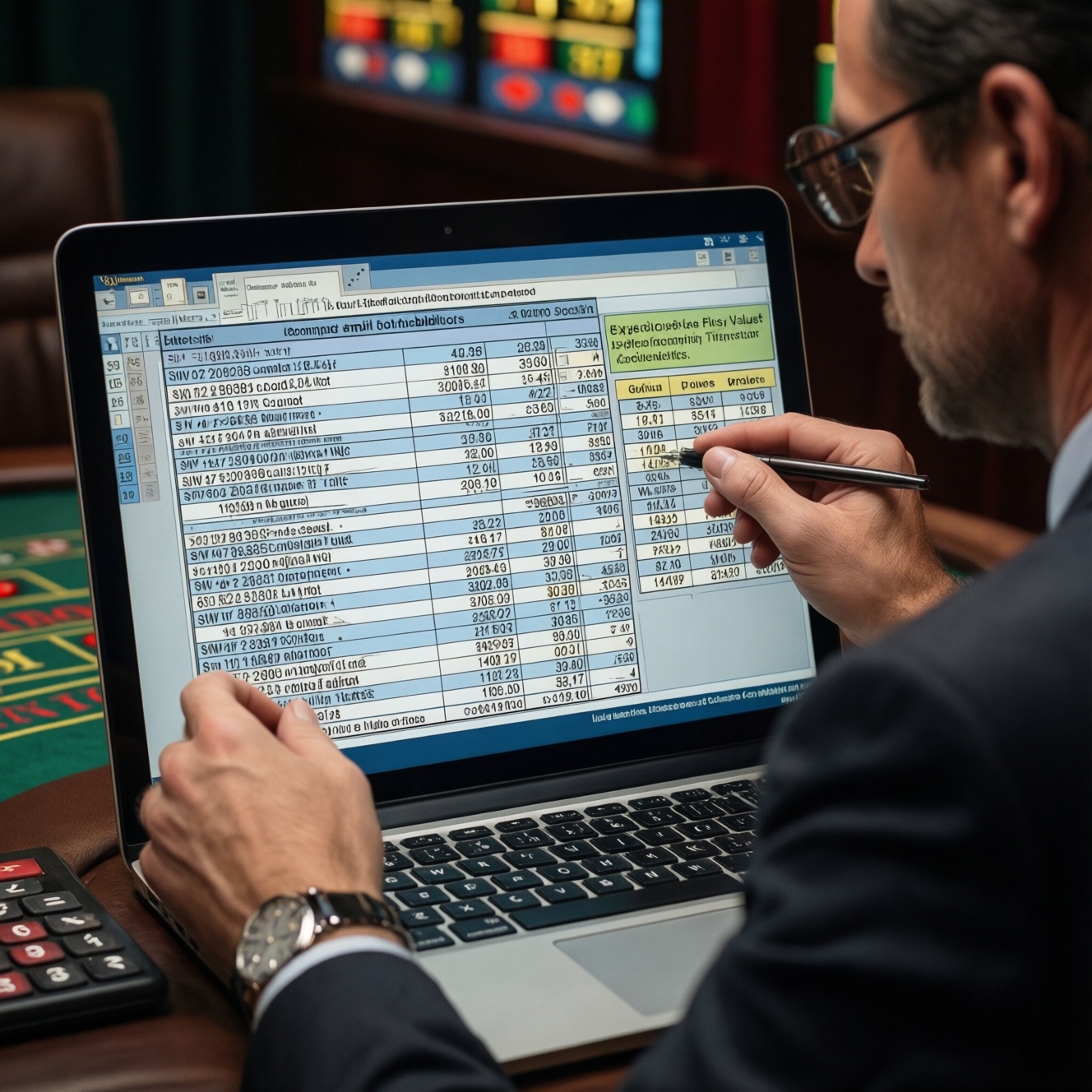

In regulated online slots, timing and button presses do not change your outcome: a Random Number Generator (RNG) continuously produces numbers, and your spin result is mapped from the RNG state at the instant the game accepts the spin. What your tap can change is only pace, bet size, and session control-not probability.
Core conclusions at a glance
- Button mashing, "stopping" reels, and spin timing don't alter RNG-selected results; they only change when the result is revealed.
- Autoplay vs manual spins should be equivalent in odds when the same bet and rules apply.
- Perceived patterns come from normal variance, not "hot/cold" cycles you can exploit.
- Meaningful player levers are bankroll discipline, volatility choice, and bet sizing-not reflexes.
- If you care about fairness, prioritize fair online slots RNG certified by reputable labs and regulators.
How RNGs determine spin outcomes
When people ask for online slots RNG explained, the key idea is simple: the RNG is a fast, deterministic algorithm (or system) that generates a long stream of pseudo-random values. The game converts ("maps") one of those values into a specific stop position or symbol outcome based on the slot's math model.
The important boundary: the RNG decides the outcome before the animation finishes. The spinning reels you see are a presentation layer designed to make the result understandable and entertaining, not a mechanical process you can influence by reacting quickly.
Micro-example: imagine the game needs a number 0-99 to pick from 100 equally sized outcome buckets. If the RNG stream at acceptance time yields 37, bucket 37 is selected. Pressing a button 50 ms earlier might yield 36 or 38, but you cannot "aim" at a bucket-because you don't observe or control the RNG state.
- Checklist: assume the outcome is locked at spin acceptance; treat the reel animation as reveal-only.
Architecture of a slot machine: software and hardware layers

Understanding how RNG works in slot machines is easier if you separate layers. Your actions are handled by the client/UI, while the actual outcome determination happens in controlled logic (often server-side for online play).
- Input layer (client UI): your tap/click requests a spin, sets bet size/lines, and may toggle features like autoplay.
- Game state validation: checks balance, bet limits, feature eligibility, and whether a spin is currently allowed.
- RNG sampling: the system reads the current RNG output (or outputs) at the moment the spin is accepted.
- Outcome mapping: RNG values are mapped to reel stops / symbol selections using the slot's predefined math tables (including any bonus trigger logic).
- Accounting: win/loss is calculated, balance is updated, and a record is created for auditability.
- Presentation: the client animates reels to match the already-chosen outcome; "stop" buttons typically just shorten this animation.
Micro-example: if the acceptance step occurs at time T, inputs after T cannot retroactively change the RNG sample used at T; they can only affect the next spin request or the animation speed for the current reveal.
- Checklist: focus on what you can set before acceptance (bet, rules, bankroll), not what you press during the animation.
Why timing and button presses appear to matter
Many slot machine myths timing button presses persist because the UI gives strong feedback while probability remains unchanged. These are the most common scenarios that create the illusion of control:
- "Stop" button: reels halt sooner, so it feels like you "caught" a symbol-even though the result was already determined.
- Near-miss animations: designs often show bonus symbols landing close together, which the brain interprets as "almost influenced."
- Sound/visual reinforcement: rapid tapping is paired with responsive effects, which conditions a sense of agency.
- Streak clustering: variance naturally produces runs; people attribute runs to timing rather than randomness.
- Autoplay vs manual: switching modes can coincide with a win purely by chance, reinforcing a false causal link.
Micro-example: if a bonus triggers with probability p per spin, then "it hit right after I switched to manual" is expected occasionally. After N spins, you'll see many coincidences; your memory selectively keeps the dramatic ones.
- Checklist: treat "stop," rapid tapping, and mode switching as pacing tools, not win-rate tools.
Debunking popular timing myths with probabilistic reasoning
The quickest way to test a claim is to ask: "Does this action change the underlying probability model, or only the moment I see the result?" If only the reveal timing changes, the odds don't.
- Myth: "Pressing stop at the right millisecond improves wins." Reality: in RNG-based slots, stop typically ends the animation; the mapped outcome doesn't change.
- Myth: "If you wait between spins, the machine cools down and pays." Reality: each spin is (designed to be) independent; waiting does not update a "payout meter" you can time.
- Myth: "Fast spins beat the RNG." Reality: fast play changes the number of spins per hour, not the probability per spin.
- Myth: "Switching bet size at the right time forces a bonus." Reality: bet size affects payout magnitude and sometimes feature eligibility, not the randomness quality of the next sample.
- Independence check: if the game's rules don't state a dependence on past spins, assume each spin's probability structure is unchanged by your timing.
- Information check: if you can't observe the RNG state, you can't intentionally synchronize with it.
- Mechanism check: if a button acts during the animation phase, it cannot change the already-accounted outcome.
- Cost check: faster spins increase variance exposure per hour; you may feel "luckier/unluckier" simply because more trials occurred.
Micro-calculation: suppose a feature triggers 1 time in 200 spins on average (a simplified illustration). Doing 200 spins quickly vs slowly doesn't change the per-spin chance; it only changes how soon you experience those 200 trials.
- Checklist: only believe an edge if you can explain a rule-level mechanism that changes probabilities-not just timings.
Empirical evidence: audits, lab tests and casino controls
Real-money platforms don't rely on trust alone. While you shouldn't assume every site is safe, reputable operators use repeatable controls that make "timing exploits" unlikely in compliant environments.
- RNG certification: reputable games are tested so that outcomes match the declared math model, supporting the idea of fair online slots RNG certified rather than user-influenced.
- Configuration control: the published game version and math parameters are controlled; operators can't casually "switch to tight mode" in response to your behavior without violating controls.
- Server-side determination (common online): the authoritative outcome is decided in controlled logic; the client mainly renders.
- Logging and dispute trails: spin acceptance, bet, outcome, and balance changes are logged, making after-the-fact manipulation harder to hide.
- Common player mistake: confusing "feel" (near misses, streaks) with evidence; neither demonstrates a timing lever.
Micro-example: if "stop button helps" were real, two players could run the same bet size and systematically outperform autoplay over many spins. In practice, any observed difference is consistent with normal variance unless a true rule/mechanism is documented.
- Checklist: pick regulated operators and certified games; don't treat anecdotal streaks as proof of a technique.
Practical player guidance: what influences return and variance
If your goal is to improve outcomes in the only ways available, prioritize game selection and bankroll process. The "best" approach for best online casino slots real money is not a timing trick; it's choosing reputable venues, understanding volatility, and controlling pace and stakes.
Actions that actually matter (and why)
- Play certified, regulated games: reduces the risk of unfair implementations and strengthens your recourse if disputes arise.
- Match volatility to bankroll: high volatility increases swing size; low volatility tends to smooth results (without changing long-run house edge).
- Control bet sizing: your risk-of-ruin is strongly affected by bet as a fraction of bankroll.
- Set stop rules: session caps limit how much variance you absorb in one sitting.
- Use autoplay for discipline (optional): not for better odds-only to prevent impulsive bet jumps or frantic tapping.
Micro-case: bankroll 2,000 THB with a 20 THB/spin habit means 100 spins of runway (ignoring wins). Dropping to 10 THB/spin doubles your runway to 200 spins; this changes your experience of variance and session length, even though it doesn't alter the game's underlying expected return.
A simple decision routine you can reuse
if (casino is regulated AND game is RNG-certified) then
  choose volatility that fits bankroll
  set max loss and max time
  keep bet size constant
else
  do not deposit
- Checklist: improve controllables (where you play, what you play, how you size bets), ignore timing rituals.
Self-check before you chase a "technique"
- Can you describe a documented rule that changes probability, not just reel animation timing?
- Would the claim still hold if you used autoplay at the same bet size?
- Is your evidence more than a memorable streak (i.e., repeatable over many sessions)?
- Have you verified the game and operator are regulated and RNG-certified?
Concise answers to recurring player doubts
Does tapping faster increase my chances?
No. Faster tapping only increases how many spins you complete per hour; it does not improve the per-spin probability once the RNG decides outcomes.
Does the "Stop" button change the result?
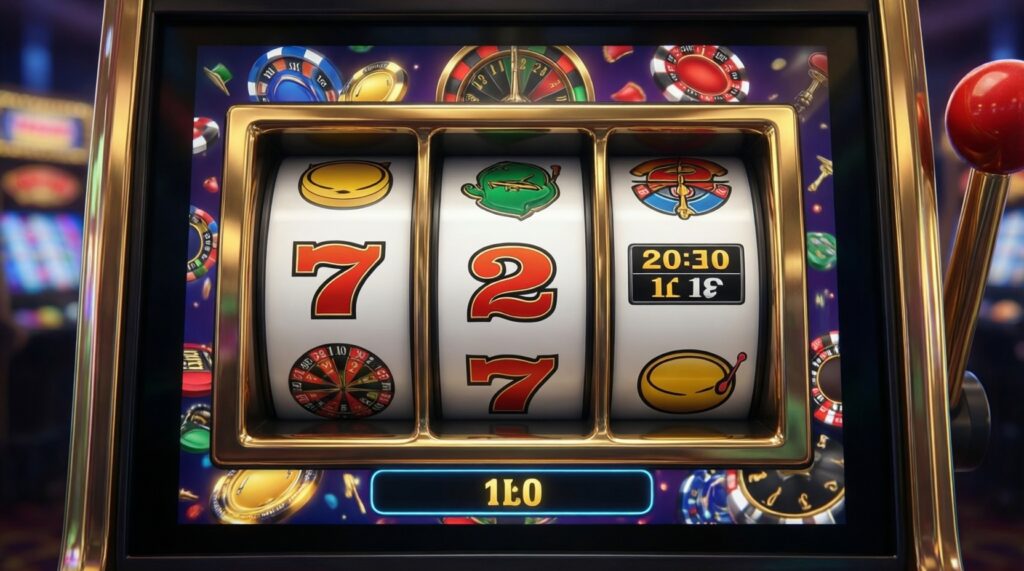
Typically, it only ends the animation early. The outcome was already selected when the spin was accepted.
Can waiting between spins "reset" the machine?
In RNG-based slots, each accepted spin samples the RNG stream; waiting changes timing, not the underlying odds.
Is autoplay worse than manual spins?
For the same bet and rules, it should be equivalent in odds. Differences people feel usually come from variance and changes in pacing or bet behavior.
Do casinos tighten slots after a big win?
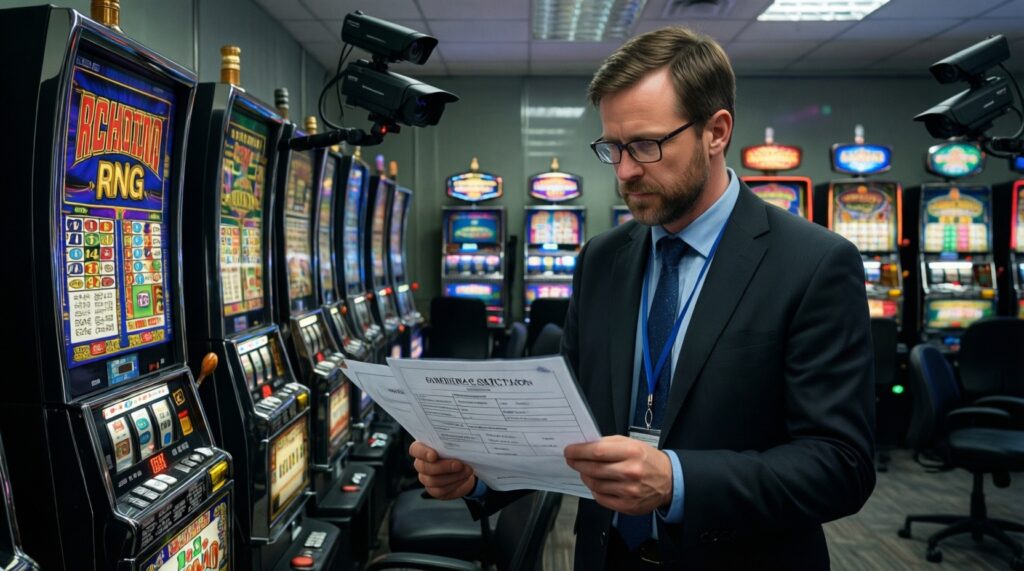
In compliant environments, game math is controlled and audited; operators shouldn't be dynamically changing RNG behavior in response to a player. If you suspect this, the practical response is to choose regulated venues and certified titles.
How can I tell a game is RNG-certified?
Look for clear information in the casino's licensing/compliance pages and the game's info panel, and prefer well-known providers under recognized regulators.