

Hit rate (win frequency) is the share of spins that return any win, not how much you win. "Frequent wins" means more spins pay something back, often many small wins, and it does not guarantee profit or higher RTP. Use hit rate to compare volatility and session feel, then validate it with a consistent sampling method.
Core Concepts at a Glance
- Hit rate = wins per spin (including tiny wins); it is not RTP and not expected value.
- "High hit rate slots" typically feel active but can still drain your balance via small payouts.
- To compare "online slots with high win frequency," you must keep bet size, game mode, and counting rules consistent.
- Short sessions are misleading; measure enough spins and track what counts as a win before concluding "frequent wins."
- Use hit rate to choose pacing/volatility, then use bankroll rules to control risk.
Common Myths About Hit Rate and What They Miss

Myth 1: Frequent wins means you will win more money. Hit rate describes how often you get a payout event, not how large the payouts are. A game can pay very often but mostly return tiny amounts that don't cover the bet.
Myth 2: High hit rate = best game. "Best slots with frequent wins" is a preference statement about experience (pace, variance, psychological comfort), not a guarantee of better outcomes. "Best" also depends on rules like wagering requirements, max bet constraints, and your bankroll tolerance.
Myth 3: A streamer's session proves the hit rate. Short clips amplify luck and selection. If someone showcases "frequent win slot games," you're seeing a biased sample: the session was selected because it looked good, not because it represents the long-run frequency.
Defining Hit Rate: Win Frequency, Win Probability, and Related Terms
- Hit rate (win frequency): the proportion of spins that produce any payout event (according to a defined rule set).
- Win probability (per spin): conceptually the same as hit rate when "win" is defined identically; in practice, marketing language may redefine what counts as a win.
- RTP (return to player): the average proportion of wagered money returned over a very long run; independent of how often wins happen.
- Volatility/variance: how spread out outcomes are; lower volatility often pairs with higher hit rate, but the relationship is not fixed.
- Net win vs. payout: some trackers count a "win" if any payout occurs, even if it is smaller than the bet (a net loss). Always clarify which definition you use.
- Feature frequency: how often bonuses/free spins trigger; this is not the same as overall hit rate.
| Metric | What it answers | What it does NOT guarantee | Practical use |
|---|---|---|---|
| Hit rate (win frequency) | How often a spin pays anything | Profit, higher RTP, bigger wins | Session "feel," pacing, volatility proxy |
| RTP | Average long-run return | Short-run outcomes, frequency of wins | Comparing expected return between games |
| Volatility | How swingy outcomes are | Any specific win pattern in a short session | Bankroll sizing, risk comfort |
| Bonus/feature frequency | How often special modes trigger | Overall hit rate, RTP by itself | Planning time-to-feature expectations |
Formulas, Sampling and Measurement: How to Calculate Hit Rate Correctly
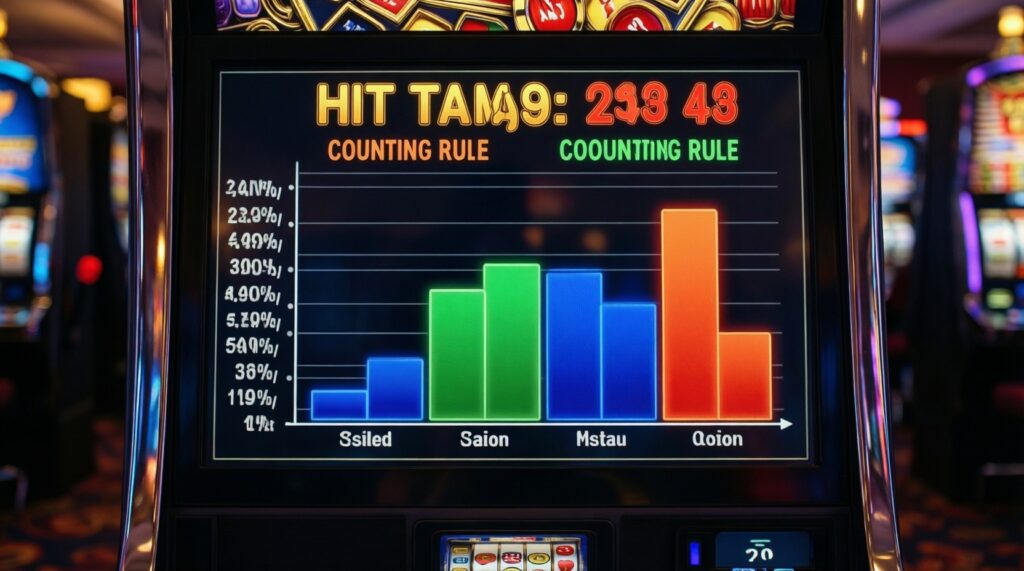
Use a simple definition and stick to it for every comparison. Two common counting rules are: (A) "any payout counts," and (B) "only net-positive spins count." Pick one and keep it consistent.
Formula (observed hit rate):
Hit Rate = (Number of winning spins) / (Total spins observed)
Quick sampling checklist (practical, not theoretical):
- Decide what a "win" means (any payout vs. net-positive).
- Keep bet size constant; don't mix base game, bonus buy, or different stake levels when measuring.
- Track spins in one mode at a time (base spins separately from free spins if you want clean comparisons).
- Record: total spins, winning spins, and optionally the payout size buckets (e.g., <1× bet, 1-2×, 2-5×, 5×+).
- Use a note app or spreadsheet; don't rely on memory from a "hot" run.
Where this is used (typical scenarios):
- Comparing games marketed as "best online casino slots hit rate" to choose the pacing you prefer.
- Session planning: deciding whether you want frequent small payouts or fewer, larger swings.
- Bankroll rules: choosing stop-loss/stop-win limits appropriate to the game's feel.
- Evaluating a provider's "high hit rate slots" claim by measuring it yourself under consistent conditions.
- Testing tweaks: comparing auto-spin speed, stake changes, or feature buys (but only when separated into distinct datasets).
Contextual Distortions: Timeframes, Opportunity Size and Selection Bias
- Short timeframes: 50-200 spins can look like "online slots with high win frequency" purely due to variance.
- Changing the definition mid-test: counting "any payout" today and "net win" tomorrow breaks comparability.
- Mixing modes: base game hit rate and free spins hit rate can differ; blending them hides what's actually happening.
- Stake hopping: higher stakes don't change hit probability in many games, but they change perceived impact and tilt decisions.
- Auto-stop behaviors: stopping after a win inflates your memory of winning frequency.
- Selection bias from content: clips of "frequent win slot games" are often chosen because they are entertaining, not representative.
- Survivorship bias: people keep recommending a game after a lucky streak; unlucky sessions get ignored.
- Confirmation bias: once you believe a title is among the "best slots with frequent wins," you notice wins and dismiss dead spins.
- Opportunity size mismatch: comparing 300 spins on Game A to 3,000 spins on Game B is not a fair test.
Worked Examples: Interpreting Hit Rate in Real-World Scenarios
- Example 1 (any payout counts): You play 200 spins and see 70 spins with any payout. Observed hit rate = 70/200 = 0.35 (35%). This supports a "frequent wins" feel, but it says nothing about profitability.
- Example 2 (net-positive only): On the same 200 spins, only 18 spins paid more than your bet. Net-positive hit rate = 18/200 = 0.09 (9%). This often explains why "high hit rate slots" can still feel like slow loss: many "wins" are actually net losses.
- Common mistake: labeling a game as "best online casino slots hit rate" after one short session; you measured luck, not a stable property.
- Common mistake: comparing your recorded base-game hit rate to someone else's session that included free spins or bonus buys.
Actionable Uses: How to Apply Hit Rate to Forecasting and Optimization
Use hit rate as a preference and risk-management tool: it helps you choose how "busy" a game feels and how strictly you should manage stops. It does not turn a negative-expectation game into a positive one.
Practical workflow (fast, repeatable):
- Pick 2-4 titles you're considering as "online slots with high win frequency" (ignore hype labels like "best slots with frequent wins" until you measure).
- For each title, run a consistent test: same bet size, base game only, and one win definition.
- Compute hit rate and also note the share of payouts that are below 1× bet (this flags "frequent but tiny" wins).
- Choose your play rules:
- If hit rate is high but many payouts are below 1×, use tighter stop-loss and shorter sessions to reduce tilt.
- If hit rate is lower, plan a larger buffer per session and avoid chasing during dry streaks.
Mini-pseudocode you can copy into a spreadsheet mindset:
wins_any = count(payout > 0)

wins_net = count(payout > bet)

hit_any = wins_any / spins

hit_net = wins_net / spins
Concise Clarifications and Quick Answers
Is hit rate the same as RTP?
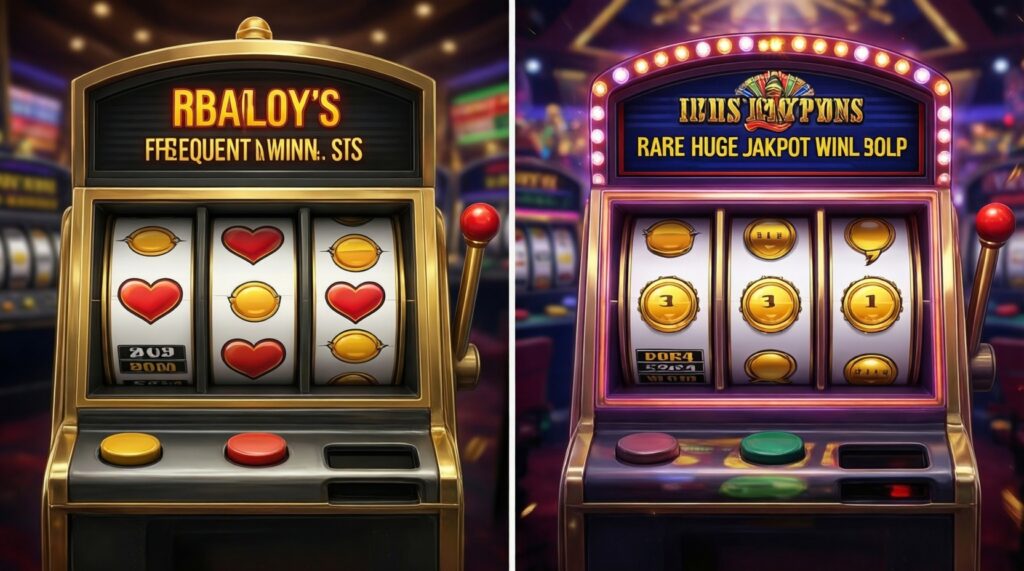
No. Hit rate is how often you get a payout event; RTP is the long-run average return amount. A game can have frequent small payouts and still have the same RTP as a game with rare big payouts.
Do "high hit rate slots" guarantee frequent net wins?
No. Many "wins" may pay less than the bet, so your balance can still decline even with frequent payout events.
What does "best slots with frequent wins" usually mean in practice?
It usually means a game that produces many small payouts and fewer long dead streaks. It is about session feel, not a guarantee of better results.
How can I check "best online casino slots hit rate" claims myself?
Track a fixed number of base-game spins at one stake, define what counts as a win, then calculate winning spins divided by total spins. Don't mix bonus buys or free spins into the same count.
Are "online slots with high win frequency" better for bonuses or wagering?
Not automatically. Frequent small payouts can slow balance decline but can also keep you playing longer; always follow the bonus terms and manage your stop-loss.
Do "frequent win slot games" have lower volatility?
Often, but not always. Hit rate is only one piece of volatility; payout size distribution matters just as much.