

Volatility is how much an investment's price swings up and down over time; low/medium/high volatility mainly changes how bumpy your journey is, not just your final destination. For Thai fund investors asking "ความผันผวน คืออะไร", the practical choice is matching expected swings to your budget for losses, time horizon, and behavior under stress.
Volatility at a glance: low, medium, high
- Low volatility: smaller price swings, typically easier to hold; trade-off is usually fewer chances for rapid upside.
- Medium volatility: balanced bumps and growth potential; often suits blended portfolios and goal-based investing.
- High volatility: big swings and deeper temporary losses; requires strong risk controls and longer holding power.
- Volatility is not "risk" by itself: the real risk is selling at the wrong time or being forced to sell.
- Matching matters more than ranking: the "best" fund is the one you can hold through its worst normal periods.
Debunking common myths about volatility and risk
Myth 1: Low volatility means safe. A กองทุนความผันผวนต่ำ can still lose money (credit events, duration shocks, currency moves, concentration). Low volatility mainly reduces day-to-day and month-to-month swings, which reduces the chance you panic-sell.
Myth 2: High volatility guarantees higher returns. A กองทุนความผันผวนสูง can produce high long-run returns, but it can also underperform for long stretches. Volatility describes dispersion of outcomes, not the direction of outcomes.
Myth 3: Volatility is a technical metric investors can ignore. In practice it's a "behavioral tax": if the swings exceed your tolerance, you may sell low or stop investing. That is why เลือกกองทุนตามความเสี่ยง is mostly about matching volatility to your ability and willingness to stay invested.
How volatility is measured: metrics and thresholds
Funds rarely label themselves "low/medium/high" the same way across platforms, so rely on measurable proxies and consistent comparisons within the same category.
- Standard deviation (return volatility): how widely periodic returns vary around the average. Use it to compare funds in the same asset class and timeframe.
- Max drawdown: the largest peak-to-trough drop over a period. It answers: "How bad did it get before it recovered?"
- Downside deviation: volatility of negative returns only; more aligned with "pain."
- Value at Risk (VaR) / Expected Shortfall: loss estimates under assumptions; useful for risk budgeting, but sensitive to model choices.
- Beta vs a benchmark: how much the fund tends to move with the market; a "high beta" equity fund can feel high volatility even if its stock picking is conservative.
- Rolling volatility: volatility calculated over moving windows (e.g., rolling months). It reveals regime changes-when "normal" becomes "not normal."
What different volatility regimes mean for returns and drawdowns
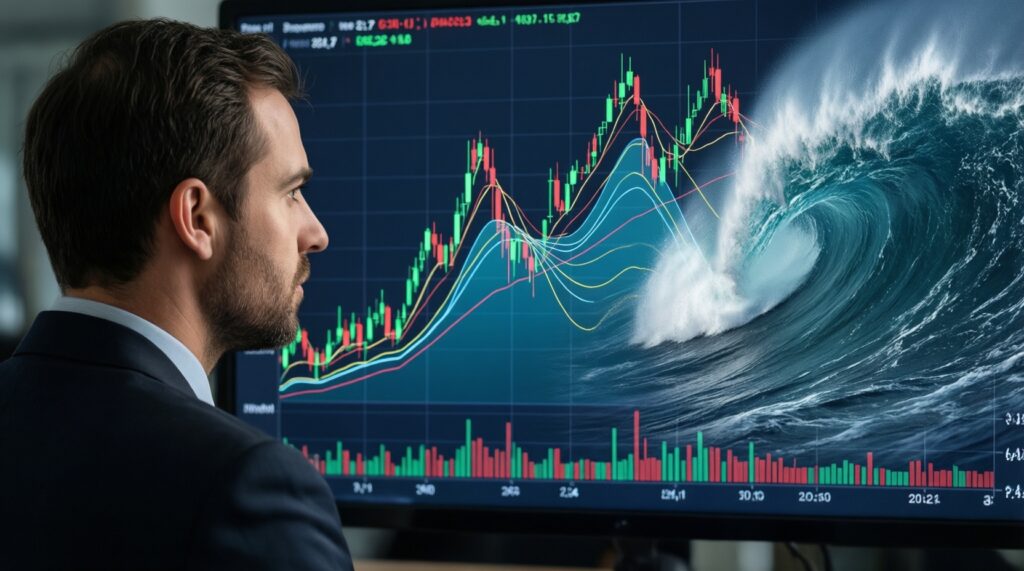
Think in regimes-your plan should still work when markets shift from calm to rough.
- Calm regime (compressed swings): trend-following and carry-like strategies may look "easy," but complacency risk rises; rebalancing discipline matters.
- Normal regime (everyday bumps): diversified portfolios behave as expected; most goal-based plans should be built for this regime.
- Shock regime (fast drawdowns): correlations can rise and "diversification disappoints" temporarily; liquidity and position sizing become the main survival tools.
- Recovery regime (violent rebounds): missing a few best days can hurt long-term results; having a pre-committed plan reduces whipsaw decisions.
- Sideways choppy regime: frequent reversals can punish overtrading; systematic rebalancing can outperform emotional timing.
Choosing volatility that fits your capital, time horizon and goals
Practical selection rules (use these before you look at returns)
- Set a pain limit: define a temporary loss (drawdown) you can realistically tolerate without selling.
- Match volatility to horizon: shorter horizons need lower volatility or stronger capital protection buffers; longer horizons can absorb higher volatility if you can keep investing.
- Match to cash-flow needs: if you may need the money soon, prioritize stability over upside.
- Budget for behavior: if you check prices daily and feel stress, avoid high-volatility allocations even if you "can" afford them mathematically.
- Use a core-satellite structure: keep the "sleep-well" portion in low/medium volatility; use a smaller satellite for higher volatility targets.
Where each volatility bucket typically fits (and where it doesn't)
- Low volatility: suitable for emergency-adjacent goals, near-term needs, or conservative cores; not ideal if your goal requires higher growth and you under-save.
- Medium volatility: suitable for multi-year goals and balanced growth; not ideal if you will panic during routine dips.
- High volatility: suitable for long horizons and investors with stable income and strong discipline; not ideal for short deadlines or leverage-like behavior (oversizing, concentrated bets).
Practical comparison table and real-world selection examples
A usable comparison (focus on decisions, not labels)
| Volatility level | What it feels like | Typical investor fit | Main mistake to avoid | Simple guardrail |
|---|---|---|---|---|
| Low | Small, frequent fluctuations; fewer "scary" months | Shorter horizon goals, conservative core, first-time investors who value stability | Assuming "cannot lose" and oversizing it for a growth goal | Define the goal date and keep only the needed amount in low-volatility assets |
| Medium | Noticeable dips that recover; requires patience | Balanced plans, mixed goals, investors building a long-term habit | Chasing recent winners and switching funds too often | Rebalance on a schedule (e.g., monthly/quarterly) instead of reacting to news |
| High | Large swings; occasional deep drawdowns; big rebound days | Long horizon, strong savings rate, disciplined process, smaller satellite allocation | Buying big after hype and selling after a drop (classic buy-high/sell-low) | Cap position size and pre-commit to a rebalancing or stop rule |
Selection examples you can copy
- New investor building confidence: If your priority is consistency and you're learning, start with a core กองทุนความผันผวนต่ำ or a balanced medium-volatility mix, then add small higher-volatility exposure only after you've held through a normal dip. This is why many consider กองทุนรวมเหมาะกับมือใหม่ when the fund style matches their stress tolerance.
- Goal in a few years (tuition/down payment): Favor low-to-medium volatility and reduce risk as the deadline approaches; avoid turning a short deadline into a high-volatility bet.
- Long-term wealth building: Use medium volatility as the core and allocate a controlled slice to กองทุนความผันผวนสูง if you can hold through deep drawdowns without changing the plan.
Common decision errors to catch early
- Using past returns as the main filter: you end up buying what already ran up, often with higher hidden risk.
- Comparing volatility across different categories: compare equity to equity, bond to bond, multi-asset to multi-asset, on the same timeframe.
- Ignoring currency exposure: FX can change effective volatility dramatically for TH-based investors.
- Oversizing a "high conviction" idea: high volatility plus big position size is what breaks plans.
- No exit/rebalance rule: without a rule, decisions become emotional during drawdowns.
Tactical risk controls: sizing, stops, diversification and rebalancing
A simple process you can run before buying
- Decide your core allocation first: pick the portion you can hold through stress without selling.
- Limit any single high-volatility sleeve: treat it as a satellite, not the foundation.
- Pre-commit to a rebalance trigger: either on a fixed schedule or when allocations drift meaningfully.
- Choose one loss-control method: either (a) smaller sizing, (b) a stop/alert rule, or (c) a tighter rebalancing band-avoid stacking too many rules you won't follow.
Mini "if-then" rule set (behavior-first)
IF I would sell after a typical drawdown,
THEN reduce the volatility level (or position size) before buying.

IF my goal date is approaching,
THEN shift from high → medium → low volatility over time.

IF a high-volatility fund exceeds its target weight after a run-up,
THEN rebalance by trimming back to target.
Concise answers to recurring practical questions
ความผันผวน คืออะไร in plain investing terms?
It's the size and frequency of price swings. Higher volatility means your portfolio value can move more sharply up and down over short periods.
Is a low-volatility fund always the best choice for beginners?
Not always, but it's often easier to stick with. Many people say กองทุนรวมเหมาะกับมือใหม่ when it reduces stress enough to maintain a consistent investing habit.
How do I เลือกกองทุนตามความเสี่ยง without overcomplicating it?
Start from your maximum tolerable temporary loss and your time horizon, then pick the lowest volatility that still gives your goal a realistic chance. Only then compare fees, diversification, and manager style.
When does กองทุนความผันผวนสูง make sense?
When your horizon is long, your income is stable, and you can follow a written rule for sizing and rebalancing. It should usually be a satellite allocation, not your entire portfolio.
What is the most common mistake with กองทุนความผันผวนต่ำ?
Treating it as "risk-free" and using it for goals that require growth. Low volatility reduces bumps; it doesn't remove the possibility of loss.
Should I switch funds when volatility increases?
Not automatically. First check whether the fund still fits your plan and risk budget; if yes, rebalancing is usually better than reactive switching.