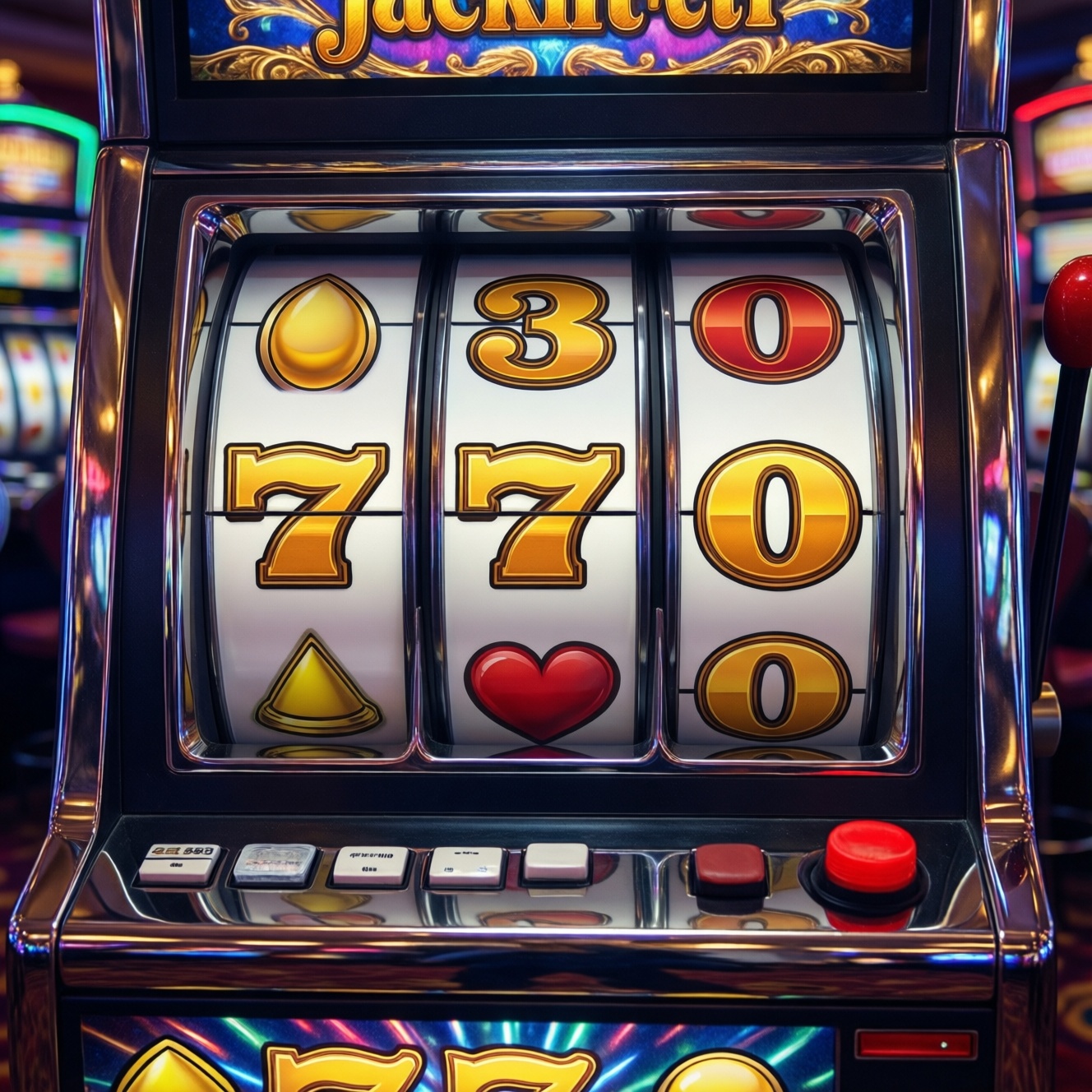
Near-misses and "almost wins" are outcomes that look close to a jackpot but are still losses; in slot play they can feel meaningful because they trigger learning and motivation signals similar to wins. In near miss slot machines, this effect is amplified by audiovisual feedback and symbol layout, shaping persistence, bet choices, and time perception.
Essential takeaways on near-misses and almost-win effects
- A near-miss is a designed perception of closeness, not evidence that the next spin is more likely to win.
- The core of slot machine psychology here is motivational arousal: near-misses can feel like progress even when the player lost.
- In digital products, online slots near miss experiences can be strengthened via pacing, sound, and animations that "mark" the loss as special.
- Near-misses interact with illusion of control, especially when players can stop reels or choose features.
- Behavioral signals to watch are persistence, stake escalation, and time distortion after clustered near-misses.
- For slot machine design psychology, the ethical question is not whether near-misses exist, but how they are framed and what safeguards surround them.
Debunking popular myths about near-misses and almost wins
Myth 1: Near-misses mean the machine is "warming up." A near-miss is still a loss; it does not indicate that a win is due. Each spin is resolved independently under the game's random process, even if outcomes appear to cluster.
Myth 2: Near-misses happen only when you "almost hit" the payline. In practice, "almost win" feelings also come from celebratory sounds, slow-down reel behavior, bonus teases, or two-of-three symbols landing, even when the math is unchanged.
Myth 3: Better strategy can convert near-misses into wins. Outside of understanding rules and paytables, players generally cannot steer a near-miss into a win; features that look skill-based often mainly change the experience of the loss.
Working definition (practitioner-friendly): a near-miss is any loss presented with cues of proximity to a reward, strong enough to increase engagement or perceived control compared with a "plain" loss.
How slot mechanics and RNG produce perceptual near-misses
What players see is the end of a pipeline: a random outcome is chosen, then mapped to a visual presentation. The "almost" feeling can be created without changing the underlying win probability.
- Outcome selection (RNG layer): the game selects a result; the reel stop positions shown to the player are a representation of that result.
- Symbol mapping and reel strips: symbol frequency and arrangement can make "two matching + one just above/below" appear more often than players intuitively expect.
- Losses with celebratory framing: sounds, lighting, and animations can make a non-winning event feel salient and memorable.
- Reel timing and deceleration: a dramatic slow-down near a high-value symbol can signal "you nearly had it," regardless of the preselected outcome.
- Bonus teasing: showing 2 of 3 scatter/bonus icons and then "missing" the third creates an almost-win narrative without a payout.
- Player-action hooks: "stop" buttons, pick-a-box, or choice prompts can imply agency, even if they do not alter the outcome distribution.
Mini-scenario (product QA): A tester reports that a title feels "hot." On review, the game uses extended reel slow-down whenever two jackpot symbols have already landed. Players interpret this as an increased chance, but the slow-down is a presentation rule, not a probability shift.
Neurocognitive mechanisms: reward prediction error, arousal, and illusion of control
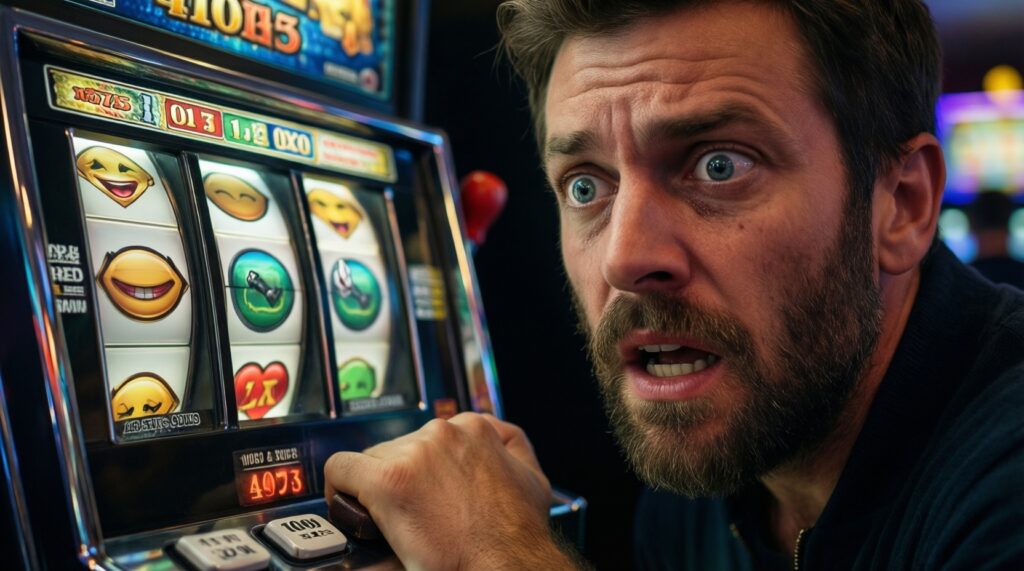
Near-misses matter because they create a mismatch between expected and received reward signals, often increasing arousal and reinforcing "try again" impulses. These mechanisms are especially relevant when players believe their actions affect outcomes.
- Reward prediction error (felt "should have won"): a near-miss can be processed as information about potential reward, nudging the brain to keep sampling.
- Arousal and attentional capture: near-miss cues (sound, motion, suspense) can increase physiological activation and narrow attention onto the next spin.
- Illusion of control from interaction: when a player taps to stop reels, chooses a feature, or times an action, they may attribute near-misses to their own "almost correct" skill.
- Memory bias toward salient losses: near-misses are easier to recall than neutral losses, shaping beliefs like "I keep getting close."
Mini-scenario (player support): A player says, "I keep missing the bonus by one symbol, so I'm close." Support scripts should gently reframe: the feeling of closeness is common, but it does not indicate a higher chance on the next spin.
Mini-scenario (UX writing): If the UI labels a loss as "So close!" it can intensify illusion-of-progress. A safer alternative is neutral language that avoids implying skill or momentum.
Observable player behaviors: persistence, bet escalation, and time distortion
Near-miss patterns show up in behavior: players often continue longer after "close calls," may change stakes in response to arousal, and can lose track of time during highly stimulating sequences.
What you can observe (and measure internally)
- Persistence after near-miss clusters: longer sessions or reduced stopping after a near-miss compared with a plain loss.
- Stake adjustments: raising bets after "almost wins" to "capitalize," or chasing perceived momentum.
- Feature switching: moving to another title or buy-feature option when near-misses suggest the base game is "about to pay."
- Time distortion signals: continued play beyond intended limits, especially when near-misses are paired with fast spin cycles.
Benefits and limits of using near-miss framing (from a practitioner lens)
- Potential benefit: clearer dramatic pacing and moment-to-moment excitement without increasing payout frequency.
- Key limitation: increased risk of misleading mental models (momentum, skill, "being due") and intensified chasing.
- Operational limitation: complaints and chargeback narratives often cite "it kept teasing wins," even when the rules are compliant.
Mini-scenario (responsible gaming team): Analysts spot a segment that spikes bet size immediately after bonus teases. The next step is not to assume intent; it is to test whether teasing frequency, speed, or messaging is driving an avoidable escalation pattern.
Regulatory, ethical, and disclosure implications for game designers
In Thailand-context discussions and regional product governance, the practical issue is how to prevent near-miss presentation from functioning as an implied promise. Designers and operators can reduce harm by aligning cues, messaging, and safeguards.
- Avoid implied probability claims: do not suggest "closer," "hot," or "almost there" as if the next outcome is more likely.
- Separate excitement from misinformation: celebratory audio/visuals should not mimic win fanfare on a loss (especially on losses disguised as wins).
- Be careful with interaction that looks skill-based: if stopping reels does not affect results, presentation should not imply timing mastery.
- Disclose feature behavior in plain language: clarify that outcomes are random and that visual sequences are part of presentation.
- Design for safe stopping points: avoid suspense loops that continually defer "resolution" (e.g., repeated teases that keep players from disengaging).
Mini-scenario (compliance review): Marketing wants to label a title among the best online slot games because it "keeps you on the edge." Compliance flags the phrase; it is revised to focus on theme and features, not implied winning momentum.
Practical interventions: design changes, responsible-play tools, and clinical responses
Interventions work best when they target the player's interpretation of near-misses: reduce misleading cues, add friction where escalation occurs, and provide clear, timely feedback that supports self-regulation.
Design and UX adjustments that reduce harmful near-miss impact
- Neutral loss presentation: reserve the strongest celebratory cues for actual wins; avoid "near-win" victory sounds.
- Limit slow-down dramatization: do not systematically slow reels when high-value symbols are nearby unless you can justify it as theme-only and non-misleading.
- Transparent language: short reminders that outcomes are random and that "stop" actions do not change results (when true).
- Pacing controls: introduce optional spin-speed limits or micro-break prompts during high-arousal sequences.
Responsible-play tooling aligned to near-miss moments
- Event-triggered prompts: gentle check-ins after repeated bonus teases or after abrupt stake increases.
- Budget and time boundaries: clear session timers and spend tracking that remain visible during suspense animations.
- Friction for escalation: extra confirmation when raising stakes soon after a near-miss-heavy sequence.
Mini-case: implementing a near-miss-aware prompt (logic sketch)
Context: An operator sees that some players increase stakes right after "2-of-3 scatter" teases. The goal is to add a neutral, non-judgmental pause that supports choice without claiming the game is changing odds.
// Pseudocode (conceptual)
if event == "scatter_tease_loss" then
  tease_count_rolling += 1
else
  tease_count_rolling = max(0, tease_count_rolling - 1)

if tease_count_rolling >= threshold and next_action == "increase_bet" then
  show_prompt("Reminder: each spin is random. Want to keep your current bet or set a limit?")
  offer_options(["Keep bet", "Set spend limit", "Take a break"])
end
Clinical mini-scenario (brief intervention): A counselor hears, "I was one symbol away all night." A practical reframe is to label it as a near-miss response ("your brain treats it like progress"), then set a concrete plan: pre-commit to time/spend limits and take a break after any intense tease sequence.
Common practitioner queries on near-miss phenomena
Are near-misses the same as losses disguised as wins?
No. A near-miss is a loss framed as "close," while a loss disguised as a win is a net loss presented with win-like celebration; both can confuse perception, but they operate differently.
Do near-misses change the chance of winning on the next spin?
No. Near-misses are outcomes and presentations of outcomes; they do not make future results more likely.
Why do near-misses feel more intense than ordinary losses?

They combine heightened arousal cues with a strong sense of proximity to reward, which can amplify motivation to continue.
Are online slots more likely to create near-miss feelings than land-based machines?
They can be, because digital experiences can tightly control pacing, animation, and messaging; the key driver is presentation design, not the platform itself.
Is the "stop" button actually skill-based?
Often it is a presentation control rather than an odds control; if it does not affect outcomes, it should not be framed as a skill mechanic.
What is the fastest way to reduce near-miss-driven chasing in a product?
Remove misleading win-like cues on losses, add event-triggered prompts around tease clusters, and introduce friction for rapid bet escalation.
How should support teams respond when players say a game is "due"?
Acknowledge the feeling, clarify that outcomes are random each spin, and point to practical tools like limits, breaks, and activity statements.