

To choose among the best online slots like an analyst, score each game on three inputs you can verify: published RTP (expected return), volatility (risk/variance), and features that change payout distribution (bonus mechanics). Then weight those scores for your persona (grinder, casual, bonus hunter, high-roller) and pick the top-ranked fit, not a universal winner.
Analyst's Snapshot: Core Metrics at a Glance
- RTP is the baseline: only compare games using the same published RTP setting when possible.
- Volatility is the risk dial: it governs bankroll swings more than RTP does session-to-session.
- Features reshape value: bonuses can concentrate returns into rare events even with similar RTP.
- Use a repeatable scoring grid: 1-5 scores + weights beat "gut feel" for picking high RTP slots.
- Persona beats hype: the "best" pick differs for low volatility slots vs high volatility slots.
- New ≠ better: new online slot games should still pass the same RTP/volatility/feature checks.
RTP Demystified: Measuring Expected Return
Use RTP as a filter, then a scoring input. Your goal is not the highest number in isolation, but a comparable, disclosed setting you can actually play.
- RTP disclosure: prefer games that clearly show RTP in-game or in the paytable/info panel.
- RTP setting risk: some titles ship with multiple RTP configurations; avoid comparing a "best-case" RTP to an unknown setting.
- Same game, different casinos: if the casino doesn't disclose the configured RTP, treat RTP as "uncertain" and penalize your score.
- RTP vs session reality: RTP is long-run expectation; short sessions are dominated by volatility and bonus frequency.
- RTP compatibility: compare RTP only across similar mechanics (e.g., both bonus-heavy, or both base-game driven).
- Bet constraints: if your THB bankroll forces tiny bets, a game whose value is mostly locked behind rare max events is effectively worse for you.
- Feature-dependent RTP feel: high RTP slots can still feel "cold" if most of the return sits in infrequent bonus sequences.
Volatility Unpacked: Hit Frequency, Variance and Bankroll Impact

Volatility is the most practical lever for "will this slot fit my bankroll and patience?" Use it to prevent mismatches: grinding players get crushed by overly spiky games; thrill-seekers get bored by flat profiles.
| Variant | Who it fits | Pros | Cons | When to choose |
|---|---|---|---|---|
| Low volatility (frequent small wins) | Conservative grinder, casual play sessions | Steadier bankroll curve; longer playtime per deposit | Lower "wow" moments; big wins are rarer/smaller | When you want low volatility slots that sustain entertainment and reduce swings |
| Medium volatility (balanced profile) | Most intermediate players | Mix of base hits + meaningful bonuses | Can still swing; not extreme in either direction | When you're unsure and want a baseline comparator for many best online slots lists |
| High volatility (bonus-driven spikes) | Bonus hunters; players comfortable with droughts | Higher upside per "good" bonus; exciting sessions | Long dead spins possible; bankroll stress | When you intentionally want high volatility slots and can size bets to survive downswings |
| Ultra-high volatility (rare, huge outcomes) | Risk-seeking high-roller style (or strict small-stake "lottery" play) | Maximum excitement potential; big-win chase | Very high variance; can burn bankroll fast | When your plan accepts long no-bonus streaks and you treat results as highly variable |
| Feature-variable volatility (e.g., persistent states, escalating bonuses) | Strategic bonus hunters; players tracking progress mechanics | Some sessions improve over time; mechanics can create "momentum" | Harder to evaluate; value depends on triggering/maintaining states | When comparing new online slot games with modern mechanics and you can test in demo first |
Game Features That Shift Value: Free Spins, Multipliers and Mechanics
Features change where the RTP lives: base game, free spins, or rare chain reactions. Use scenario rules to avoid surprises.
- If most of the payout is in free spins, then treat the game as higher volatility and require either a bigger bankroll buffer or a smaller bet size.
- If the slot has purchasable bonus (buy feature), then compare two profiles separately: "base-play value" and "bonus-buy value," because they can feel like different games.
- If multipliers can stack (especially during free spins), then expect wider outcomes; score it higher for thrill seekers and lower for grinders.
- If the game uses persistent progress (collect meters, expanding symbols over time), then evaluate how often progress resets; frequent resets reduce practical value for short sessions.
- If it has high hit rate but low average win size, then it may still drain bankroll via "small-win masking"; watch net results, not win frequency.
Building a Comparative Table: Metrics, Weights and Scores
Use this lightweight scoring algorithm to compare candidates consistently (including high RTP slots you shortlist).
- List 3-6 candidate slots you can actually access in Thailand and that clearly disclose core info (RTP/feature rules).
- Score each metric 1-5 (5 is best for your persona): RTP clarity, volatility fit, hit frequency comfort, feature transparency, and bankroll efficiency.
- Apply persona weights (example): Grinder emphasizes volatility fit and hit comfort; Bonus hunter emphasizes bonus quality and multiplier mechanics; High-roller emphasizes upside mechanics.
- Compute a weighted score using a simple formula:
Weighted Score = (RTP score × wRTP) + (Volatility fit × wVol) + (Hit comfort × wHit) + (Features × wFeat) + (Bankroll efficiency × wBank).
Keep weights as percentages that sum to 100. - Penalize uncertainty: if RTP setting is unknown or rules are unclear, cap the affected metric at 2/5.
- Run a short reality check: test 50-150 spins in demo (or low stakes) only to confirm "feel" matches your volatility expectation, not to "prove" RTP.
Persona-Based Slot Fit: Recommendations for Different Player Types
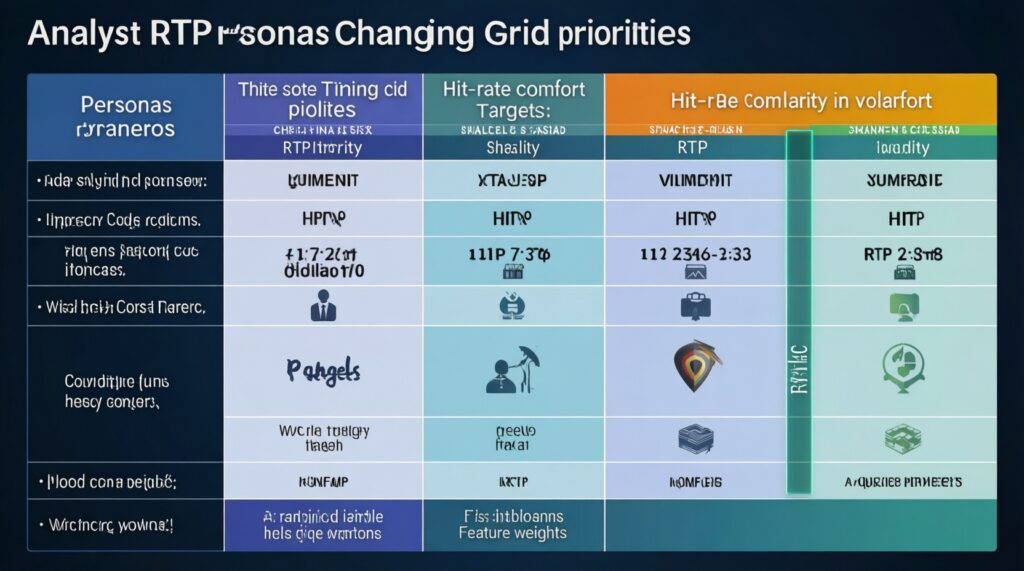
This table shows how an analyst-style grid changes by persona. Values are targets and scoring priorities, not claims about any single game.
| Persona | RTP target (published) | Volatility proxy | Hit-rate comfort | Main features to prioritize | Example weights (RTP/Vol/Hit/Feat/Bank) |
|---|---|---|---|---|---|
| Conservative grinder (steady play) | Prefer clearly disclosed, higher-end available setting | Low → Medium | Frequent small hits acceptable; avoid long dead zones | Transparent paytable, simple bonuses, limited extreme multipliers | 20 / 30 / 25 / 10 / 15 |
| Casual player (short sessions) | Clear disclosure matters more than chasing the top number | Low → Medium | High comfort needed (wins often enough to stay engaging) | Fast bonuses, clear triggers, minimal complex states | 15 / 25 / 30 / 15 / 15 |
| Bonus hunter (feature-first) | Accept slightly lower RTP if bonus value/clarity is strong | Medium → High | Can tolerate droughts if bonus is compelling | Free spins depth, retriggers, multiplier behavior, bonus consistency | 15 / 20 / 10 / 40 / 15 |
| Risk-seeking high-roller style (upside chase) | Only if disclosed; uncertainty is a hard no | High → Ultra-high | Low comfort is acceptable by design | Stacking multipliers, rare max paths, volatile bonus structures | 15 / 35 / 5 / 35 / 10 |
Common selection mistakes that break the framework
- Picking "best online slots" lists without checking whether RTP is disclosed for your casino's configuration.
- Assuming "high RTP slots" automatically mean low risk; volatility can still be punishing.
- Confusing hit frequency with profitability; frequent tiny wins can still trend negative quickly.
- Choosing high volatility slots with a bet size that can't survive typical downswings.
- Overvaluing bonus buys without separating base-game evaluation from purchase evaluation.
- Ignoring mechanic complexity: unclear rules should reduce your score, even if the theme is attractive.
- Judging new online slot games by novelty instead of by where the return is concentrated (base vs bonus).
- Changing multiple variables at once (bet size, slot, session length), which makes comparisons unreliable.
Step-by-Step Comparison: Applying the Framework to Real Slots
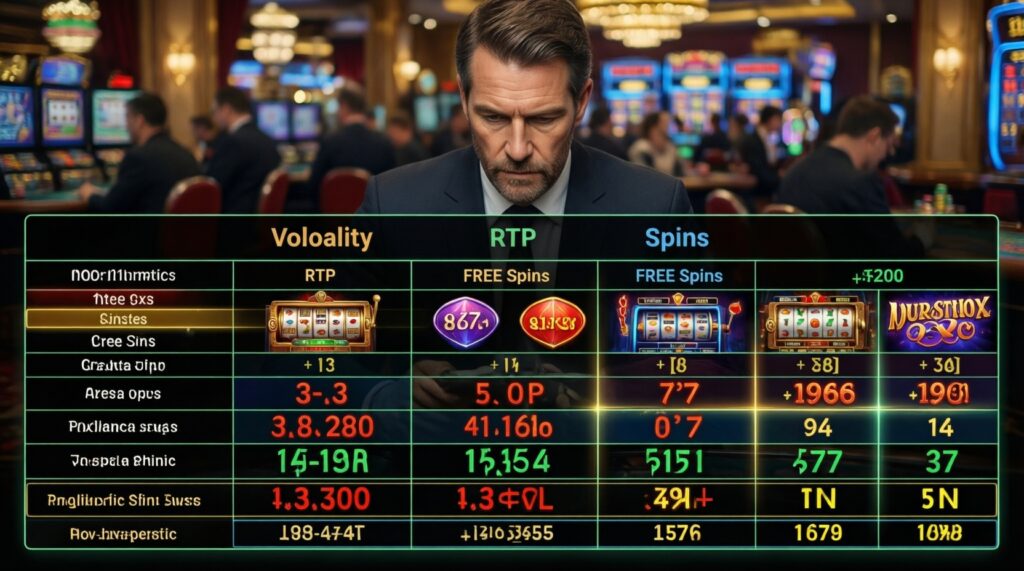
Using this grid, the "best" choice usually resolves to fit: for a conservative grinder in THB bankroll terms, low-to-medium volatility with clear RTP disclosure tends to score highest; for a bonus hunter, medium-to-high volatility with transparent free spins and multipliers ranks better; for a risk-seeking high-roller style, ultra-high volatility with defined upside mechanics can lead-if you can tolerate long droughts and keep bet sizing disciplined.
Common Analyst Questions with Concise Answers
Are high RTP slots always the best online slots?
No. Higher RTP helps long-run expectation, but volatility and feature structure determine whether the game fits your bankroll and session length.
How can I tell if a slot is low volatility slots or high volatility slots without data?
Use the provider's volatility label, bonus structure (how much value sits in free spins), and the presence of stacking multipliers or rare states as practical proxies.
Should I prioritize RTP or volatility first?
Filter by disclosed RTP, then prioritize volatility fit. A small RTP edge is often less important than avoiding a volatility mismatch for your budget.
Do new online slot games tend to be higher volatility?
Many modern releases lean feature-heavy, which can increase volatility, but it varies by title. Treat "new" as neutral and score based on mechanics and disclosure.
What's a safe way to compare two slots quickly?
Score both 1-5 on RTP clarity, volatility fit, hit comfort, feature transparency, and bankroll efficiency, then apply persona weights that sum to 100.
Is hit frequency the same as RTP?
No. Hit frequency is how often you win something; RTP is the long-run expected return. A slot can hit often but still return less overall.
How do I avoid overrating a bonus-buy feature?
Evaluate base play and bonus buy as separate profiles, and penalize the one whose rules, volatility, or bankroll demands don't match your persona.