

Hit rate is only the frequency of receiving a bonus event; it does not tell you whether the bonus is worth taking. To read hit rate without being misled, separate bonus frequency from bonus value, then adjust for wagering terms, sample size, and variability. A practical metric is expected net value per deposit or per 100 spins, not hit rate alone.
Interpreting Hit Rate: Essential Concepts
- Hit rate = frequency: how often a bonus triggers (e.g., 12 bonuses in 100 deposits = 12% hit rate).
- Bonus value = magnitude: the monetary (or gameplay) value after realistic conversion, not the headline amount.
- Terms convert value: online casino bonus terms and conditions can turn a frequent bonus into low value via caps, exclusions, or limits.
- Wagering is the main filter: knowing how to read casino bonus wagering requirements is often more important than the casino bonus hit rate.
- Compare like-for-like: evaluate "best" and "high value" offers by expected net value under the same play assumptions, not by marketing labels.
Clarifying Terms: Hit Rate, Bonus Frequency, Bonus Value
Bonus frequency is how often an offer delivers something (a free spins drop, a reload, a cashback credit, a prize wheel entry). People often call this the casino bonus hit rate, but that shorthand hides the "what did you actually get" part.
Bonus value is what the bonus is worth after constraints: wagering, max bet, eligible games, withdrawal caps, and time limits. A "฿500 bonus" can be worth close to ฿0 if you cannot convert it under realistic play.
Practical separation: treat frequency as a probability and value as a payout. A minimal model is:
Expected bonus value per attempt = Hit rate × Average net value when it hits. Example: 15% hit rate × ฿80 net value = ฿12 expected value per deposit attempt.
| Term | What it measures | Common trap | Practical question to ask |
|---|---|---|---|
| Hit rate / frequency | How often a bonus triggers | Assuming frequent = profitable | How many qualifying tries produced a credit? |
| Bonus value | Net benefit after constraints | Using headline bonus amount | What can I actually withdraw, realistically? |
| Wagering requirements | Turnover needed before withdrawal | Ignoring eligible games / max bet | How does required turnover map to my session size? |
| Expected net value | Frequency × net value | Mixing different play styles | Is EV positive for my exact bankroll and games? |
- Checklist: write down hit rate as hits / attempts, not as a vibe.
- Checklist: estimate net value (after caps, exclusions, and realistic conversion).
- Checklist: only compare offers using the same "attempt unit" (per deposit, per day, per 100 spins).
Why Hit Rate Alone Misleads: Common Statistical Biases
- Selection bias: you remember wins/bonuses and forget the many non-hits. Example: tracking only "promo days" inflates hit rate.
- Denominator tricks: "15% hit rate" is meaningless if attempts exclude disqualified deposits (wrong payment method, wrong country, wrong game).
- Survivorship bias: players who bust early stop attempting; remaining players see more offers and report higher hit rates.
- Time-window bias: weekly promos make hit rate look high if you sample only on eligible days. Example: 2 hits in 2 eligible Fridays = 100%, but 2 hits in 14 days = 14%.
- Value masking: frequent micro-bonuses (e.g., ฿10) hide rare high-value bonuses (e.g., ฿500). Hit rate rises while EV falls.
- Terms-driven nullification: online casino bonus terms and conditions can void value via max cashout or restricted games; hit rate stays unchanged.
- Checklist: define the attempt set (eligible deposits/sessions) before computing hit rate.
- Checklist: record misses as carefully as hits; otherwise frequency is overstated.
- Checklist: always pair hit rate with an average net value estimate.
Quantifying Uncertainty: Sample Size, Variability, and Significance
Hit rate is a sample estimate of a probability. With small samples, it swings wildly and invites overconfident conclusions. A simple sanity check is to compute the standard error for a proportion: SE ≈ √(p(1−p)/n). Example: p=0.2, n=25 → SE≈0.08 (very noisy).
Typical scenarios where uncertainty matters:
- New account testing: first 5-10 deposits are not enough to claim an offer is "consistent"; treat early hit rates as provisional.
- Comparing two casinos: two hit rates close to each other may be indistinguishable when n is small; you may be "optimizing noise".
- Segmented promos: separate hit rates by game category, deposit method, or stake size only if each segment has enough attempts.
- Seasonal campaigns: event weeks can shift both frequency and value; track by campaign ID, not calendar memory.
- "Best casino bonus offers" lists: affiliate rankings often mix different audiences and sample windows; treat them as leads, not evidence.
- Checklist: don't conclude "good/bad hit rate" from tiny n; label it as low confidence.
- Checklist: if you segment data, ensure each segment has enough attempts to be meaningful.
- Checklist: log the promo name/date so changes don't corrupt your comparisons.
Combining Frequency and Value: Constructing a Meaningful Metric
A practical metric for decision-making is expected net value under your own play constraints. Use:
EV per attempt = (hit rate) × (average net value conditional on hit) − (expected costs/fees/time value, if any).
- Pros
- Lets you compare high value casino bonuses that hit rarely against frequent low-value perks on one scale.
- Forces you to include how to read casino bonus wagering requirements: a bonus with 30× wagering may have much lower net value than its headline.
- Aligns with bankroll reality: you can compute EV per ฿1,000 deposited or per 100 spins.
- Limitations
- Net value depends on assumptions (eligible games, typical stake, session length); wrong assumptions = wrong EV.
- Some terms are discontinuous (max cashout, max bet). Small behavior changes can flip value sharply.
- Bonuses can be non-cash benefits (VIP points, free spins variance); EV estimates may need ranges, not a single number.
- Checklist: compute EV using your actual stake size and game eligibility, not generic assumptions.
- Checklist: translate terms into a single unit (EV per deposit or EV per 100 spins) before comparing.
- Checklist: treat EV as a range when caps or volatility dominate outcomes.
Reporting and Visualization: What to Show and What to Hide
- Show hit rate with its denominator: "8/40 deposits hit" is more informative than "20%". Example: both 1/5 and 20/100 are 20%, but confidence differs.
- Show net value, not headline value: marketing displays "100% match" while your net depends on wagering and withdrawal caps.
- Don't mix incompatible attempt units: per-login freebies vs per-deposit bonuses cannot be compared without normalization.
- Hide vanity rankings: labels like "best casino bonus offers" are not metrics unless tied to EV under declared assumptions.
- Expose key terms inline: summarize the 2-3 clauses that change value most (wagering multiple, max cashout, eligible games) instead of dumping full T&C text.
- Checklist: always publish hit rate as hits/attempts plus the time window.
- Checklist: include the two biggest value-killers from the online casino bonus terms and conditions.
- Checklist: normalize everything to one unit (per deposit or per 100 spins) before you "rank" offers.
Applied Corrections: Examples and Remediation Steps
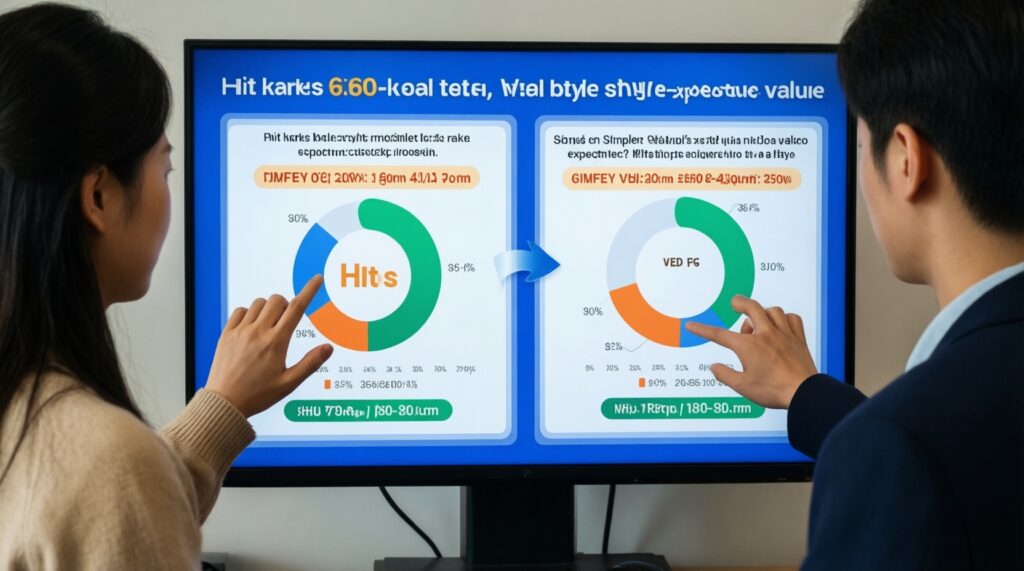
Mini-case: You're choosing between two promos.
- Offer A: hit rate 30% (0.30). Average net value when it hits ≈ ฿40 (after wagering/caps). EV ≈ 0.30×40 = ฿12 per deposit.
- Offer B: hit rate 8% (0.08). Average net value when it hits ≈ ฿200. EV ≈ 0.08×200 = ฿16 per deposit.
Even though A "hits" more often, B is the higher expected value under these assumptions-typical of truly high value casino bonuses.
Practical remediation workflow (pseudo-steps you can implement in a spreadsheet):
- Log each attempt with: date, casino, promo name, qualifying action, hit/miss, credited amount, key terms (wagering, cap), and final withdrawable impact.
- Compute hit rate = hits / eligible attempts.
- Compute average net value on hit = average(withdrawable impact | hit=1).
- Compute EV per attempt = hit rate × avg net value on hit.
- Compare EV across offers; only then consider variance (how spiky outcomes feel).
- Checklist: correct your log for eligibility (remove disqualified attempts from the denominator).
- Checklist: recompute value as net withdrawable impact, not credited bonus size.
- Checklist: pick offers by EV per attempt, then by volatility preference.
Self-audit before you trust your conclusion

- I used one consistent attempt unit (per deposit/per day/per 100 spins) across all offers.
- I included the parts of online casino bonus terms and conditions that change cash value (wagering, caps, exclusions).
- I reported hit rate as hits/attempts and avoided decisions based on tiny samples.
- I compared offers using EV (frequency × net value), not frequency alone.
- I can explain why my shortlist matches my play style, not a generic "best" label.
Short Answers to Practical Edge Cases
If a casino advertises a high hit rate, is it automatically one of the best casino bonus offers?
No. A high hit rate can come from small, heavily restricted bonuses; evaluate EV using the net value after wagering and caps.
How do I read casino bonus wagering requirements quickly without missing the deal-breakers?
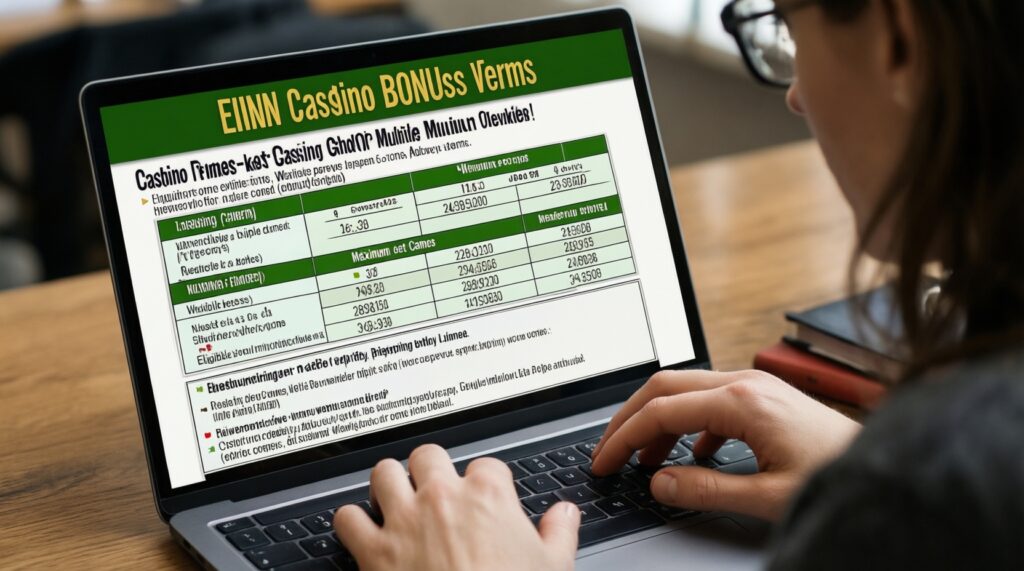
Extract three items: wagering multiple, eligible games, and max bet. Then translate them into whether your typical session can realistically clear wagering before expiry.
What if two offers have the same EV but different hit rates?
Choose based on volatility tolerance: higher hit rate usually feels smoother but may be capped; lower hit rate can be spikier with larger occasional value.
Can a casino bonus hit rate be manipulated by changing what counts as an attempt?
Yes. Always confirm the denominator: only eligible deposits/sessions should count, and you should track disqualifications explicitly.
Do online casino bonus terms and conditions matter if I never plan to withdraw?
They still matter because max bet limits, game exclusions, and expiry can prevent you from converting the bonus into playable value even without withdrawing.
How do I identify high value casino bonuses when the headline numbers look similar?
Focus on net withdrawable impact: lower wagering, fewer exclusions, and higher or absent cashout caps typically preserve value more than a larger headline match.