
A near miss is a losing outcome that is presented with win-like cues-symbols, timing, sound, and visual alignment-so your brain treats it as "close," not simply "lost." In slot play (including online), this "almost hit" feeling can increase attention and persistence even though the result is still determined by the game's underlying RNG and paytable.
Core Concepts of Near Miss Mechanics
- A near miss is a loss that is perceived as close to a win because of the displayed symbol arrangement and feedback.
- Closeness is usually manufactured in the presentation layer, not in the probability layer that decides wins.
- Near misses combine reward expectancy, frustration, and action-readiness-often stronger than a plain loss.
- Design levers include reel mapping, stop positions, anticipation animations, and "tease" sounds.
- Measuring near-miss impact requires separating outcome (win/loss) from experience (perceived closeness).
Defining a Near Miss: Signals, Probabilities, and Perception
In the strict behavioral sense, a near miss is a losing event that carries signals commonly associated with a win: two-of-a-kind on a payline with the third symbol just above or below, a bonus symbol that "lands" one short, or an animation that suggests the reels nearly stopped at the jackpot configuration.
It is critical to separate (1) the mathematical outcome and (2) the displayed outcome. In many modern implementations of near miss slot machines, the RNG determines the result first, then the game chooses a visually plausible reel stop sequence that can make the loss look close. This is why two losses can feel psychologically different despite being identical financially.
"Near miss" is not "almost won" in probability terms. It is "almost won" in perception terms. That distinction matters when evaluating slot machine psychology, because player behavior responds to perceived patterns, not just to the true odds.
| Displayed event | Outcome type | Typical cues | Common player interpretation |
|---|---|---|---|
| Clear non-match | Loss | Fast stop, neutral sound, no highlight | "Nothing happened." |
| Two matching + third adjacent | Loss (near miss) | Reel "slows," tease audio, symbols framed | "I was close-next one might hit." |
| Low payout line win | Win | Win jingle, coin count-up, celebratory visuals | "I won," even if net session is down |
| Bonus trigger | Win event (feature) | Screen takeover, feature intro, extended play | "Now it's paying." |
How the Brain Interprets Near Misses: Reward, Frustration, and Dopamine
- Expectation spike: Anticipation cues (slowdown, suspense audio) raise the brain's expectation of reward before the loss is revealed.
- Prediction error mismatch: The reveal is negative (no reward), but the pre-reveal cues were positive-creating a strong "should-have-won" sensation.
- Action readiness: "Close calls" can prime immediate re-engagement ("try again"), especially when the next spin is frictionless.
- Frustration as fuel: The emotional mix of disappointment and perceived progress can motivate persistence more than a bland loss.
- Pattern completion bias: Seeing two-of-three jackpot symbols invites the mind to complete the pattern and overestimate how "due" the missing symbol is.
- Memory weighting: Near misses are vivid and easier to recall than ordinary losses, shaping beliefs about how often wins "almost" occurred.
Slot Design Features That Manufacture 'Almost Hits'
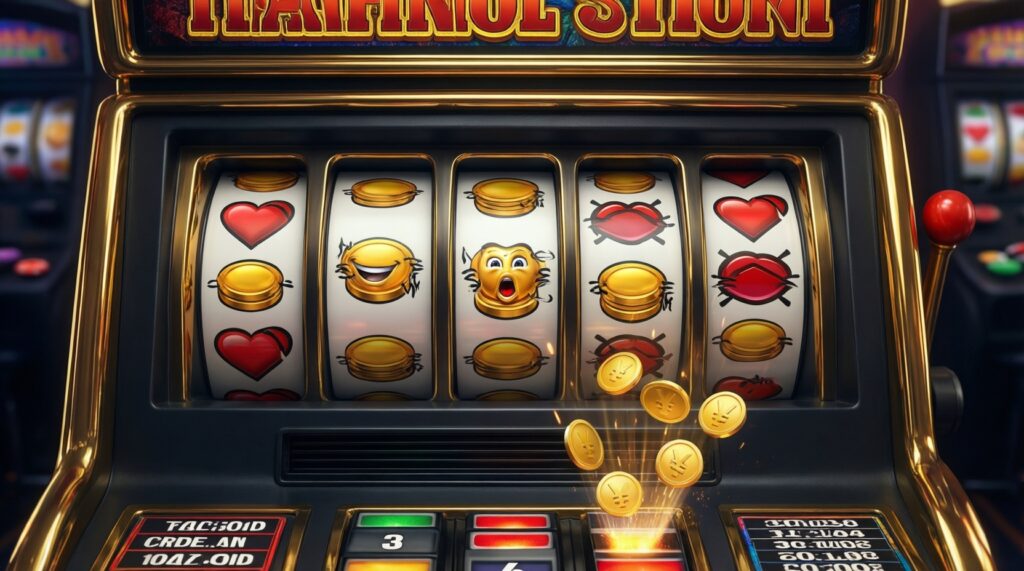
- Reel mapping and virtual stops: Many symbol positions exist in the mapping that never appear equally on-screen; this lets "tease" symbols appear frequently near the payline without changing the underlying hit frequency of the jackpot.
- Anticipation stop patterns: The first two reels stop as matching high-value symbols, while later reels slow dramatically-creating suspense even when the outcome is already determined.
- Losses disguised as wins (LDWs): A payout animation triggers even when the credited win is smaller than the bet, keeping the reinforcement loop active.
- Bonus symbol teases: Two bonus scatters land early; the third "just misses" repeatedly, often with enhanced audio/visual emphasis.
- Near-line alignment: Symbols stop one position above/below the payline, making the miss visually measurable ("one step away").
Mini-scenarios you can recognize in casino slot games
- Prototype A (3-reel classic): Two BARs land on the payline, the third BAR lands one notch above; the game flashes the payline briefly anyway, then fades to loss.
- Prototype B (5-reel video slot): Reels 1-2 show the bonus symbol; reels 3-5 enter "anticipation mode" with slowed spins and a rising sound, then stop on non-bonus symbols adjacent to the scatter positions.
- Prototype C (mobile UI): After a near miss, the "Spin" affordance remains prominent and immediate, reducing the pause that might otherwise interrupt the chase cycle.
Behavioral Outcomes: Why Near Misses Drive Persistence
- Longer play sessions: Near misses can sustain engagement by implying progress without delivering actual reward.
- Higher spin rate: When the interface minimizes friction, the action-ready state turns into faster re-betting.
- Belief in "hot" machines: Players may infer momentum ("it's about to pay"), even though each spin is independent in properly designed RNG systems.
- Selective attention: Teases become salient; ordinary losses fade into the background, skewing perceived hit frequency.
- Limits and boundary conditions: Experienced players may habituate to teases, and excessive near-miss frequency can feel manipulative, reducing trust.
- Budget constraints dominate: Bankroll and deposit friction can override near-miss effects, especially in online casino slots real money contexts where session limits or payment steps interrupt play.
- Game literacy matters: Players who understand RNG separation are less likely to interpret "close" as "likely next."
Quantifying Effects: Experiments, Metrics, and Computational Models
- Mistake: counting near misses by symbol proximity alone. You must also code the cue intensity (slowdown duration, audio swell, highlight effects), because those drive perception.
- Mistake: pooling LDWs with true wins. A "win animation" is not the same as positive return; analyze net outcome separately from celebratory feedback.
- Mistake: ignoring sequence effects. Near misses after a streak of losses can behave differently than near misses after wins; model state dependence.
- Myth: "near misses improve odds." In RNG-based slots, the next spin's probability is not increased by previous outcomes, even when the UI strongly implies momentum.
- Practical metrics to log: re-spin latency (time to next bet), bet change after near miss, stop-button use, session continuation probability, and voluntary pauses.
Responsible Design and Policy Responses to Near Miss Manipulation
For designers and regulators, a workable approach is to make the "result determination" auditable and to constrain win-like cues on losses. This is especially relevant when promoting best online slots lists, where marketing language can unintentionally amplify "almost hit" narratives and obscure how outcomes are generated.
A short, checkable algorithm for verifying the outcome vs. the presentation
- Capture inputs: log bet size, RNG seed/state (or server nonce), and the RNG output used for outcome selection.
- Determine outcome first: map RNG output to an outcome category (win tier, bonus trigger, or loss) using the paytable math.
- Render second: choose reel stop positions consistent with the pre-determined category, with explicit rules that limit "tease" intensity on losses.
- Validate: re-run the mapping offline to confirm the displayed symbols did not influence the win decision.
- Report: store an audit record linking (bet, RNG output, outcome, rendered stops) for dispute resolution.
// Pseudocode: outcome must be decided before any reel-stop animation is selected
rng = NextRandom(serverSeed, clientNonce, spinIndex)

outcome = MapToOutcome(rng, paytable)      // e.g., LOSS, WIN_TIER_3, BONUS_TRIGGER
stops   = ChooseStops(outcome, reelMap, cuePolicy)  // cuePolicy caps tease on LOSS

assert VerifyStopsMatchOutcome(stops, outcome, paytable)  // presentation cannot create a win
RenderSpin(stops, outcome, cuePolicy)
AuditLog(bet, rng, outcome, stops)
Concise Answers to Practical Questions on Near Miss Effects
Are near misses the same as "almost winning"?
No. A near miss is a loss presented with close-to-win cues; it feels like progress but does not imply improved probability on the next spin.
Do near misses change the RNG odds on the next spin?
No. Proper RNG implementations keep each spin independent, even if the visuals suggest you are "due."
Why do near miss slot machines often slow down before a losing reel stops?
Slowdown and suspense audio increase reward expectation, making the eventual loss more emotionally activating and more memorable.
How can I tell if a game is using "tease" design?
Look for frequent two-of-three jackpot symbols near the payline, repeated bonus-symbol "one short" sequences, and win-like highlight effects applied to losses.
Is the near-miss effect relevant to online casino slots real money play?
Yes. The same perceptual cues exist digitally, and fast re-spin loops can convert frustration into immediate continued betting.
Does choosing among casino slot games change how strong near misses feel?
Yes. Games with heavier anticipation cues (slowdowns, teases, celebratory framing) typically make near misses more salient than minimalist designs.