

Gambler's fallacy is the belief that after a streak, the opposite result is "due" (Thai: ใกล้ออกแล้ว). In truly random, independent games, past outcomes do not change the next probability, so "keep playing because it's close" is not a valid reason. If you rely on streaks, you usually increase time, stake, and risk-not accuracy.
Core Concepts and Practical Consequences
- If a game's outcomes are independent, then a losing streak does not make a win more likely on the next round.
- If you feel ใกล้ออกแล้ว จริงไหม, then treat it as an emotion signal, not information about probability.
- If you change bet size to "recover" because of a streak, then you are adding variance without improving odds.
- If you cannot write the probability for the next trial, then assume your intuition is unreliable and use pre-set limits.
- If the system has memory (promotions, progressive jackpots, biased mechanisms), then verify the rules; otherwise assume "no memory."
What Gambler's Fallacy Is and Why It Persists
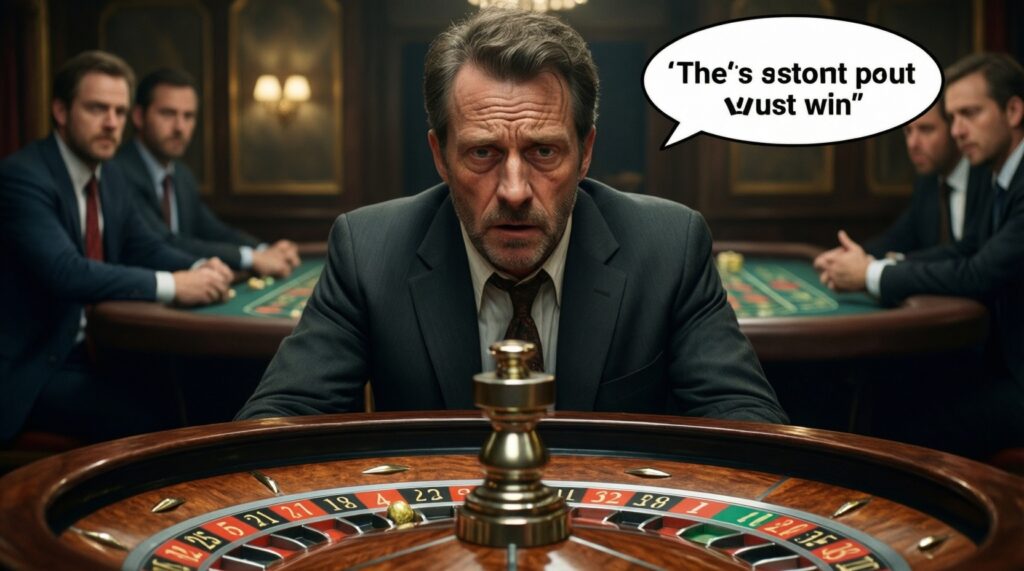
Definition: Gambler's fallacy is the reasoning error of expecting a short-term "balancing out" in a random process, e.g., thinking a win must arrive soon because losses just happened. Many people ask Gambler's Fallacy คืออะไร when they notice they chase streaks despite knowing the odds.
Numeric example: A fair coin that landed Heads 6 times in a row still has a 1/2 chance of Heads on the next flip. The streak feels "unlikely," but it does not change the next flip.
Practical takeaway (if..., then...): If your reason to continue is "it has to turn," then stop and restate the decision using only the next-round probability and your bankroll rules-no streak-based arguments.
How Probability Misleads Intuition: The Math Behind 'It's Due'
Definition: The fallacy happens when you confuse the probability of a streak with the probability of the next outcome. Streaks can be rare, but once a streak has occurred, the next trial in an independent process is unchanged.
Numeric example: In European roulette, a single-number bet is 1/37 each spin. After 20 spins without your number, the next spin is still 1/37-not "closer."
- If you look at a long run and feel it "must" even out soon, then remember: long-run averages don't schedule when wins happen.
- If you say "I'm due," then translate it into a testable statement: "Has the probability for the next trial increased?" In independent games, it hasn't.
- If you track past results, then use them only to detect non-randomness (bias, rule changes), not to predict a fair next draw.
- If you are tempted to increase stake after losses, then note you are changing your exposure, not improving the game's edge.
- If you believe patterns in random sequences, then remember humans are pattern-finders by default; randomness often looks "clumpy."
Practical takeaway (if..., then...): If your decision rule depends on "the last N outcomes," then rewrite it to depend on "the next outcome distribution + limits," or don't use it.
Independence, Memoryless Processes, and When Past Outcomes Don't Matter
Definition: Independence means each trial's probability does not depend on previous trials. A "memoryless" setup (in the everyday sense) is one where the machine or process does not adjust your chance based on what just happened.
Numeric example: If a slot feature triggers with probability 1/200 per spin (as a simple model), then after 199 misses the next spin is still 1/200 if spins are independent and the RNG is fair.
Typical scenarios (if..., then...):
- If you are playing roulette, baccarat, dice, or RNG slots, then assume independence unless you have verifiable evidence of a mechanism that changes odds with history.
- If you are drawing without replacement (e.g., cards from a shoe with known composition), then past outcomes can change future probabilities; treat it as a different model.
- If you are using "recent outcomes" to time entry in a market, then separate momentum/mean-reversion strategies (data-based) from "it must reverse" (fallacy-based).
- If you see a "near miss" animation on slots, then treat it as presentation, not probability; near misses can be frequent even when odds are unchanged.
- If you suspect manipulation, then look for auditable rules, licensing, and consistent terms; do not infer "due" from outcomes.
Practical takeaway (if..., then...): If you cannot clearly classify the game as "independent" vs "without replacement / stateful," then default to independence and do not justify extra play by streaks.
Concrete Cases: Casinos, Markets, and Everyday Decision-Making
Definition: Applying the concept means spotting where "due thinking" pushes you into low-quality decisions: chasing losses, oversizing bets, or ignoring base rates.
Numeric example: If you take a bet with a fixed 49% win chance (after costs), then repeating it more times does not turn it into a >50% bet; it only increases the range of outcomes you might experience.
Where the idea helps you avoid costly moves
- If you are about to continue because "this machine is hot/cold," then pause and assume the next spin is identical to the last in probability terms.
- If you are considering doubling after losses, then recognize it as a bankroll risk decision, not an odds-improving decision.
- If you are switching tables/providers because "it should pay soon," then treat that as superstition unless you can show a real rule difference.
- If you are making everyday choices (queues, traffic, job applications) and think "I've had bad luck all week, so good luck is next," then re-center on controllable actions and base rates.
Limits of the concept (where history can matter)
- If outcomes are sampled without replacement (cards, limited pools), then history changes the composition and can change odds.
- If there is a documented state (bonus unlocking after X actions, progress meters that are real, not cosmetic), then the process is not independent-read the terms and compute from the stated rules.
- If you have strong evidence of bias (mechanical, procedural, or informational), then you are in a different problem: detection and verification, not "due" logic.
Actionable Rules and Betting Strategies That Resist the Fallacy
Definition: Anti-fallacy strategy means building decisions from probabilities, limits, and verification-never from streak emotions. This is the backbone of กลยุทธ์เล่นสล็อตอย่างมีสติ and responsible play.
Numeric example: If your max loss limit is 1,000 THB for a session, then hitting -1,000 THB is a stop condition regardless of whether you feel "one win away." The number is your control variable; the game odds are not.
- If you catch yourself saying "I'm close / due," then stop and ask: "What is the next-trial probability?" If it's unchanged, then your reason is invalid.
- If you plan to "win back" losses, then pre-commit to a fixed stake size or a fixed number of rounds; do not escalate because of prior outcomes.
- If you use any progression system (Martingale variants), then treat it as a volatility amplifier; if you cannot tolerate the worst-case run, then do not use it.
- If you want to keep playing, then set both a time cap and a loss cap; if either cap is hit, then you end the session.
- If you are choosing a provider and searching for เว็บคาสิโนออนไลน์ที่น่าเชื่อถือ, then prioritize verifiable licensing/terms and clear RTP disclosures; do not use "pays more after long dry spells" as a selection criterion.
Practical takeaway (if..., then...): If you cannot explain your next bet without referencing the last outcomes, then you are probably rationalizing-switch to pre-set rules or stop.
Cognitive Triggers and Training Techniques to Correct Faulty Intuition
Definition: The brain overweights recent events, searches for patterns, and hates unfinished narratives. Training is about inserting a short, repeatable decision interrupt before you act.
Numeric example: If you rate your urge to continue at 8/10 after five losses, then the urge is high but the probability for the next trial is still the same; treat "8/10 urge" as a risk flag, not a signal of improved odds.
Mini-case: a 20-second interrupt you can reuse
You lose several spins, feel ใกล้ออกแล้ว, and want to press. Use this routine as วิธีแก้อาการเล่นพนันต่อเนื่อง:
- If you feel urgency, then pause for 10 seconds and name the feeling: "chasing / due thinking."
- If you cannot state the next-round probability in one sentence, then assume it is unchanged from baseline.
- If your limit would be exceeded by continuing, then stop now; do not negotiate with the streak.
- If you still choose to play, then play only the pre-set stake for the pre-set remaining rounds-no increases.
If reason == "due" or "ใกล้ออกแล้ว":
    stop()
    restate_next_trial_probability()
    check_limits(time_cap, loss_cap, stake_rule)
    if any_limit_hit: quit_session()
    else: continue_only_with_preset_stake_and_rounds()
Short Answers to Typical Practitioner Doubts
Is "ใกล้ออกแล้ว" ever a valid reason to continue?
No. If the game is independent, then "close" is a feeling, not information, and it should not override your limits.
Does a long losing streak make the next spin more likely to win?
No. If the probability per spin is fixed, then the next spin keeps that same probability regardless of the streak.
What's the fastest way to stop chasing losses?
If you notice bet size rising after losses, then freeze stake size immediately and apply a loss cap; if the cap is hit, then end the session.
Are slots "memoryless," or can they be "due"?
If the slot uses an RNG with fixed odds per spin, then it is not "due." If there is a documented progress mechanic, then read the terms and compute based on that stated state.
How is gambler's fallacy different from card counting?
If outcomes are without replacement (cards), then past draws change the remaining composition, so history can matter. In independent RNG games, it doesn't.
How do I choose เว็บคาสิโนออนไลน์ที่น่าเชื่อถือ without relying on superstition?

If trust is the goal, then prioritize verifiable licensing, clear terms, and transparent game information; do not use "it will pay soon" narratives as a selection tool.